

Under the Lantern's Glow
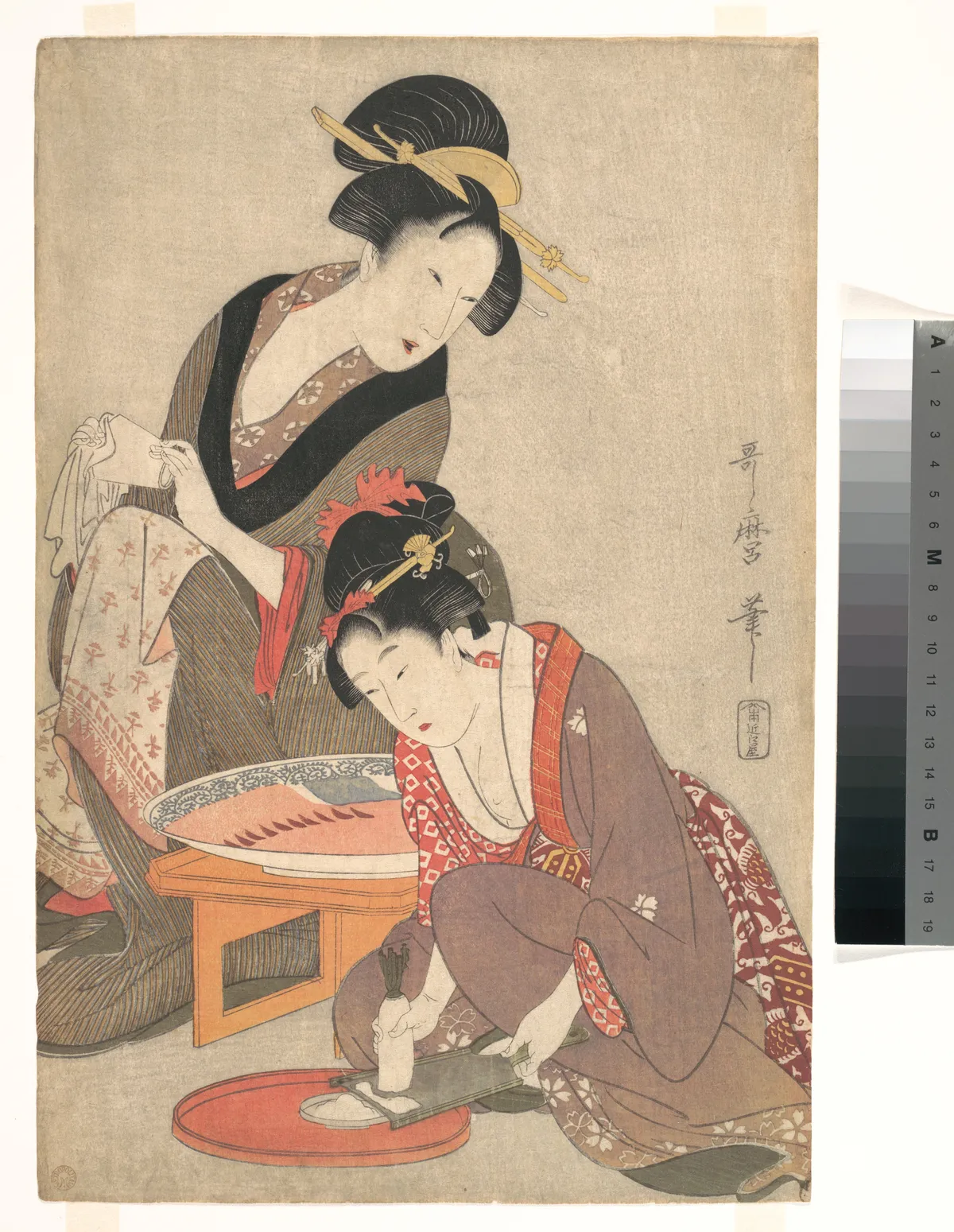
The room is quiet, save for the soft rustle of silk and the gentle clatter of porcelain. Under the warm glow of paper lanterns, two women sit, their sleeves tied back. The air is thick with the scent of fresh fish and the faint tang of soy. A wooden tray, damp and cool, rests between them. One woman, her hands deft and sure, slices through the fish with a slender blade. The other arranges the delicate pieces on a plate, her fingers moving like a silent dance.
Outside, the world is a distant hum. The day has faded into night, and the room feels like an island, adrift in its own time. Shadows play across the women's faces, highlighting the curve of a cheek, the tilt of a chin. Their expressions are serene, focused, as if this simple act of preparing sashimi holds a quiet reverence.
In the corner, a small brazier flickers, casting an amber glow. The walls, adorned with simple screens, hold the warmth within. The women work in silence, their movements a gentle rhythm. The sashimi, translucent and gleaming, takes shape under their hands, a testament to their skill and care.
Historical Echo
In the Edo period, the preparation of food was often a ritual, a moment of shared intimacy. Kitagawa Utamaro captures this with a delicate touch, his print a window into the quiet dignity of everyday life. The women, anonymous yet alive, embody the grace and precision that defined this era's domestic sphere.