

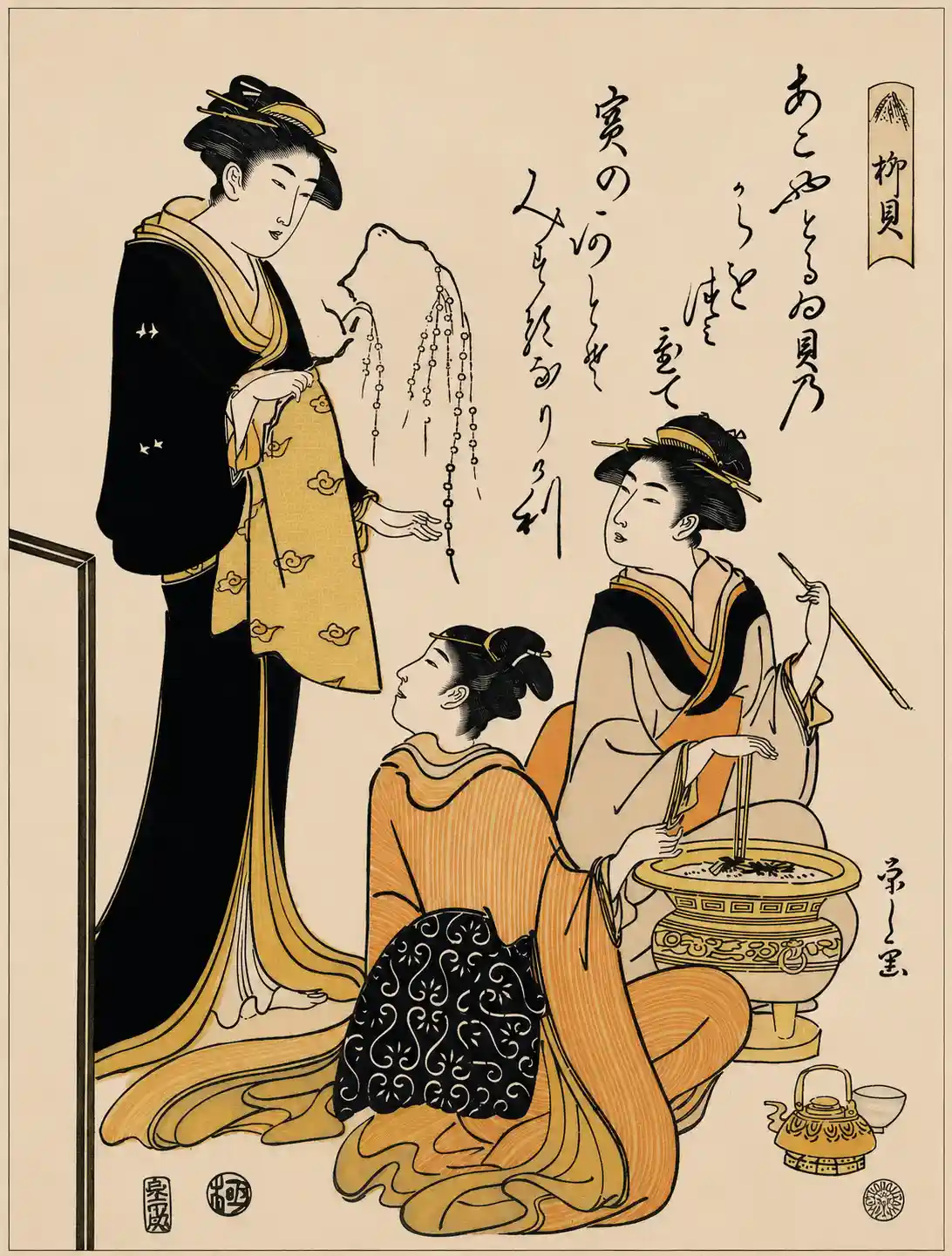
The Willow Shell
A soft rustle in the air. The willow branches sway gently, their slender leaves brushing against the silk of her kimono. She stands quietly, a figure of grace, lost in thought. Her fingers trace the delicate patterns on the shell she holds, its surface smooth and cool. The light filters through the willow leaves, casting gentle shadows on her serene face.
The air is still, yet alive with the scent of distant rain. Her gaze drifts, unfocused, beyond the garden's edge, where the world feels both vast and intimate. Her kimono, a cascade of intricate patterns, speaks of elegance and quiet confidence. Each fold and crease catches the light, a testament to the artisan's skill and her own poise.
The moment hangs, suspended in the quiet of the afternoon. She listens to the soft murmur of the breeze, the whisper of the past mingling with the present. The echo of the willow's grace mirrors her own, a quiet dance of nature and beauty.
Historical Echo
In the late 18th century, the Edo period thrived on a culture of refinement and aesthetic appreciation. Chōbunsai Eishi, a master of bijinga, captured the elegance of women with exquisite detail. His work, like "The Willow Shell," exemplifies the era's ideals of beauty and transience. With each print, Eishi celebrated not only the physical allure of his subjects but also the delicate interplay between nature and human artistry. The willow and the shell, symbols of fragility and endurance, echo through time, whispering tales of an era defined by its fleeting grace.