

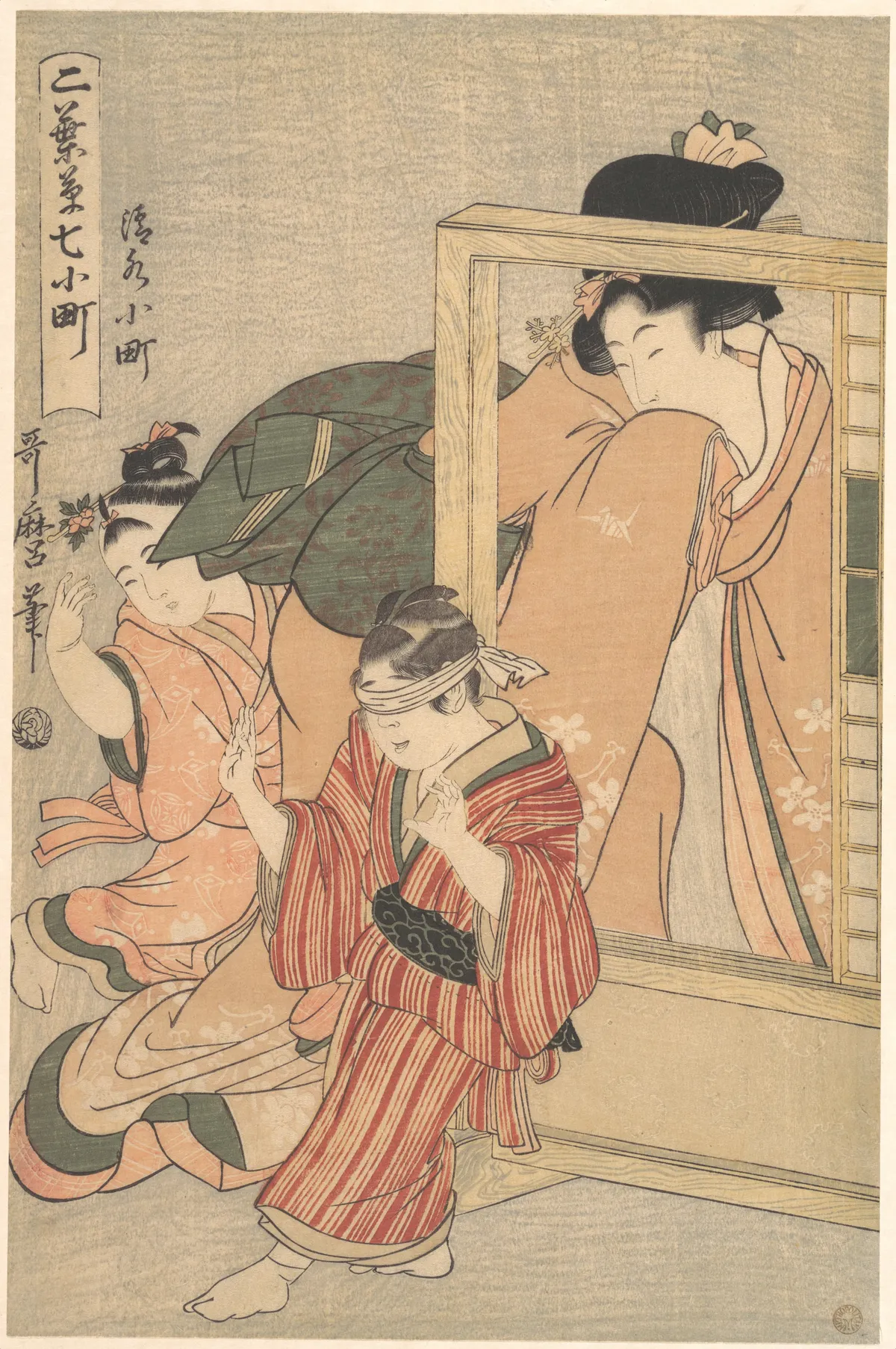
Kiyomizu Komachi
The air was heavy with the scent of incense. A gentle rustling of silk filled the small room. Komachi moved with quiet grace. Her kimono whispered against the tatami mat. Her eyes, dark and contemplative, watched the flickering candlelight. Shadows danced on the walls, echoing the soft murmur of distant voices.
Outside, the temple grounds lay silent. The moonlight bathed the stone paths, their surfaces cool under the night sky. Komachi's fingers traced the delicate fabric of her sleeve. Her thoughts drifted back to the poetry etched in her memory. Words that once flowed like the river beneath Kiyomizu.
Her reflection, caught in the polished surface of a small mirror, seemed to belong to another world. She sighed, a sound almost lost to the stillness. The weight of her hair, the subtle fragrance of plum blossoms, all part of this moment suspended in time.
As the night deepened, the echoes of her past lingered. A poet's heart, a beauty's fate, entwined in the silence of the temple. Komachi, lost in her reverie, remained a figure of elegance and mystery, framed by the delicate lines of Utamaro's art.
Historical Echo
Kitagawa Utamaro, a master of bijin-ga, captured the essence of beauty and grace. In the 1790s, his prints of celebrated women like Komachi became timeless. This piece, part of the series "Futabagusa nana Komachi," reflects the allure and poise of its subject. Komachi, a legendary poet, was famed not only for her literary talent but also for her captivating presence. Her story, steeped in history and myth, resonates through Utamaro's delicate lines. The print evokes an era where art and life intertwined, where the ephemeral nature of beauty was both celebrated and mourned.