

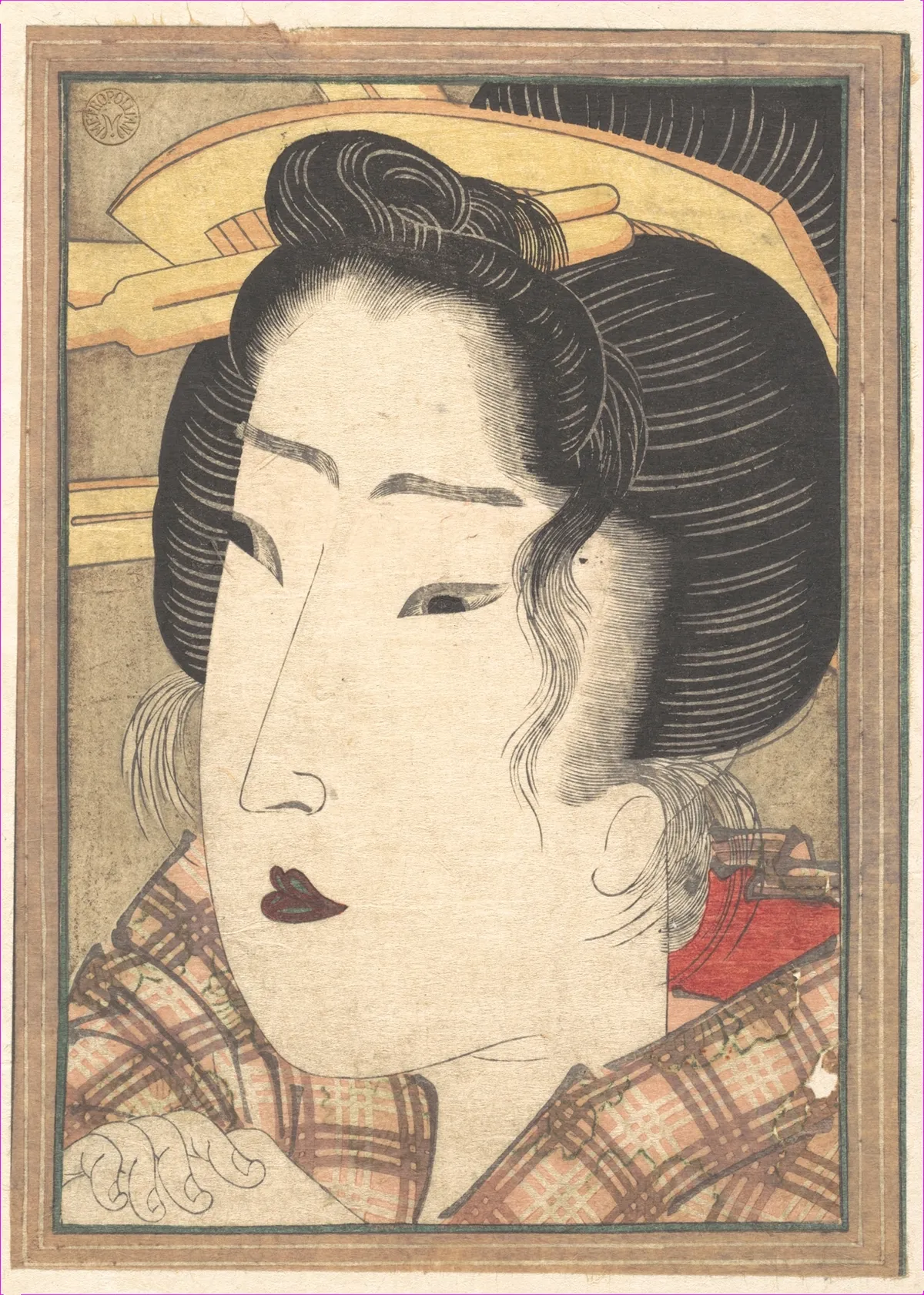
The Silent Reflection
The room was hushed. A single lantern cast a gentle glow, illuminating the delicate features of her face. Her eyes, half-lidded, seemed to be lost in a world beyond the paper. Her lips, slightly parted, suggested a whisper never spoken. The air was heavy with the scent of ink and wood, mingling with the faint aroma of cherry blossoms from outside.
A gust of wind rattled the shoji screen, but her gaze remained distant, unaffected. Her hair, dark as the night, cascaded down, framing her face like the ink of a calligrapher's brush. There was a grace in her stillness, a quiet dignity that transcended the fragile woodblock beneath her.
The artist had captured a moment suspended in time. The elegance of her kimono, the subtle play of shadows across her skin, spoke of a beauty both timeless and ephemeral. Her presence lingered, a haunting echo of a world where silence spoke louder than words.
Historical Echo
In the Edo period, beauty was a fleeting ideal, ever-changing yet eternal. Keisai Eisen, a master of bijin-ga, understood this nuance. His prints captured the essence of feminine allure. They whispered stories of elegance and grace through every line and shadow.
During the early 19th century, ukiyo-e artists thrived in capturing the transient beauty of the floating world. Eisen's works stood out, depicting not just the outer beauty but the inner world of his subjects. His portrayal of women was both an homage and a reflection of the society that revered them.
In "Head of a Beauty," Eisen invites the observer to pause, to reflect on the silent depth behind her gentle expression. It is a moment of contemplation, both for the viewer and the beauty within the frame. The print remains a timeless reminder of the delicate balance between art and the ephemeral nature of beauty.