

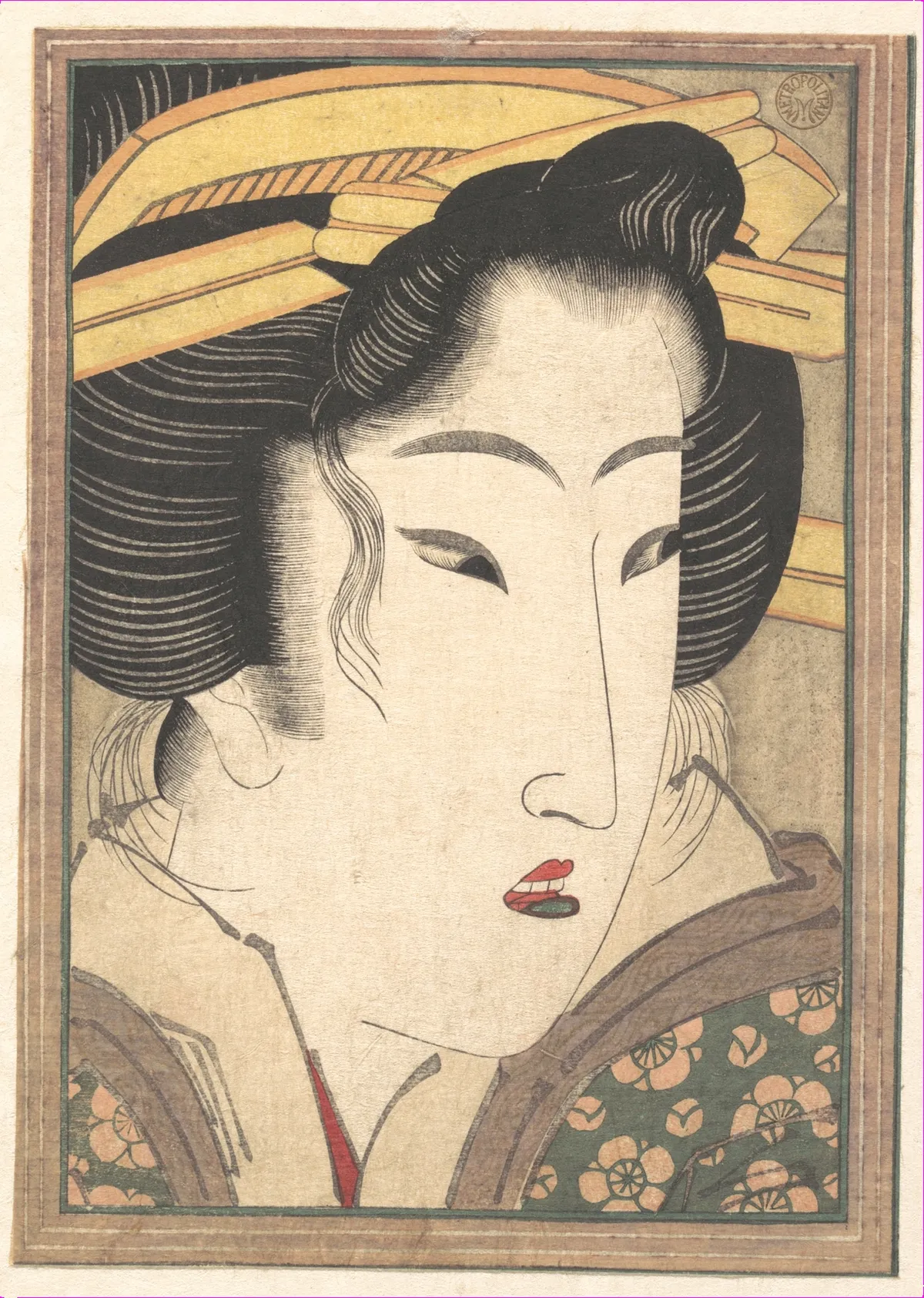
A Quiet Reflection
The room is still. A single lantern flickers, casting shadows on the tatami. She sits, poised and silent. Her kimono, a cascade of muted patterns, drapes over her knees, whispering against the floor. Her hair, an intricate structure of ebony, glistens in the dim light. It holds the fragrance of camellia oil, a scent that clings to the air.
Her eyes, half-closed, reflect a world beyond the paper walls. The weight of the day lingers on her lashes, heavy with unseen thoughts. She listens to the distant rustle of leaves, the soft murmur of the city that never sleeps. The air, thick with the residue of incense, wraps around her like a forgotten memory.
A slight breeze slips through the shoji screen, stirring the silence. Her fingers, delicate and pale, trace the edge of her sleeve. Time pauses, suspended in the stillness of the moment. She is alone, yet the room is full—echoes of laughter, whispers of secrets long buried.
She breathes in, the gentle rise and fall of her chest a testament to the night's quietude. The world outside fades, leaving only the whisper of silk and the soft glow of the lantern's flame. She remains, a solitary figure in the heart of the night, her beauty an eternal mystery.
Historical Echo
Keisai Eisen, a master of bijin-ga, captured the ephemeral beauty of women in Edo-era Japan. His work, created around 1825, reflects the elegance and grace of the period. The artist's precise lines and subtle colours convey the quiet dignity of his subjects. In this portrait, the woman remains a timeless enigma, a symbol of beauty in a world of transient moments. The ukiyo-e, a glimpse into a past world, endures as a testament to Eisen's skill and vision.