

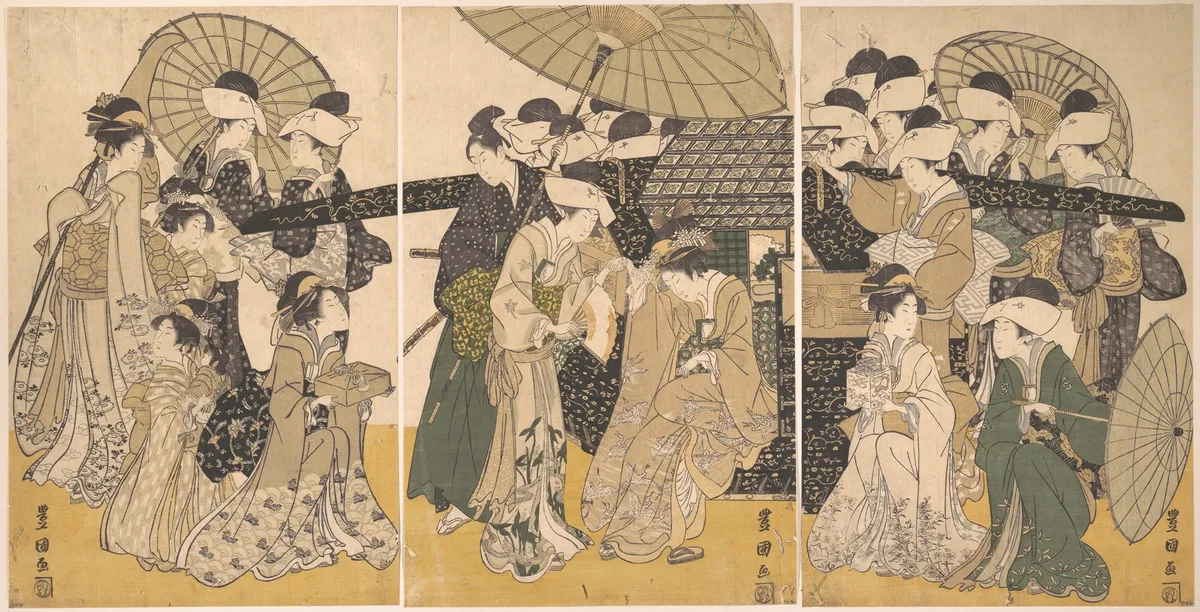
The Procession
The air was thick with anticipation. Silk rustled as the women moved in unison. At their centre, the famous beauty walked, her presence commanding. Layers of exquisite kimono swayed with each step. The muted thud of wooden geta echoed softly on the stone path. A gentle breeze carried the scent of cherry blossoms, mingling with the fragrance of incense lingering on their garments.
The women flanking her were of varied ranks. Their expressions were a study in restrained deference. Some bore signs of admiration, others of duty. They formed a living frame around her, their movements choreographed, deliberate. Each step was a testament to the hierarchy of Edo society.
As they passed under a canopy of trees, dappled sunlight played across their faces, shadows weaving fleeting patterns. The world seemed to hold its breath, time suspended in the moment. The procession moved forward, silent save for the whisper of fabric and the distant murmur of a city alive, just beyond the garden's confines.
Historical Echo
In Edo Japan, the art of escorting a beauty was a spectacle. It reflected the rigid social structures of the time. Women of varying ranks often accompanied high-status individuals, marking their importance. This print captures the elegance and formality of such a procession. Utagawa Toyokuni I, renowned for his bijin-ga, immortalised these moments. His work offers a glimpse into the societal norms and aesthetic ideals of the period. Here, beauty and status intertwine, preserved in delicate lines and vibrant hues.