

The Silent Procession
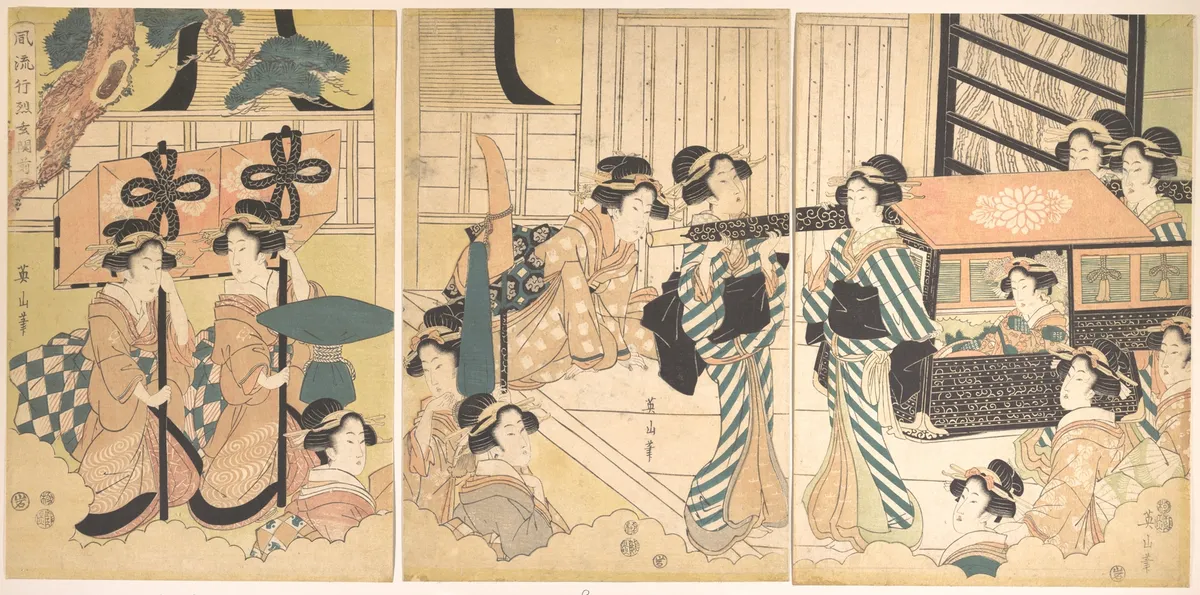
The air was heavy with anticipation. A soft rustle of silk echoed through the narrow street. The procession moved with deliberate grace. At its heart, a woman of unparalleled beauty. Her kimono shimmered like a night sky, deep blues and blacks under the dim light. She was the centrepiece, her presence commanding yet serene.
Around her, the attendants formed a protective shell. They moved in unison, a delicate choreography of devotion. Each step was measured, each glance calculated. The street was silent, save for the occasional whisper of a passing breeze.
The lanterns cast a warm glow, illuminating their faces in soft amber. Shadows played tricks on the walls, dancing with every flicker of light. The famous beauty’s face was a mask of calm, her eyes distant, as if seeing beyond the material world.
Spectators dared not breathe too loudly. They watched from the shadows, their faces hidden in the twilight. This was a moment to savour, a rare glimpse into a world of elegance and mystery.
Her name was spoken in hushed tones, a legend in her own time. Yet here, in the quiet of the evening, she was simply a figure moving through the night, leaving an indelible mark on the fabric of the city.
Historical Echo
Kikugawa Eizan captured moments of beauty and poise in his work. This print, though shrouded in mystery regarding its exact date, evokes the quiet elegance of Edo's high society. The depiction of the famous beauty, escorted by her attendants, speaks to the cultural reverence for beauty and the elaborate social rituals of the era. Eizan's work remains a window into a world where formality and grace were paramount, and where the allure of a single figure could captivate an entire city.