

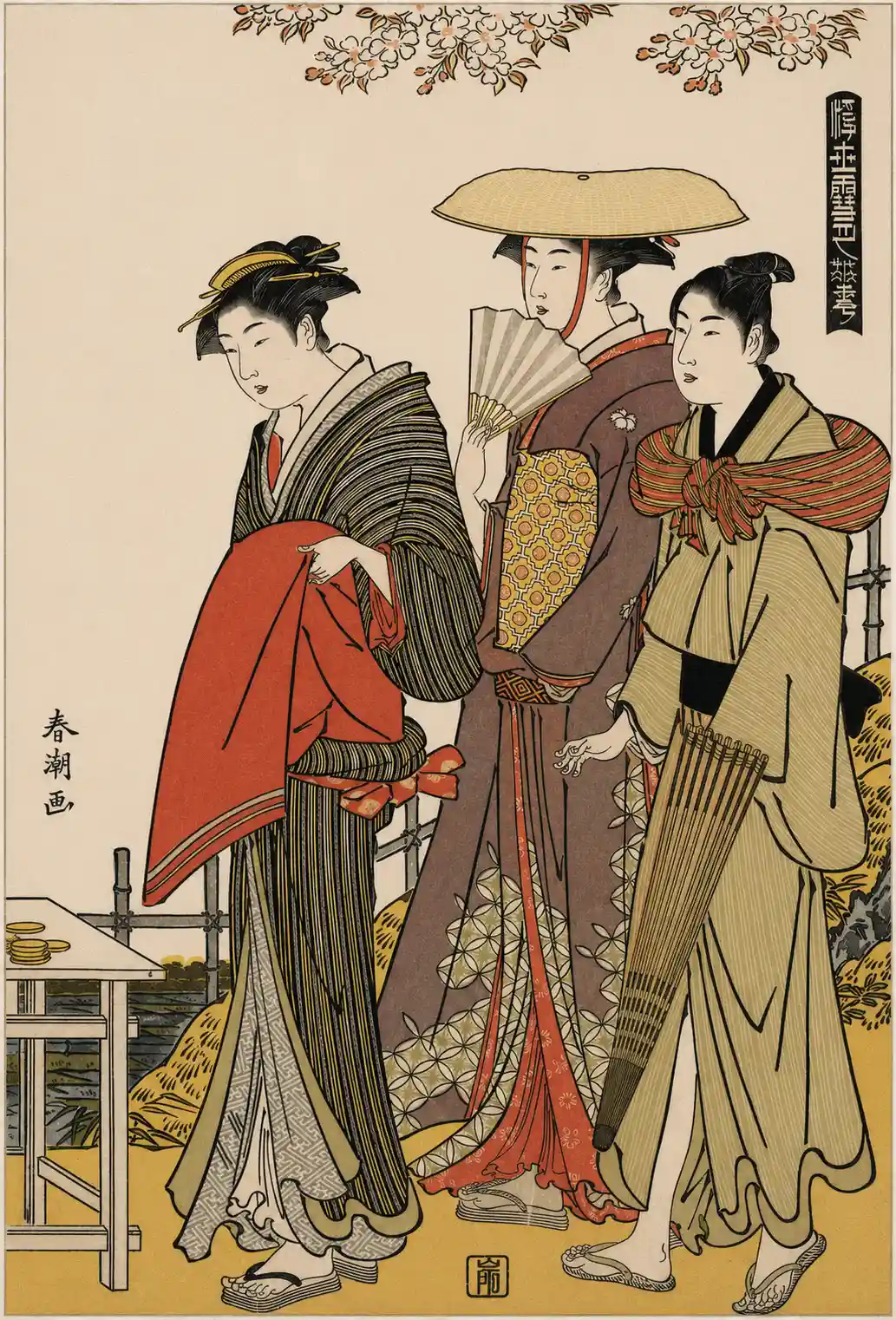
The Beauty of the Floating World
The room is hushed, save for the faint rustle of silk. A woman stands, poised and serene. Her kimono, an expanse of delicate patterns, whispers as she moves. Light filters through shoji screens, casting soft, latticed shadows across the tatami. She adjusts a hairpin, its jade surface catching the dim glow of a nearby lantern. Outside, the distant murmur of Edo's night life drifts in, a reminder of the world that spins beyond these walls. She pauses, a figure suspended in the quiet elegance of the floating world. Her eyes hold a depth, a knowing of fleeting beauty and time's gentle tread. The air is thick with the scent of incense, mingling with the cool night air that slips through a slightly open window. In this moment, she embodies the grace and ephemeral allure of an era long past.
Historical Echo
In the late 18th century, Edo thrived with vibrant energy. The ukiyo-e artists captured its transient beauty, immortalising moments of everyday life. Katsukawa Shunchō was a master of bijin-ga, depicting women of grace and poise. These prints became windows into the floating world, a realm where beauty was revered and life was as delicate as the ink and paper that portrayed it.