

Beneath the Arching Serenity
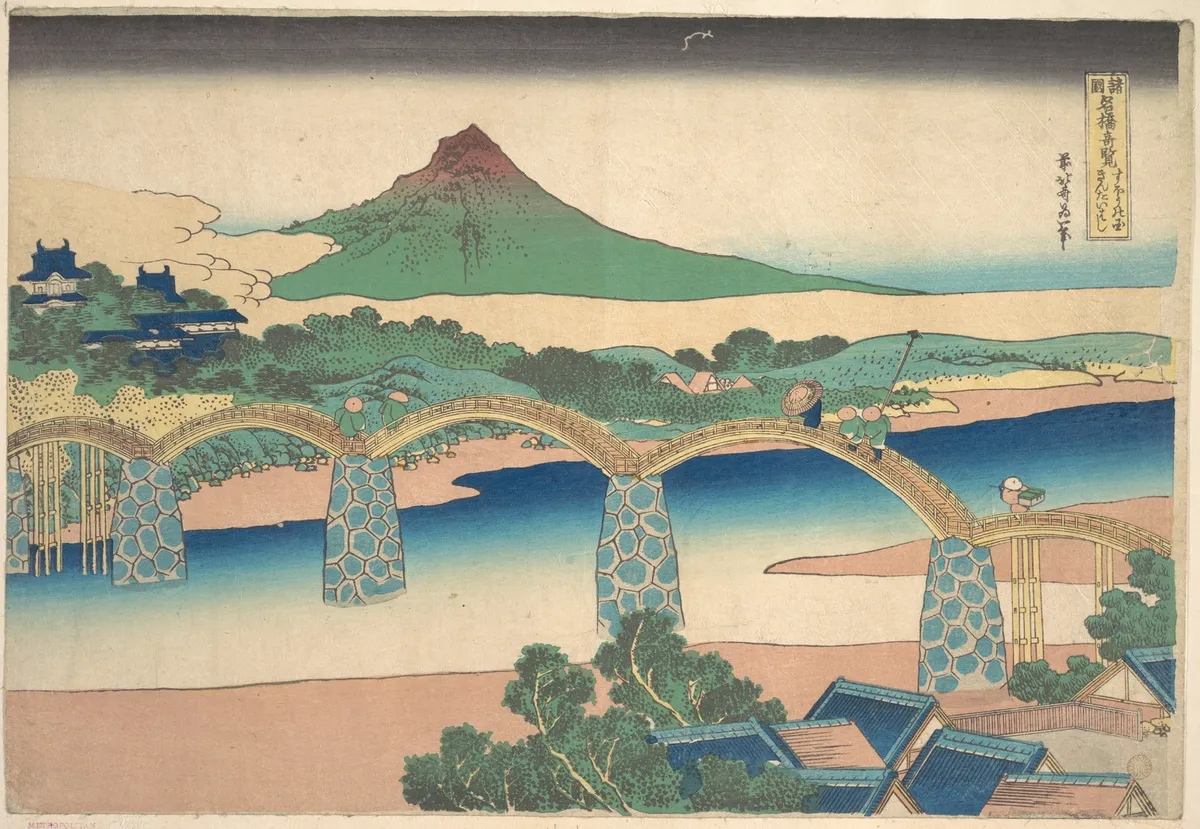
The morning mist clung to the wooden arches of Kintai Bridge, wrapping each curve in a shroud of soft grey. The river below murmured its timeless song, a gentle counterpoint to the whisper of the breeze that rustled through distant trees. In the early light, the bridge seemed to float, an ethereal path suspended between earth and sky.
A solitary figure moved with deliberate grace across the planks, the sound of straw sandals tapping lightly against the wood. Each step was measured, a moment held in the breath of morning. The figure paused midway, leaning against the sturdy rail, eyes cast over the tranquil waters where the first hints of sunlight danced like fleeting spirits.
The air was heavy with the scent of damp earth and the faint, sweet fragrance of cherry blossoms carried from a grove unseen. Above, the sky began to blush with the promise of a clear day, its gentle hues mirrored in the river’s surface. Somewhere, a bird called out, its song a bright note in the tapestry of dawn.
This bridge, a feat of human ingenuity, stood as a testament to the harmony between man and nature. It was here that travellers found a moment of reflection, a space where the journey paused to allow the soul to breathe.
Historical Echo
Kintai Bridge, known for its distinctive wooden arches, was an emblem of Suō Province’s architectural prowess. Constructed in 1673, it spanned the Nishiki River, a symbol of both strength and elegance. Its unique design, with interlocking arches, was not only a marvel of engineering but also a work of art, capturing the spirit of a place where nature and human craft converged seamlessly. In the early 19th century, Hokusai immortalised this bridge in his series, capturing not just a landscape, but a moment suspended in time, echoing through the centuries.