

Windswept Journey
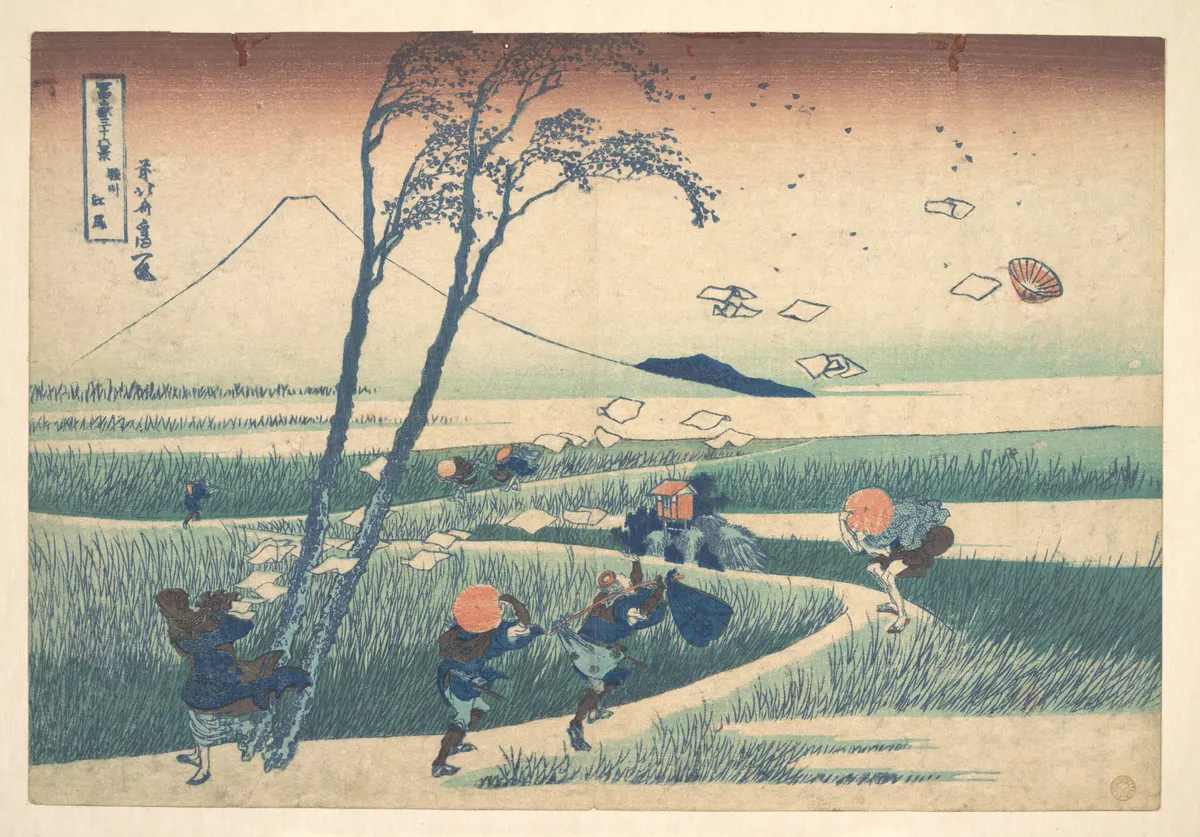
The wind comes alive with an invisible force, sweeping across the open plains of Ejiri in Suruga Province. Loose papers, caught in the gale’s playful grasp, dance erratically through the air. A trio of travellers, caught unawares, clutch at their hats and garments, their laughter swallowed by the roaring gusts. The sound of rustling leaves and the distant echo of the sea blend into a symphony of nature’s whims.
In the distance, Mount Fuji looms, its majestic peak a silent witness to the unfolding scene. The mountain stands immutable against the transient chaos below, its snow-capped summit merging with the clouds, a symbol of eternal tranquility amidst the flurry of movement.
The road, lined with swaying trees, leads the travellers onward, each step a battle against the playful wind. Their journey is marked by the earthy scent of disturbed soil and the crisp, salty tang carried from the distant ocean. As the papers finally settle onto the path, the wind’s laughter subsides, leaving behind a moment of stillness, a brief pause before the journey resumes.
Historical Echo
Katsushika Hokusai, a master of capturing the ephemeral beauty of nature, created "Ejiri in Suruga Province" as part of his renowned series, Thirty-six Views of Mount Fuji. This particular scene, crafted between 1830 and 1832, showcases his unparalleled ability to infuse landscapes with a sense of life and movement. Through his deft use of line and colour, Hokusai not only depicts a moment in time but also encapsulates the enduring spirit of the Japanese landscape.