

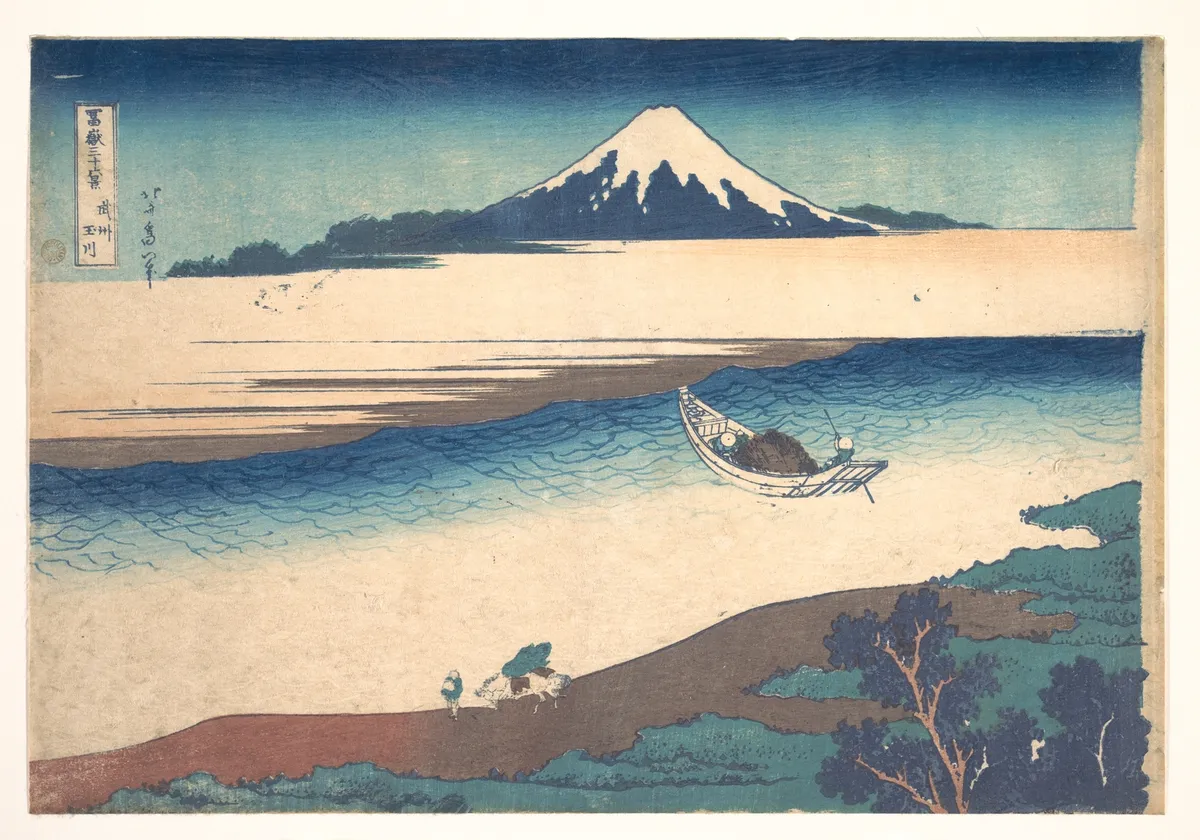
Beyond the River's Whisper
The soft murmur of the Tama River wove its way through the morning mist, a gentle breath against the silence of the Musashi Province. As dawn's first light caressed the rippling waters, the silhouette of Mount Fuji loomed in the distance, majestic and eternal, a guardian of the land. The air was thick with the scent of damp earth and the distant promise of rain, each droplet a memory of the river's journey from the mountain to the sea.
Along the riverbank, willows bowed gracefully, their slender branches dipping into the river's embrace. Fishermen, mere shadows against the waking world, moved with the rhythm of the current, their nets cast wide, a dance with the unseen beneath the surface. The quietude of the scene was broken only by the occasional call of a bird, a fleeting note in the symphony of nature's quietude.
Hokusai's gaze captured this ephemeral moment, the play of light and shadow a testament to the transient beauty of life. The print held the weight of time, a whisper of the past echoing through the present. The colours, muted yet vibrant, spoke of a world untouched by haste, where even the passage of time seemed to slow, allowing the soul to breathe.
Historical Echo
In the Edo period, the Tama River was more than a mere body of water; it was a lifeline, a source of sustenance and a spiritual presence. Hokusai, with his profound understanding of nature's rhythms, immortalised this serene landscape as part of his celebrated series, "Thirty-six Views of Mount Fuji." Each print a testament to the enduring allure of Japan's sacred mountain and the harmonious interplay of human life and nature. The river, with its quiet wisdom, continues to flow, a silent witness to the stories of those who have passed along its banks.