

Enoshima's Whisper
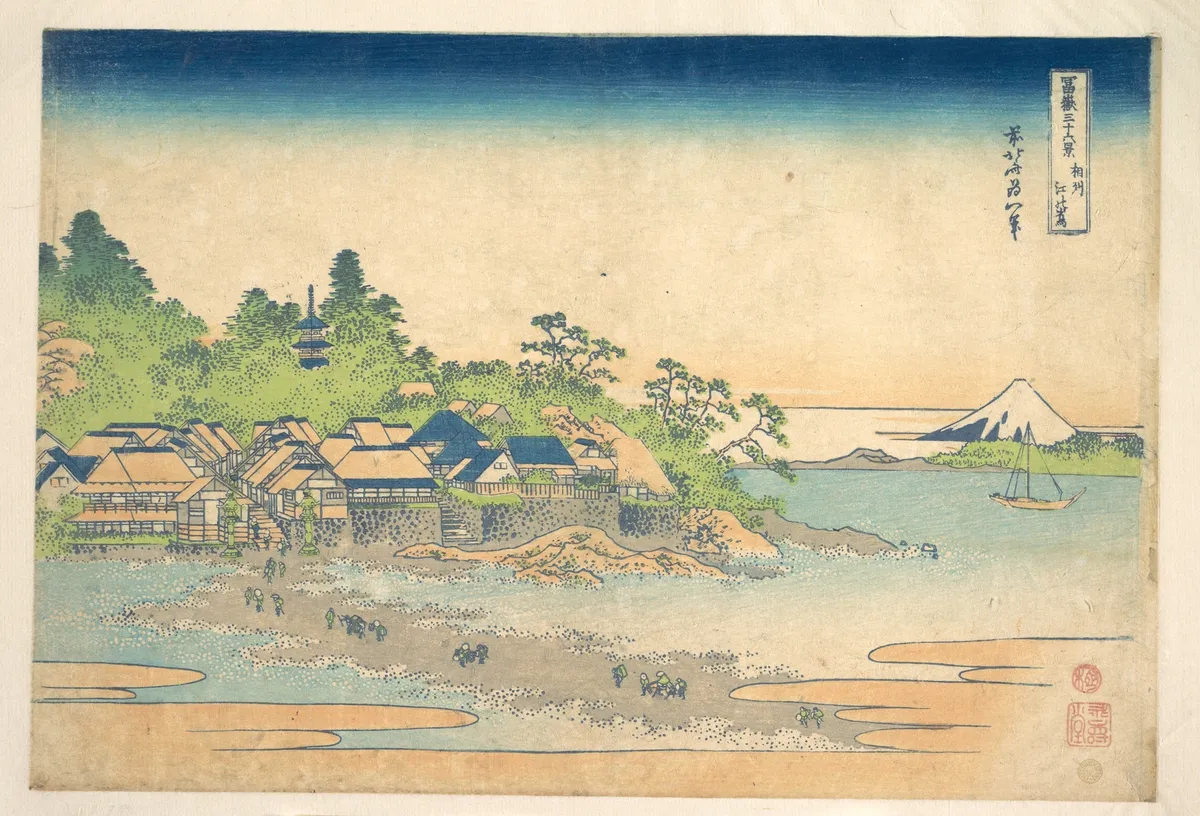
The sea murmurs against the rocky shores of Enoshima, its whispers mingling with the faint rustle of pine needles swaying gently in the coastal breeze. A lone fisherman stands ankle-deep in the ebbing tide, his silhouette framed by the ethereal glow of dawn. Above him, the sky blushes with the first light of morning, casting a soft luminescence across the tranquil waters.
In the distance, Mount Fuji rises majestically, its snow-capped peak a silent guardian over the scene. The mountain's presence is both comforting and humbling, a reminder of nature's timeless beauty and power. Wisps of cloud cling to its slopes, like delicate brushstrokes left by the hand of a master artist.
Nearby, the island of Enoshima sleeps, its cliffs and forests shrouded in a gentle mist. The air is cool and filled with the scent of salt and pine, a refreshing balm that awakens the senses. The world is quiet, save for the rhythmic lapping of waves and the distant cries of seabirds soaring above.
As the sun slowly ascends, its rays touch the island, illuminating the vibrant greens and earthy browns of the landscape. The fisherman pauses, his gaze drawn to the sacred mountain, lost in reverie. Time seems to stand still, and for a moment, all is in perfect harmony.
Historical Echo
In the early 19th century, Katsushika Hokusai captured the serene beauty of Japan's landscapes through his masterful series, Thirty-six Views of Mount Fuji. Enoshima in Sagami Province is a testament to his genius, where the interplay of land and sea speaks to the soul. This ukiyo-e print reflects the harmony between humanity and nature, a theme that resonates through the ages. As with all of Hokusai's works, the image is a portal to a world where the ordinary becomes extraordinary, and the ephemeral becomes eternal.