

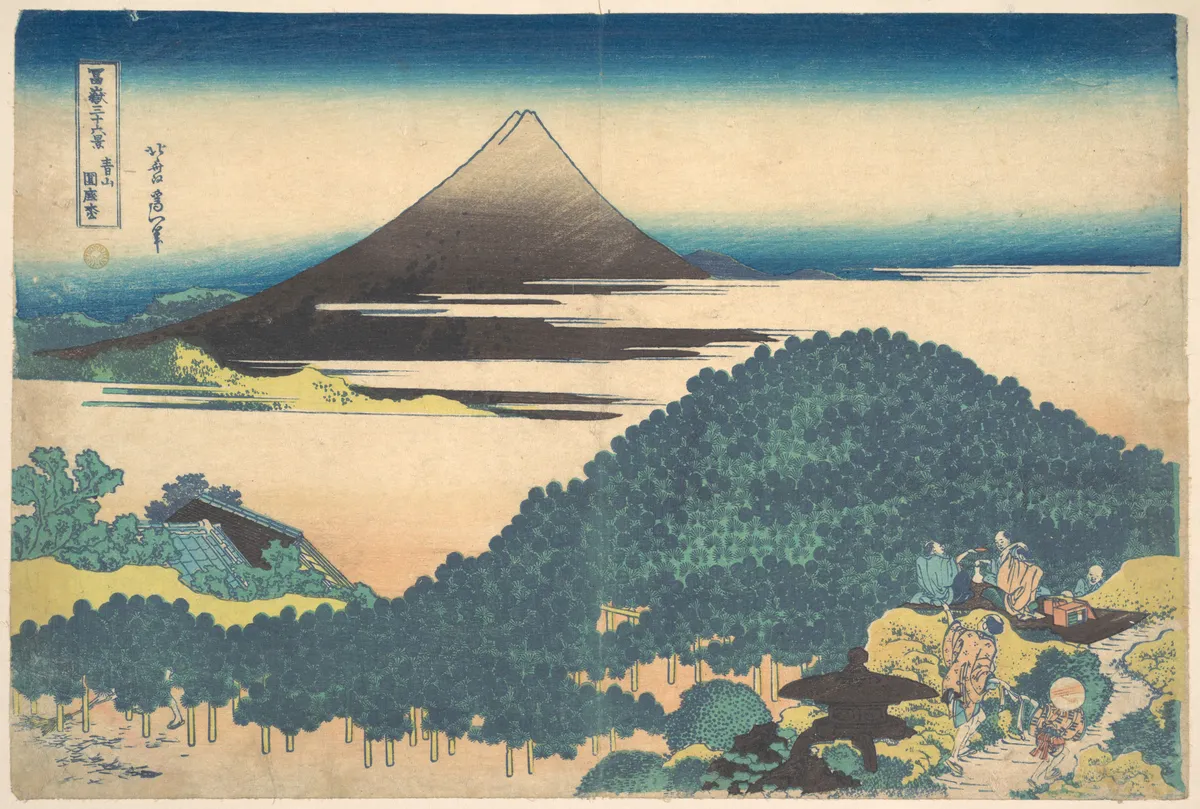
Cushion Pine at Aoyama
The air is crisp and still, as if the world holds its breath beneath the watchful gaze of Mount Fuji. The sky is a gentle expanse, its pale hues a tender embrace for the mountain's distant silhouette. In the foreground, the cushion pine stands resolute, its branches reaching out like the poised fingers of an ancient storyteller. The needles whisper secrets to the wind, tales carried from the depths of time.
A solitary figure moves beneath the boughs, a traveller whose journey seems guided by the soft lines of the landscape. The ground beneath is cushioned by fallen needles, each step muted, a silent melody accompanying the traveller's passage. The pine's shadow stretches long and languid, merging with the earth, a reminder of the dance between light and dark.
The scent of pine mingles with the freshness of the morning, a scent that speaks of both presence and memory, of moments captured like ink upon paper. The traveller pauses, looking towards the distant mountain, where snow-capped peaks meet the sky in a gentle gradient.
Here, in the embrace of nature, time slows, and the world is reduced to the simplicity of sky, pine, and mountain. Aoyama's cushion pine holds its vigil, eternal and unmoving, a witness to the ever-changing dance of the seasons and the eternal presence of Fuji.
Historical Echo
Katsushika Hokusai, in his masterful series "Thirty-six Views of Mount Fuji," captures the essence of a Japan seen through the lens of tranquillity and reverence for nature. Created around 1830–32, each print in the series is a meditation on the harmony between humanity and the natural world. The cushion pine at Aoyama becomes a symbol of resilience and continuity, a living bridge connecting the ephemeral with the eternal. Through Hokusai's eyes, we glimpse a world where the spirit of the landscape speaks softly to those who pause to listen.