

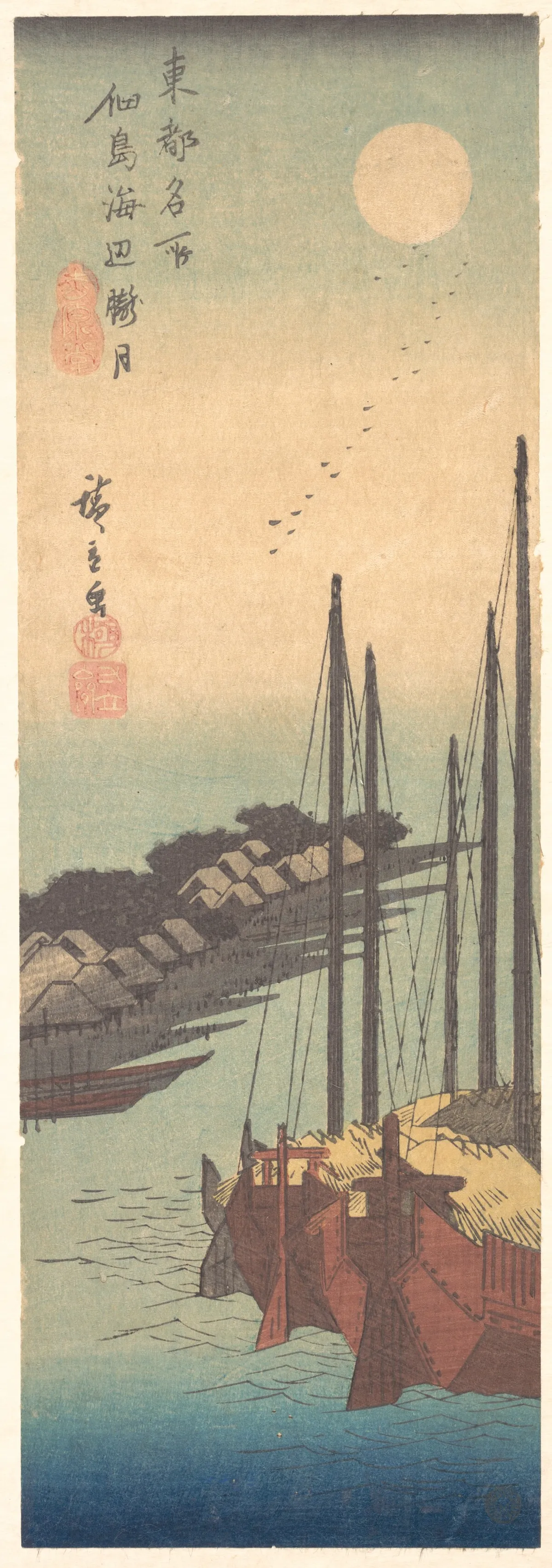
Moonlit Shores of Tsukudajima
The moon hung low, a lustrous pearl against the indigo sky, casting its serene glow over the tranquil waters of Tsukudajima. The rhythmic lapping of waves against the shore was a gentle lullaby, whispering secrets of the sea to the night. A lone boat drifted silently across the mirrored surface, its silhouette a dark brushstroke against the luminous expanse.
Faint echoes of laughter lingered in the cool night air, carried from the distant horizon where the city slept under its silken veil. Shadows played along the shoreline, dancing with the soft flickers of lanterns that lined the coast, their light winking in and out like fireflies.
The scent of salt mingled with the earthy aroma of seaweed, and the night was thick with the promise of stories untold. Each ripple in the water seemed to hold a fragment of history, whispering tales of those who had come before—fishermen returning with their haul, lovers stealing moments under the moon's watchful gaze.
In this suspended moment, time felt as fluid as the waters that ebbed and flowed, a gentle reminder of the transient beauty captured by Hiroshige's hand. The moon, the sea, and the land coalesced into a single, breathless panorama—a testament to the silent dialogue between nature and the observer.
Historical Echo
In the Edo period, Tsukudajima was known for its fishing industry and the serene beauty of its seascapes, which inspired many artists of the time. Utagawa Hiroshige, a master of the ukiyo-e tradition, immortalised these tranquil scenes with his deft touch and keen eye for the ephemeral beauty of nature. The interplay between light and shadow, the quietude of the night, and the harmony of land and sea in "Tsukudajima Kaihin Rōgetsu" reflect not only a geographical locale but also a philosophical meditation on the passage of time and the fleeting nature of existence.