

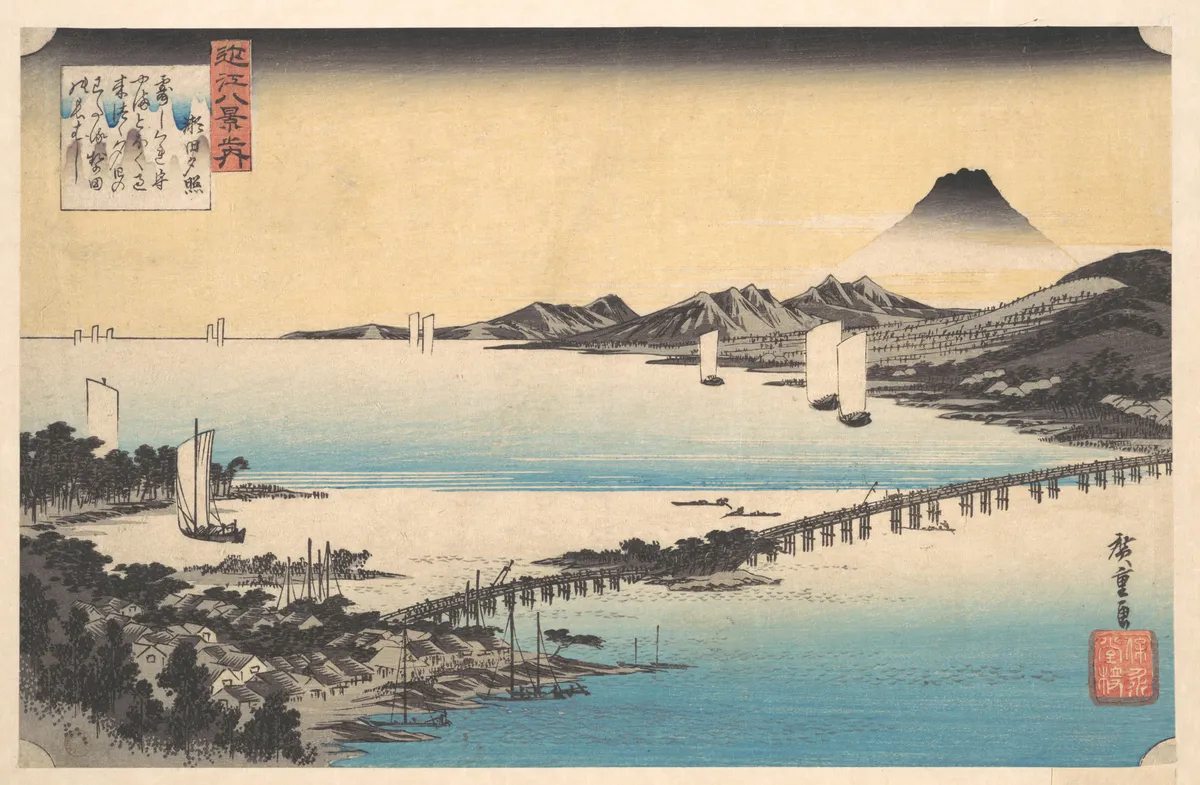
Sunset over Seta
As the sun dipped low over Lake Biwa, its golden light spilled across the water, turning the surface into a shimmering tapestry of molten hues. The bridge at Seta, silhouetted against the fading light, seemed to float above the water, its wooden arches echoing the gentle curves of the distant hills.
A lone traveller, wrapped in a cloak to guard against the evening chill, paused midway across the bridge. The air was filled with the scent of damp earth and the distant call of a waterbird, a haunting note that lingered in the silence. The traveller's footsteps, a soft rhythm against the wooden planks, were the only sounds accompanying the quiet descent of night.
The horizon, a soft blur of lavender and coral, held the last whispers of day. Shadows lengthened, reaching out like fingers across the landscape, and the traveller, a small figure against the vast sky, felt the weight of the world settle into the quiet of twilight.
Historical Echo
In the Edo period, the bridge at Seta was a well-trodden path for merchants, pilgrims, and wanderers alike. Hiroshige's depiction captures a moment suspended in time, where the convergence of natural beauty and human presence creates a silent dialogue. The artist's delicate play of light and shadow evokes a sense of melancholy, a reminder of the impermanence that defines both the journey and the landscape.