

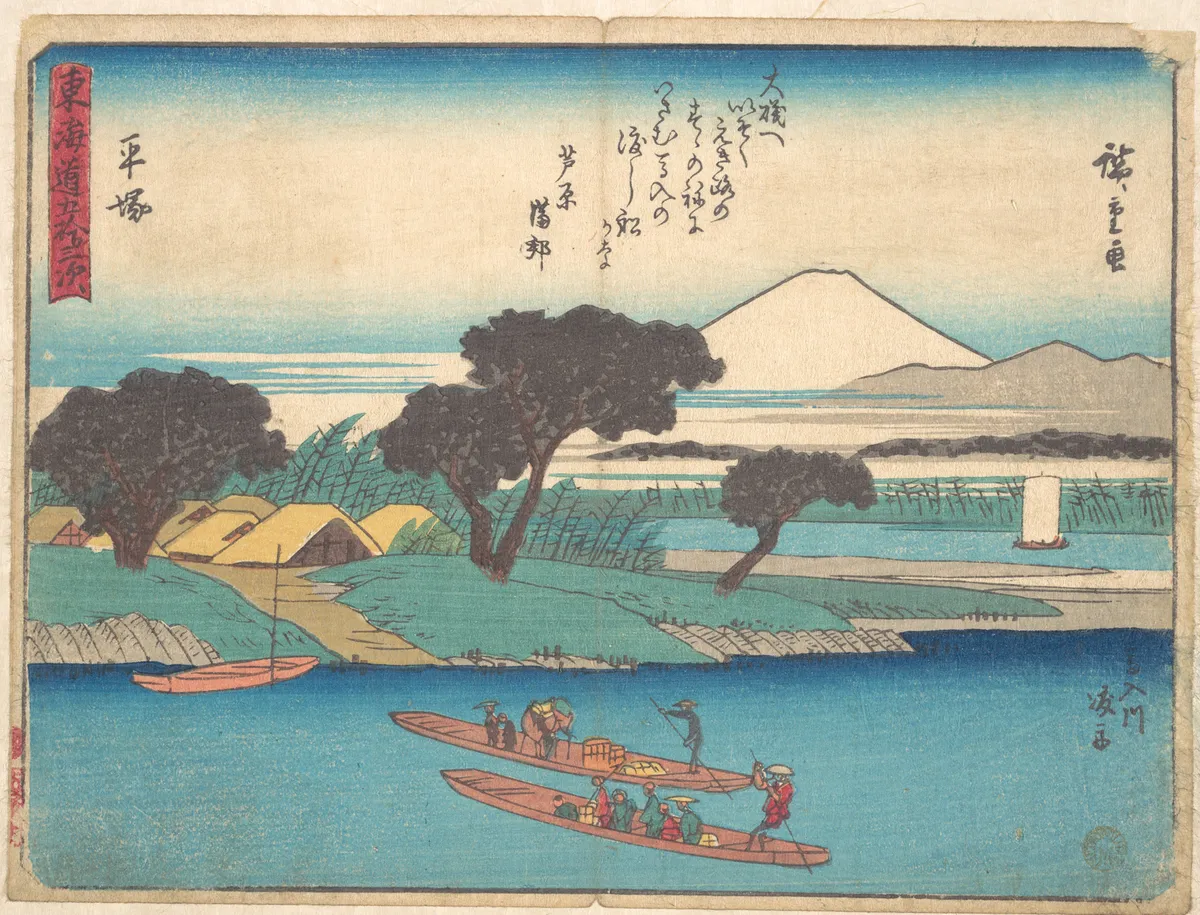
Silent Path to Hiratsuka
A gentle mist hangs over the Tokaido road, softening the edges of the world. The dampness in the air carries the scent of earth and distant rain, while the faint echo of footsteps merges with the rustle of leaves. Travellers move quietly, their forms obscured by the swirling fog, like spectres on a timeless journey.
Hiratsuka emerges through the veil, a peaceful town cradled by nature's embrace. The road is lined with tall, whispering pines, their needles glistening with dew. Lanterns flicker in the early evening light, tiny beacons guiding weary souls towards warmth and respite.
A solitary figure pauses, listening to the distant call of a cuckoo hidden among the branches. The bird’s song is a poignant reminder of the passage of time, marking the steady rhythm of life along this ancient route. As the traveller resumes his journey, the sound of his wooden sandals fades into the chorus of the night.
The scene is serene, yet filled with the quiet anticipation of change, as the road stretches ahead into the unknown.
Historical Echo
In 1838, Utagawa Hiroshige captured the essence of the Tokaido, the vital artery connecting Edo to Kyoto. His depiction of Hiratsuka is more than a mere landscape; it is a moment suspended between past and future. The Tokaido was not just a road but a lifeline of culture, commerce, and the flow of ideas. Each step along its path was a step into the heart of Japan, where tradition and modernity danced in the twilight of the Edo period.