

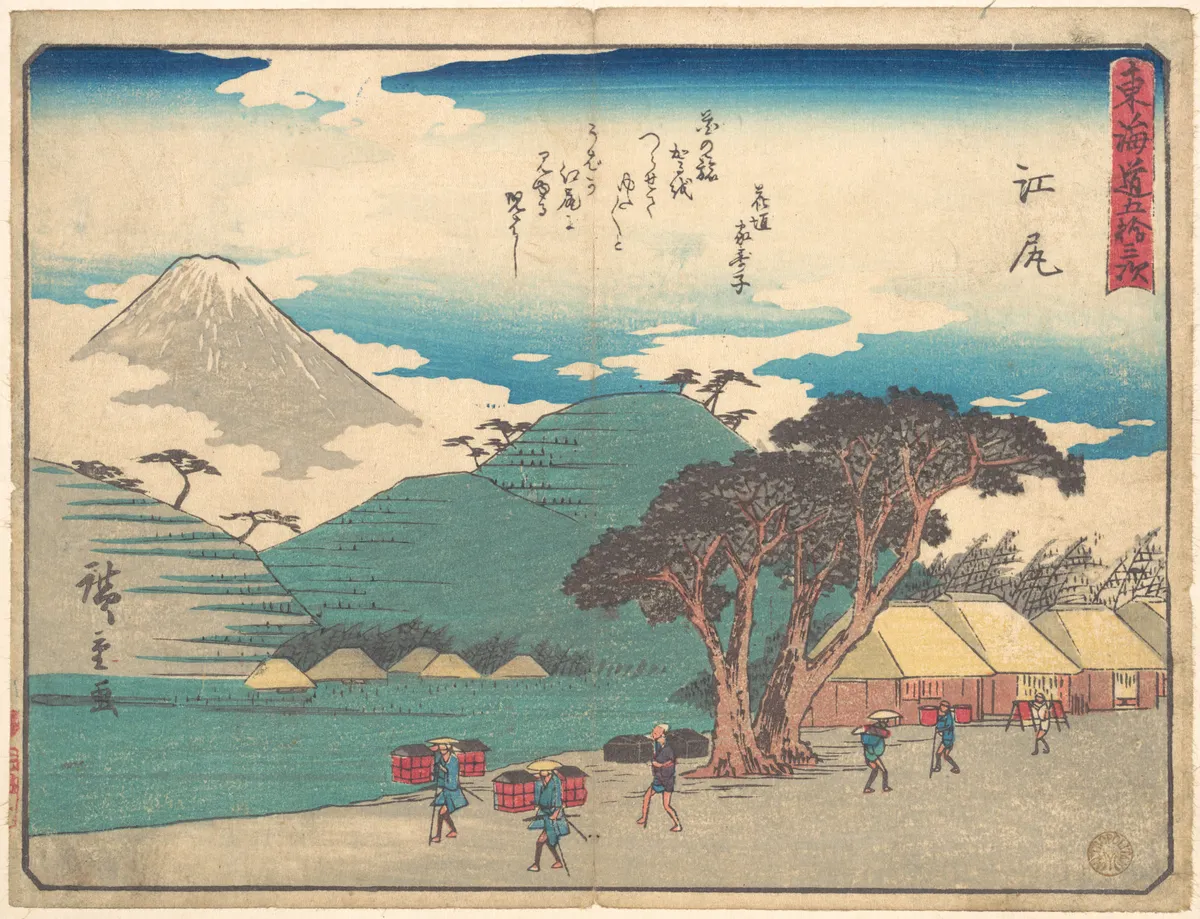
Whispers of the Wind at Ejiri
The wind at Ejiri is like a ghost, invisible yet palpable, sweeping across the landscape with a mischievous intent. Papers, once held tightly by travellers, take flight, swirling in the air like white butterflies caught in a sudden squall. Each sheet dances, caught in the eddies, a flurry of forgotten words and messages lost to the elements.
A group of travellers, caught unawares by this capricious breeze, scramble to retrieve their scattered belongings. The air is filled with their exclamations, half-laughing, half-frustrated, as they chase the papers across the grass, their voices mingling with the rustling leaves. In the distance, the pale sky stretches endlessly, its vastness both comforting and daunting, a reminder of the journey that lies ahead.
The scent of the sea lingers in the air, salty and fresh, carried by the wind from the distant shore. It mingles with the earthy aroma of the damp grass, grounding the scene in a moment of serene chaos. The light is soft, diffused through a veil of thin clouds, casting gentle shadows that flicker as the wind teases the grasses.
This is Ejiri, a place where the world pauses, caught in a breath of wind and the rustle of paper, where humanity and nature meet in a quiet dance, ephemeral yet eternal.
Historical Echo
In the early 19th century, Edo-period travellers would often traverse the Tōkaidō road, a vital artery connecting Edo (now Tokyo) to Kyoto. "Ejiri," one of the fifty-three stations of this famed route, was a destination where the mundane and the mystical intertwined. Here, Utagawa Hiroshige captured a fleeting moment infused with the gentle humour of everyday life, illustrating the playful yet unpredictable nature of the wind. Hiroshige's work invites us to pause, to consider the harmony and whimsy of the world in which these travellers moved, a world that remains hauntingly alive within the lines and colours of his woodblock print.