

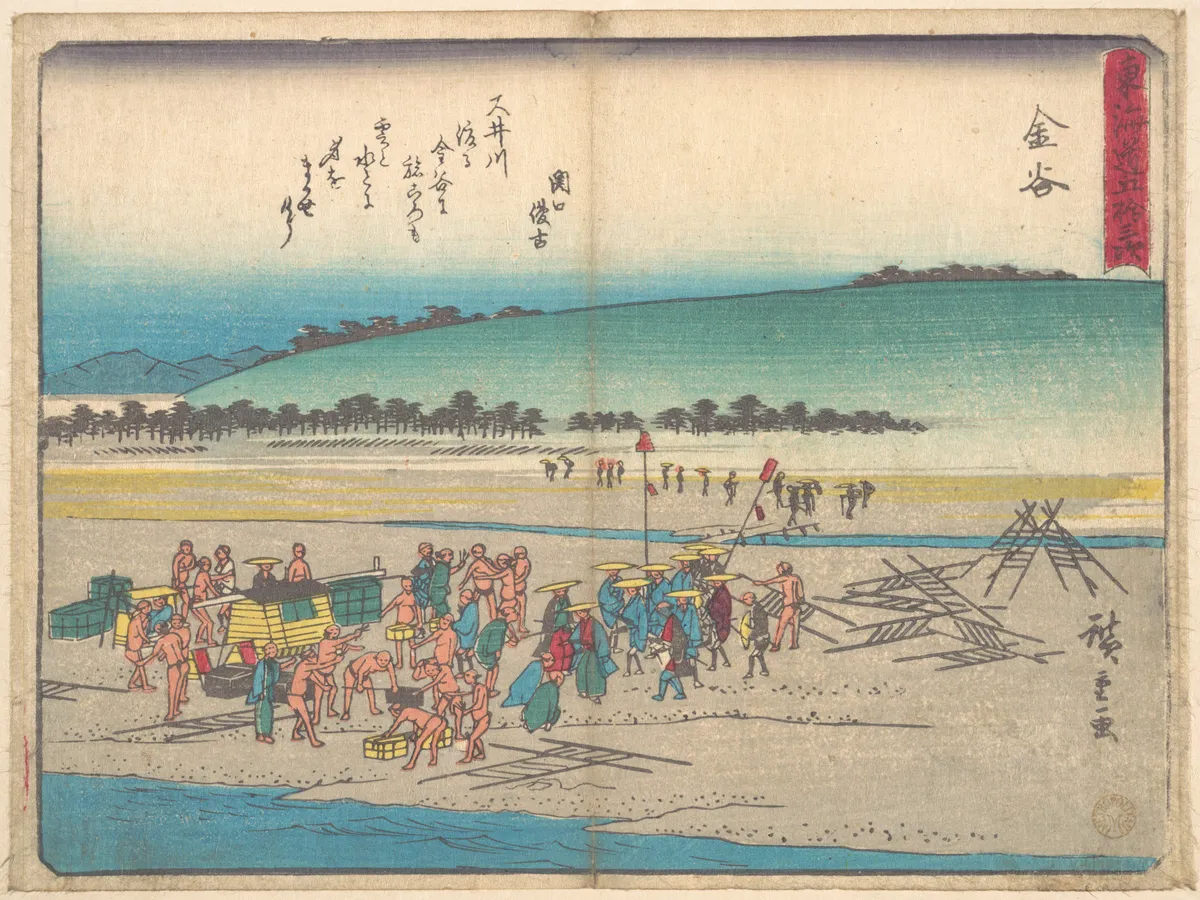
Crossing at Kanaya
The sound of the river was a constant murmur beneath the bridge, flowing with a serenity that belied its strength. The wooden planks creaked under the weight of travellers making their way across, each step a soft thud against the grain. Mist hung low over the water, a gentle veil that blurred the edges of the world.
A procession of figures moved steadily, their silhouettes softened by the hazy morning light. A merchant, burdened with goods, paused to adjust the strap digging into his shoulder, his breath visible in the chill air. Nearby, a samurai stood motionless, his gaze fixed on the distant mountains, the hem of his hakama brushing against the wooden slats with a whisper.
The scent of damp earth and the fresh tang of river water mingled with the faint aroma of rice from a nearby village, just awakening with the first stirrings of morning. The bridge, a vital artery between towns, bore witness to countless journeys, each step a story etched into its timbers.
Hiroshige captured this moment with a quiet reverence, his brush strokes echoing the rhythm of the river, the weight of the air, the transient lives passing over Kanaya. The scene was both a snapshot of a world in motion and a meditation on the ephemeral nature of travel and time.
Historical Echo
Utagawa Hiroshige, the master of Edo period landscapes, immortalised the journey across the Ōi River at Kanaya, a crossing that was both a literal and metaphorical bridge in the lives of many travellers. His work, created around 1838, reflects the intersection of human endeavour and nature’s vast, indifferent beauty. The print speaks of a time when journeys were measured in footsteps, and the world unfolded slowly, revealing its secrets to those who listened closely to the whispers of the wind and water.