

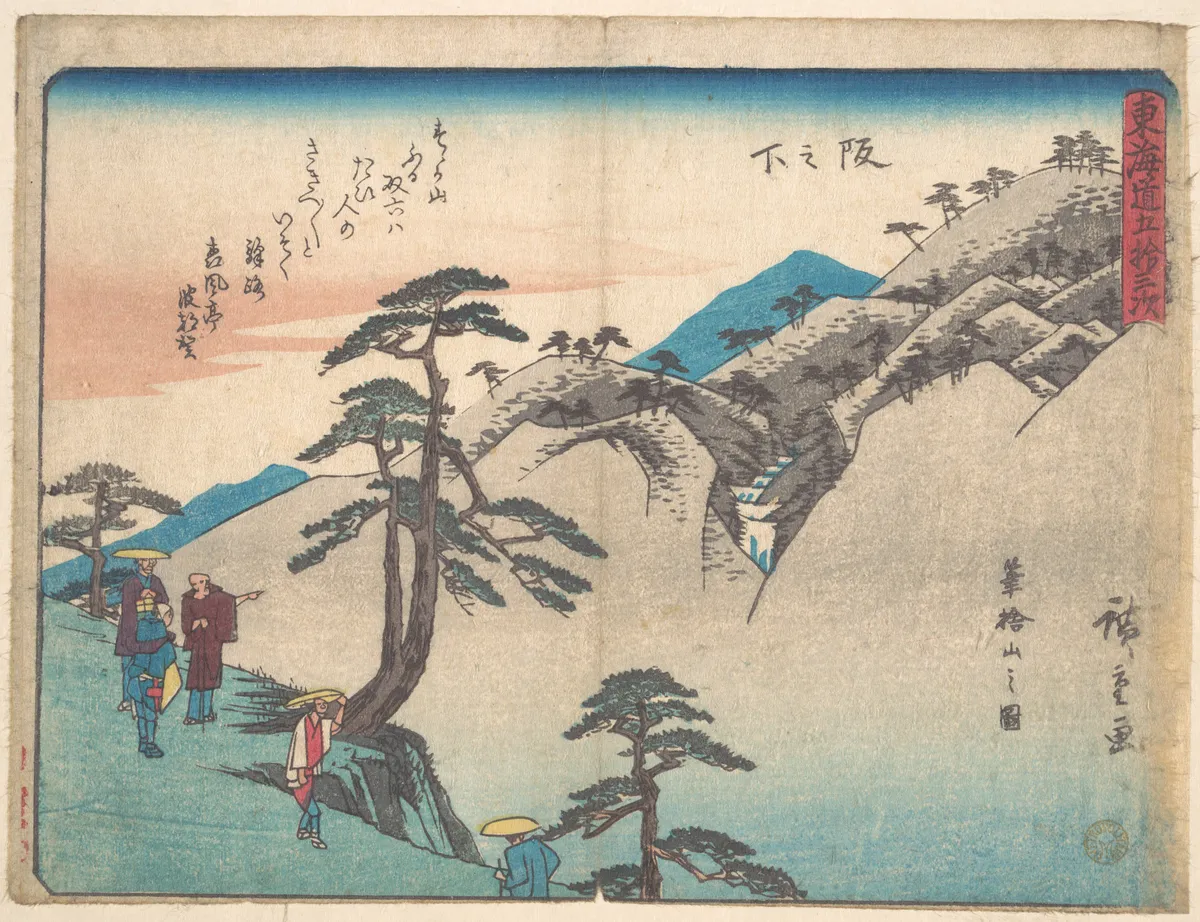
Beneath the Slope
The road winds gently beneath the shadow of the mountain, a path etched through the earth by countless feet. Mist hugs the base of the slope, softening the edges of the world and blurring the line between earth and sky. A procession of travellers, small against the grandeur of nature, move with a quiet purpose. Their straw hats bob like small boats on a sea of grey, their footsteps a soft, rhythmic murmur.
The air is cool, carrying the scent of wet earth and the distant promise of rain. The road, damp underfoot, holds the imprint of hooves and sandals, a tapestry of journeys intertwined. Tree branches hang low with the weight of moisture, whispering secrets to those who pass beneath.
In the distance, the peaks loom silent and immutable, guardians of a landscape both daunting and serene. Hiroshige's world is one of balance, where human endeavour and nature’s vastness coexist in a dance as old as time. The travellers, cloaked in simple garments, are anonymous, their stories untold, yet their presence infuses the scene with life and movement.
As the day wanes, the light shifts, painting the sky in muted hues of twilight. The journey continues, each step a quiet assertion against the vastness that surrounds them. Here, beneath the slope, time meanders like the road itself, a gentle current carrying stories into the night.
Historical Echo
In the delicate hands of Utagawa Hiroshige, landscapes become more than mere images; they are evocations of a time and place, imbued with the essence of Edo-period Japan. "Saka-no-shita" captures a moment in the flow of life along the Tōkaidō, the famed road connecting Edo to Kyoto. Hiroshige's portrayal reflects not only the physical journey but the spiritual and cultural passage, a reminder of the impermanence of life and the enduring beauty of the natural world.