

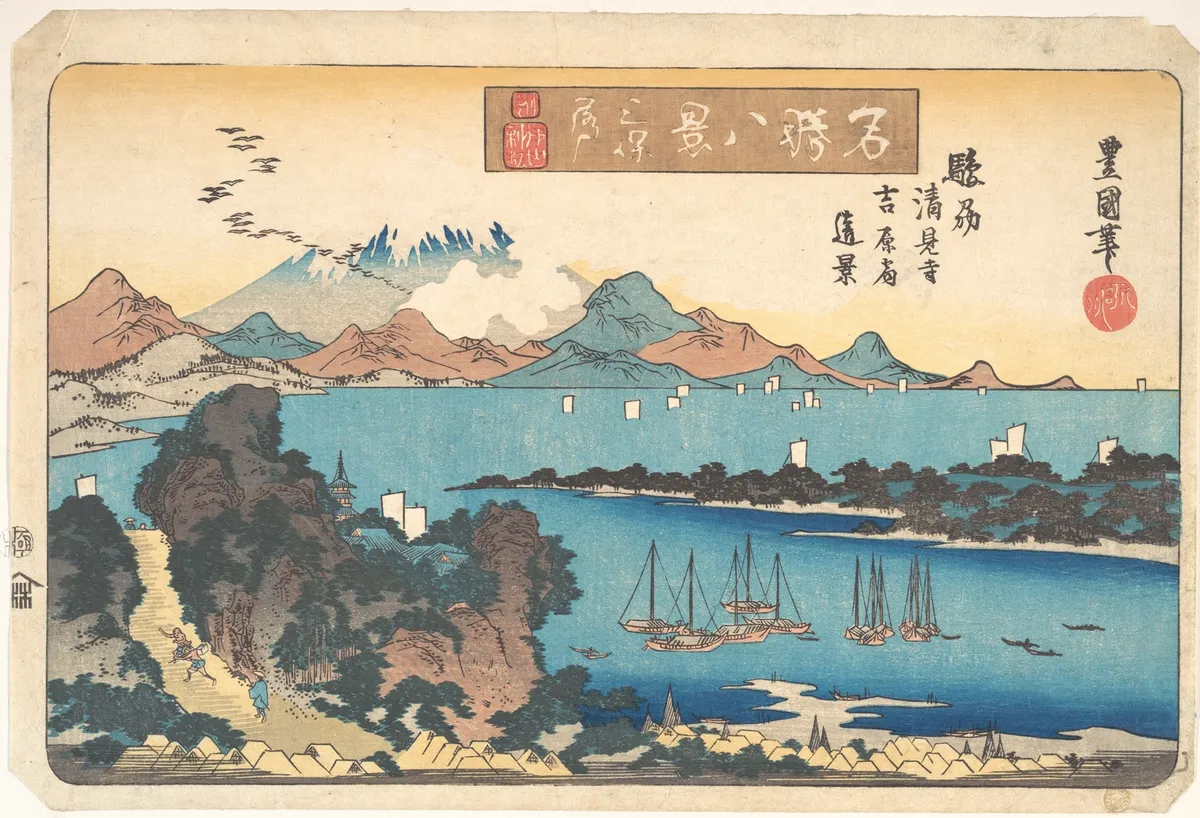
The Journey to Kiyomi-dera
The soft whispers of a breeze carried the scent of pine through the air as pilgrims ascended the winding path towards Kiyomi-dera. The sun, a gentle orb in the early morning sky, cast a golden veil over the landscape, bathing the ancient temple in a serene glow. Below, the Yoshiwara Shuku lay still, a village caught in the delicate balance between night and day, its thatched roofs glistening with dew.
Steps echoed softly against the worn stones of the pathway, each footfall a quiet testament to the seekers' devotion. Lanterns, their flames flickering like small, earnest spirits, lined the route, guiding the way through the verdant embrace of cedar and maple. The air was alive with the sound of rustling leaves, a symphony composed by the gentle hands of nature.
As the procession drew nearer, the temple's silhouette became clearer, its graceful architecture a harmony of wood and stone, speaking of centuries past. The pilgrims paused, their breaths mingling with the morning mist, as they gazed upon the sacred site. In the distance, the mountains stood like silent sentinels, their peaks brushed with the tender hues of dawn.
Among the travelers, an old man, his face lined with the passage of many seasons, knelt on the ground. His hands, worn yet steady, clasped a small offering of rice and plum wine. He whispered a prayer, his voice barely audible over the rustling canopy above, a prayer for peace, for health, for the simple joys of another spring.
The moment lingered, suspended in the gentle embrace of time, before the pilgrims rose and continued their journey. The path stretched on, a ribbon of earth woven through the tapestry of the land, leading them ever forward, ever upward, to the heart of Kiyomi-dera.
Historical Echo
In the quietude of early 19th-century Japan, the pilgrimage to Kiyomi-dera was both a physical and spiritual journey. The temple, nestled in the lush embrace of the mountains, served as a beacon for those seeking solace and enlightenment. Utagawa Toyoshige captures this serene passage in his woodblock print, a moment frozen in time, where nature and devotion converge in harmony. The print reflects the Edo period's deep reverence for nature's beauty and the spiritual pursuits that threaded through everyday life.