

The Quiet Passage
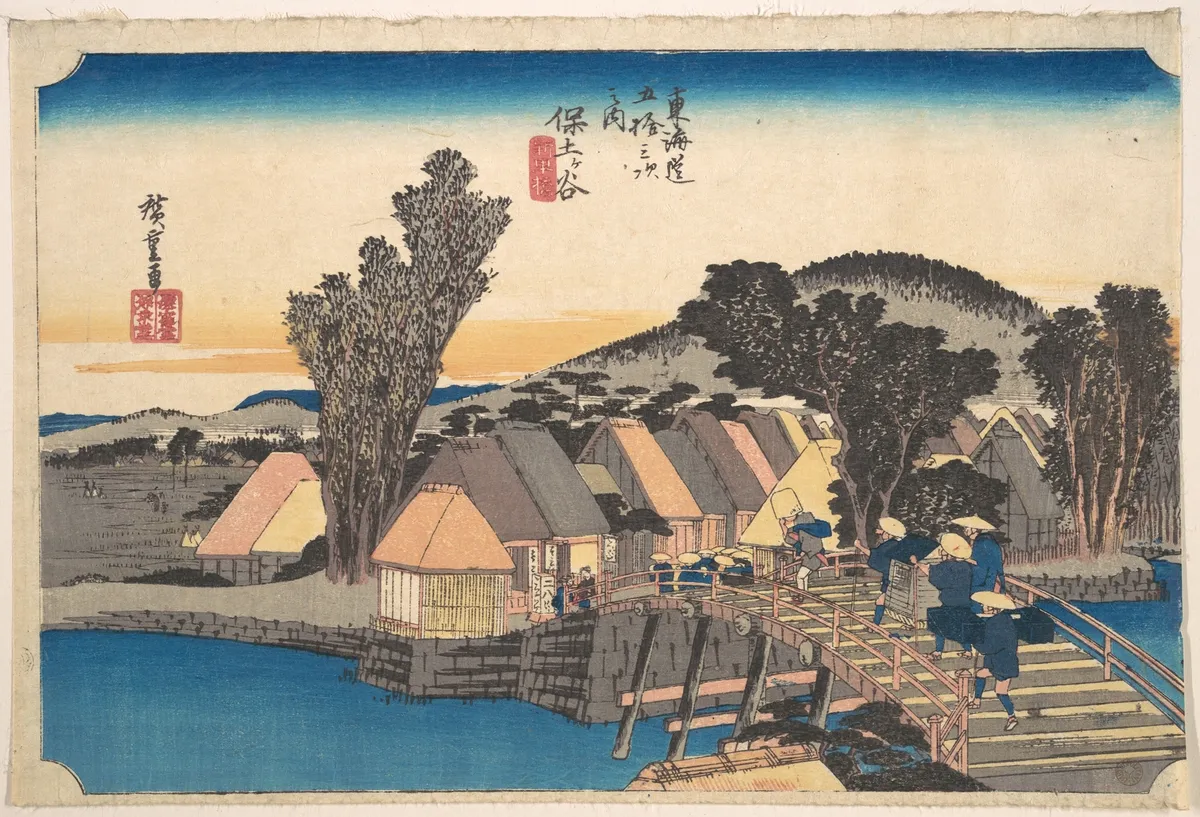
The air is crisp, carrying whispers of the distant sea as the sun dips low, casting long shadows on the path. Hodogaya Station hums quietly with the subdued bustle of travellers, their wooden sandals clacking softly against the earth. A gentle breeze rustles through the leaves, carrying with it the scent of earth and distant rain. The Shinkame Bridge arches gracefully over the river, its wooden planks creaking gently under the weight of those who cross it.
A lone traveller pauses at the crest of the bridge, his form silhouetted against the fading light. He gazes out across the water, where reflections dance and shimmer like fleeting memories. The sound of water lapping softly against the banks is a lullaby in the twilight, mingling with the faint chatter of voices from the station behind him. Somewhere, a lantern is lit, its warm glow flickering to life, casting a gentle illumination that touches the traveller's face with a soft, golden hue.
A moment of stillness envelops the scene, as if the world itself holds its breath, lingering on the brink of night. The traveller adjusts the weight of his pack, the fabric of his kimono rustling softly in the cooling air. He takes a deep breath, the scent of pine and the distant promise of rain filling his senses, and continues on his journey, the quiet footfalls fading into the embrace of evening.
Historical Echo
In the Edo period, Hodogaya was a vital stop along the Tōkaidō, the famed road that connected Edo to Kyoto. Utagawa Hiroshige captured this essence with a masterful touch, illustrating the serene yet transient nature of travel. The Shinkame Bridge, a humble yet significant crossing, stands as a testament to the quiet resilience of those who journeyed its length. Hiroshige's work invites us into this tranquil moment, where the past mingles with the present, and the echoes of footsteps linger long after they have faded from view.