

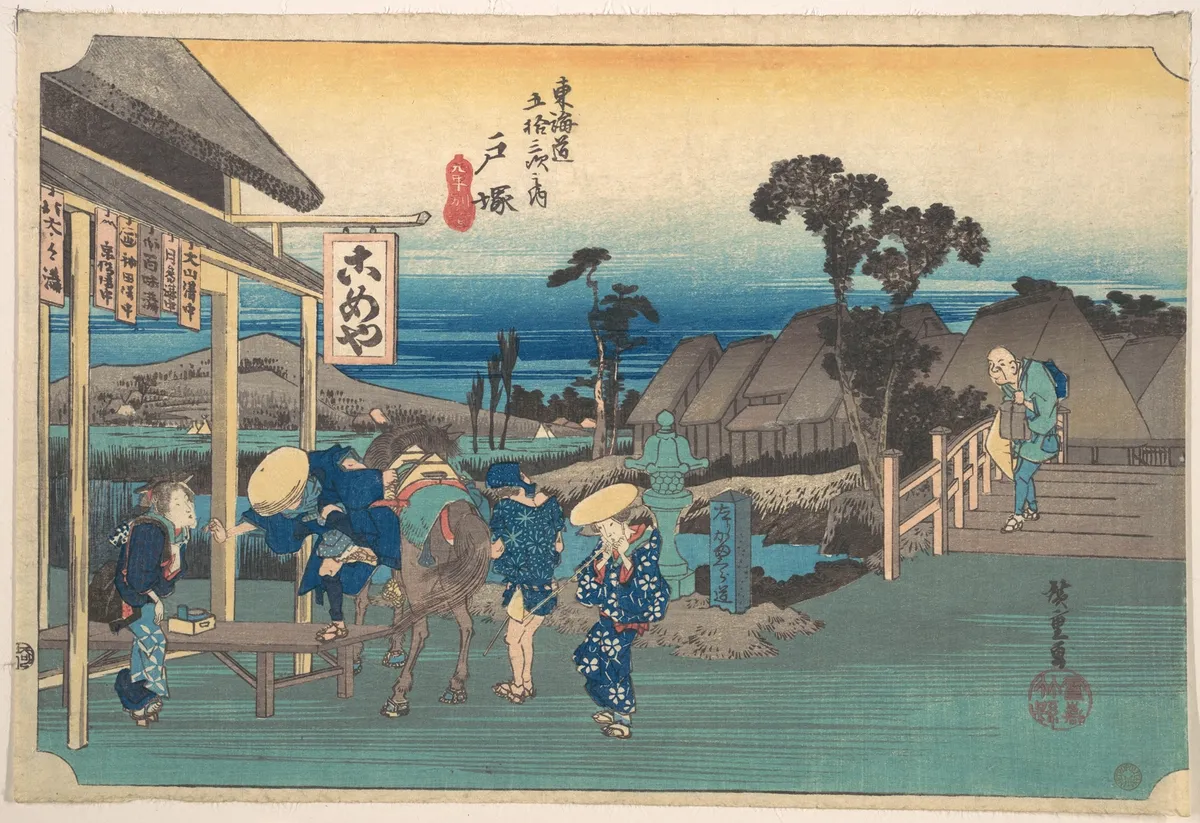
Totsuka; Moto Machi Betsudo
The rain had been falling steadily since dawn, casting a silvery veil over the narrow street of Totsuka, where travellers sought shelter under the eaves of wooden inns. The air was thick with the scent of wet earth and the soft murmur of distant conversations. A lone figure moved carefully along the path, the sound of geta against the damp ground, a rhythmic counterpoint to the rain's gentle percussion.
Lanterns flickered faintly in the mist, their light casting long shadows that seemed to dance with the whispers of the past. Hiroshige captured this moment as if it were suspended in time, a delicate balance of nature’s melancholy and human resilience. The weight of travel hung heavy on the shoulders of those who passed by, each footstep a silent testament to the road behind and the journey ahead.
The town of Totsuka was a place of transition, a momentary pause on the well-trodden Tōkaidō road. Here, the echoes of travellers’ stories mingled with the ever-present rain, creating a tapestry of sound and silence. It was a place where the mundane met the mystical, where every traveller became a part of the landscape's enduring tale.
Historical Echo
In the Edo period, Totsuka was a bustling post station on the Tōkaidō road, a vital artery connecting Edo to Kyoto. Utagawa Hiroshige, renowned for his landscapes, often depicted such scenes with an intimate understanding of the interplay between human life and nature. This print from his "Fifty-three Stations of the Tōkaidō" series captures the ephemeral beauty of a moment caught in the flow of time, where the ordinary becomes extraordinary under the artist's gaze.