

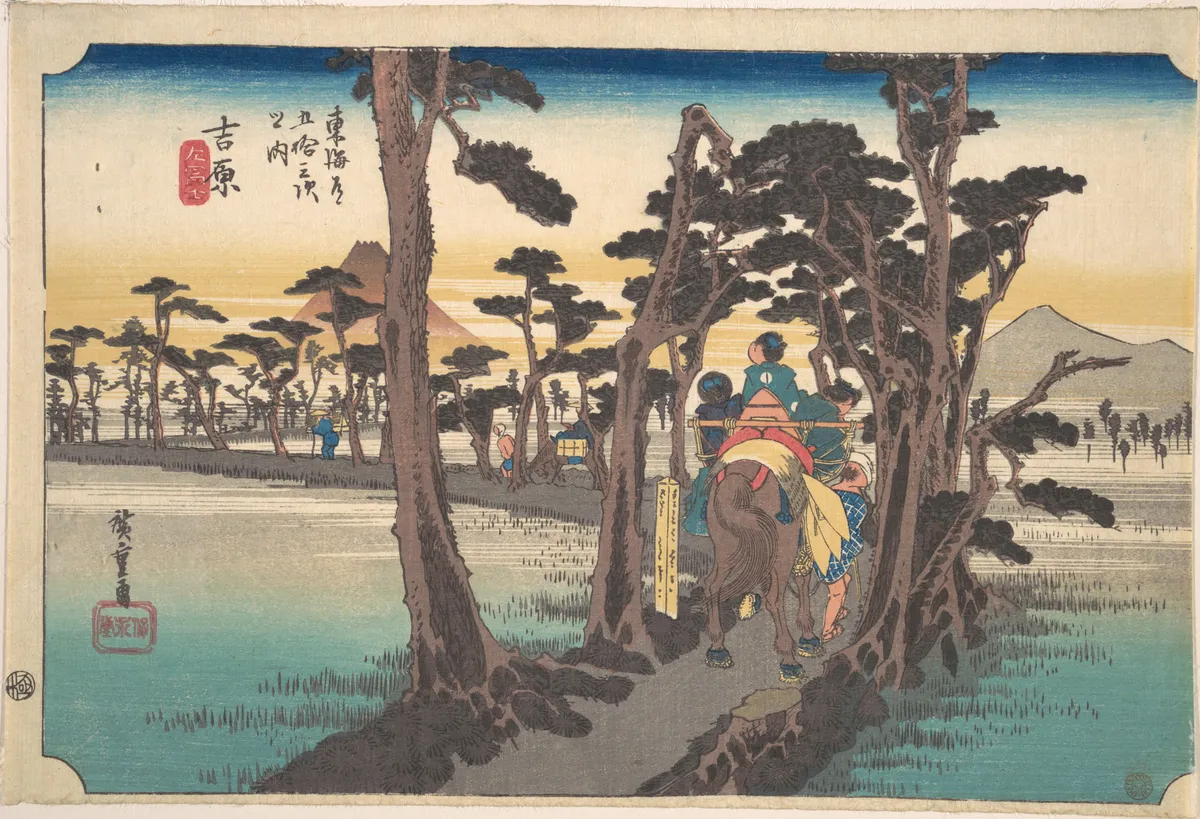
Yoshiwara, Hidari Fuji
The lanterns flicker along the Yoshiwara street. Their glow dances on the wet cobblestones. A faint scent of plum blossoms mingles with the night air. Footsteps echo softly, a gentle rhythm against the murmurs of the evening. In the distance, Mount Fuji looms, serene and eternal, its silhouette tinted by the moon's pale light.
Travellers make their way through the narrow path, their voices hushed, their garments brushing the earth with a whisper. Somewhere, a shamisen plays a mournful tune, its notes blending with the rustle of pine trees. The world feels suspended, caught between the past and the present, between the earthly and the ethereal.
The Yoshiwara district hums with quiet anticipation. It is a place of dreams and desires, of fleeting encounters and hidden stories. Tonight, it is alive with the weight of history and the promise of the unknown. And above all, the mountain watches, a silent guardian of secrets untold.
Historical Echo
Utagawa Hiroshige captured this scene around 1834, during the Edo period. Yoshiwara was a famed pleasure district in Edo, now Tokyo. It was both a cultural hub and a confined world of its own. Hiroshige's work reflects the daily life and landscapes that surrounded him, blending reality with a sense of ethereal beauty. The presence of Mount Fuji, often depicted in his prints, symbolises not only nature's majesty but also the enduring spirit of Japan.