

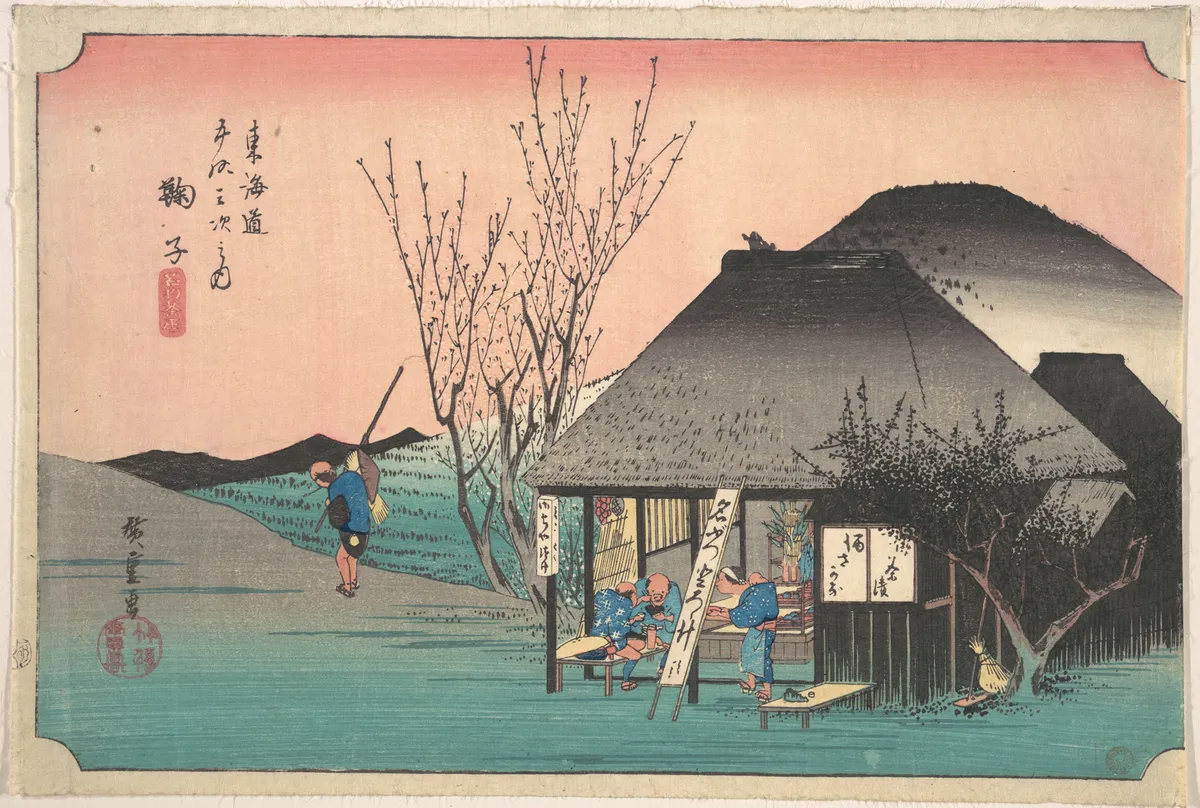
Mariko's Quiet Repose
The air is thick with the scent of brewed tea. A gentle whisper of steam rises from the cups, mingling with the cool morning mist. Two travellers, weary from the road, sit silently under the thatched roof of Meibutsu Chaya. Their cloaks, damp from the journey, hang heavily from their shoulders.
Beyond the wooden posts of the tea house, the world stretches out in muted greys and greens. The distant mountains are shrouded in a soft, persistent haze. Pine trees stand as silent sentinels, their needles dark against the pale sky. The quiet murmur of a stream can be heard, its waters slipping over stones, echoing the gentle rhythms of the land.
The travellers exchange no words. Their eyes, tired yet alert, gaze out at the landscape. The tea warms their hands, offering a moment of pause in the relentless passage of time. The tea house, with its simple comforts, is a place of brief reprieve, a resting point in the vastness of the journey.
In the stillness, the sound of distant footsteps on the road reaches them. Another traveller approaches, the echo of their steps a reminder that the world beyond continues to turn. The tea house holds its breath, a quiet refuge amidst the ceaseless flow of life.
Historical Echo
In the early 19th century, the Tōkaidō road was the lifeline connecting Edo to Kyoto. Mariko, one of its fifty-three stations, was famed for its tea houses. Utagawa Hiroshige captured the essence of these waystations, where weary travellers found solace. His prints offer a glimpse into a world where the journey itself was the destination, and the simple act of pausing for tea was a moment of grace in a transient life.