

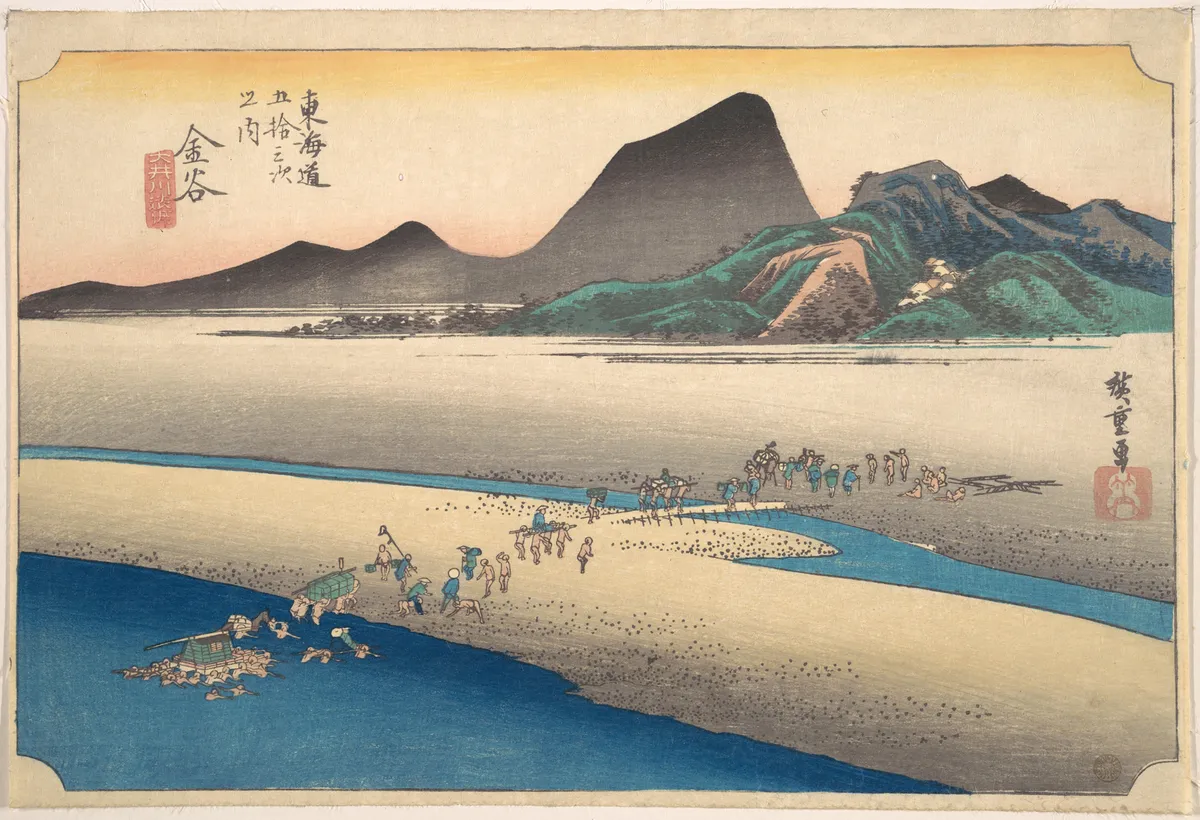
Crossing the Oigawa
The Oigawa River flows under a pale sky. Light filters through thin clouds, casting a diffused glow on the water. Travellers cross a narrow wooden bridge, each step careful, deliberate. The bridge creaks softly beneath their feet. A gentle breeze rustles through their worn clothes. Their journey is long, the road stretching endlessly. In the distance, hills rise, shrouded in mist. The air smells of wet earth and river stones. Silence envelops them, broken only by the soft murmurs of the river. Shadows shift with the sun's slow descent. Each traveller carries their own weight. A mother holds her child close. A merchant steadies his cart. The river whispers secrets of journeys past. Underneath the wooden planks, water laps quietly. The bridge stands firm, a silent witness to countless crossings. The day wanes, and they walk on, into the waiting dusk.
Historical Echo
In the early 19th century, the Tōkaidō road was a vital artery connecting Edo to Kyoto. Kanaya, a small post town, lay along this route. The Oigawa River, often unpredictable, was a formidable barrier for travellers. Crossing it required patience and caution. Hiroshige captured this moment of transit, the timeless rhythm of movement and pause. His work preserved the serene beauty of the landscape and the quiet persistence of those who journeyed.