

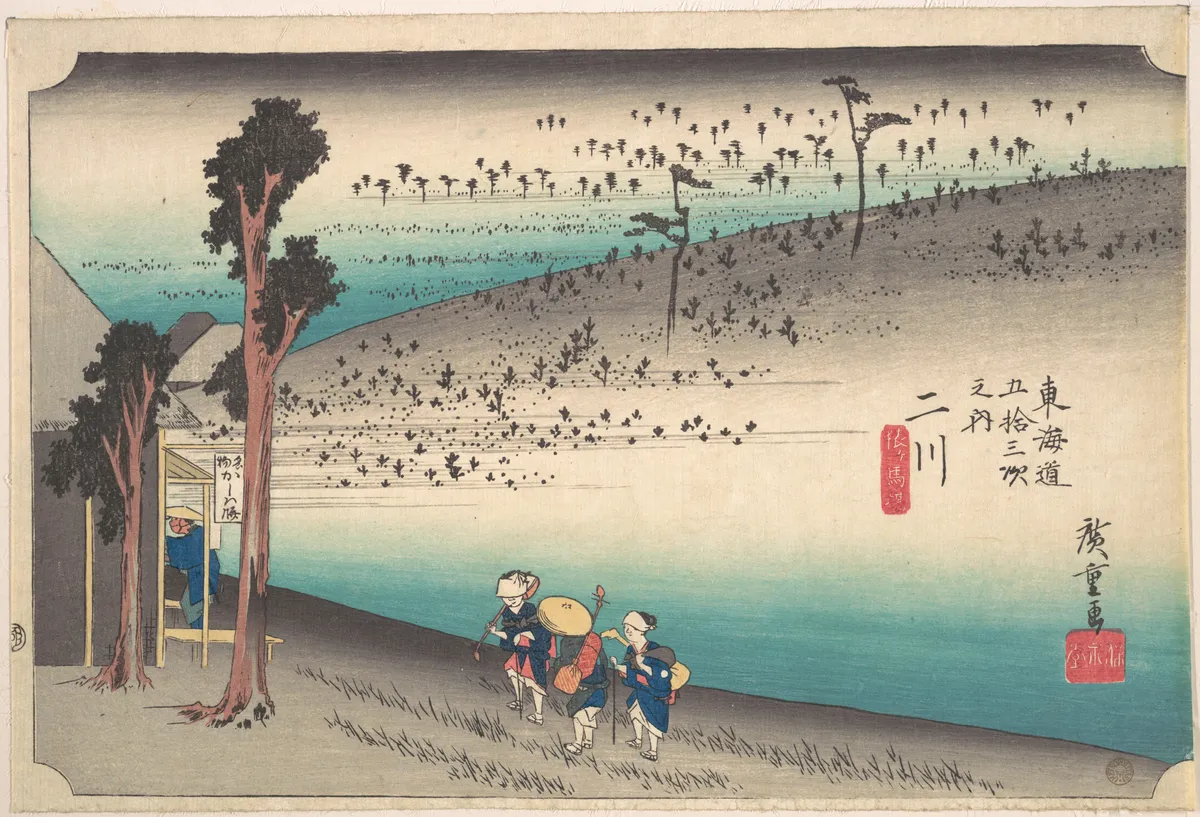
On the Road to Futagawa
The road unfurls under a sky heavy with mist. A traveller leans against the wind, his hat pulled low. The air is thick, pressing against skin and cloth alike. Trees line the path, their branches bare, reaching like silent sentinels. A faint scent of earth and damp leaves lingers.
Footsteps echo on the path, swallowed by the fog. The traveller pauses, adjusting the weight of his pack. He listens to the quiet rustle of unseen creatures. A monkey, perhaps, for which this place is named—Saru ga Baba, the field of monkeys.
The shadows deepen as he moves forward. Lantern light flickers in the distance. Futagawa is near. His journey has left him weary, but the promise of rest keeps him moving. Each step is a gentle reminder of the distance travelled, and the distance yet to go.
Historical Echo
In Hiroshige's time, the Tōkaidō was a vital artery. Travellers bound for Edo trudged its length. Futagawa, one of its stations, offered respite. Hiroshige captured its essence, the weight of travel, the quiet persistence of those who journey. His prints are echoes, whispering the stories of those who walked before us.