

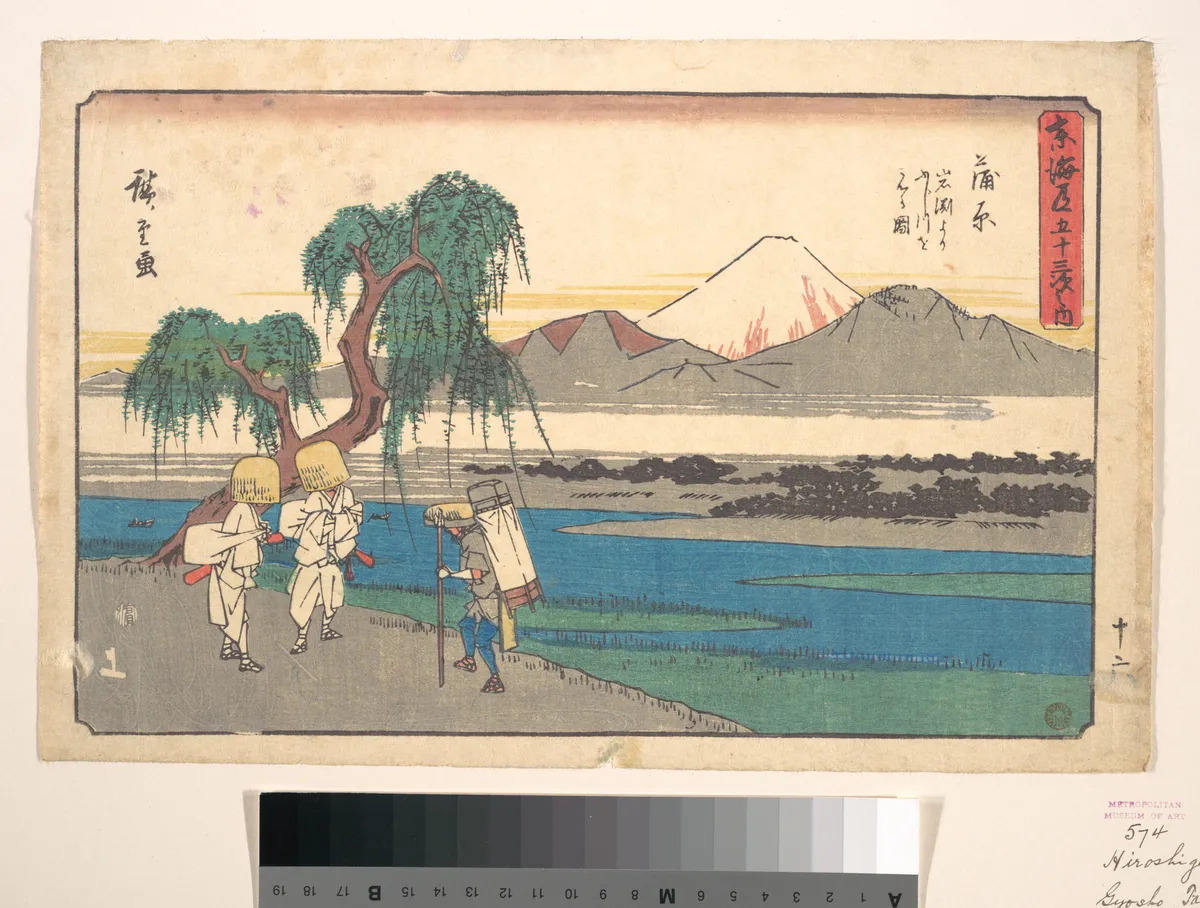
Kambura Station
The rain falls gently, a constant silver thread through the air. The earth smells rich, dark, alive. Kambura Station stands quietly under a grey sky, its wooden structures soaked and glistening. Travellers huddle under the eaves, their voices murmuring against the rain's soft percussion on roofs and ground.
A lone horse stands tethered nearby, its breath visible in the cool morning. The rider, cloaked in a straw raincoat, adjusts his wide-brimmed hat. His eyes scan the horizon, where mountains loom, their peaks shrouded in mist. He waits, patient, as if time here moves with the rain — steady, unhurried.
The air is thick with the scent of wet pine and earth. Footsteps squelch in the mud, slow and deliberate. A cart creaks by, wheels heavy under the weight of goods. The driver nods at a passing fisherman, his pole balanced on his shoulder, a basket at his side.
All is muted, softened by the rain's embrace. The station, a transient place, becomes a world unto itself, where the journey pauses and the road beyond fades into the grey.
Historical Echo
Utagawa Hiroshige captures a moment suspended in time. The Edo period's travel routes, the Tōkaidō, connected distant provinces to the bustling heart of Japan. Kambura Station, one of many along this road, offered shelter and respite. Hiroshige's art, a window to the past, echoes with the quiet lives and journeys of those who paused there, under the unending rain.