

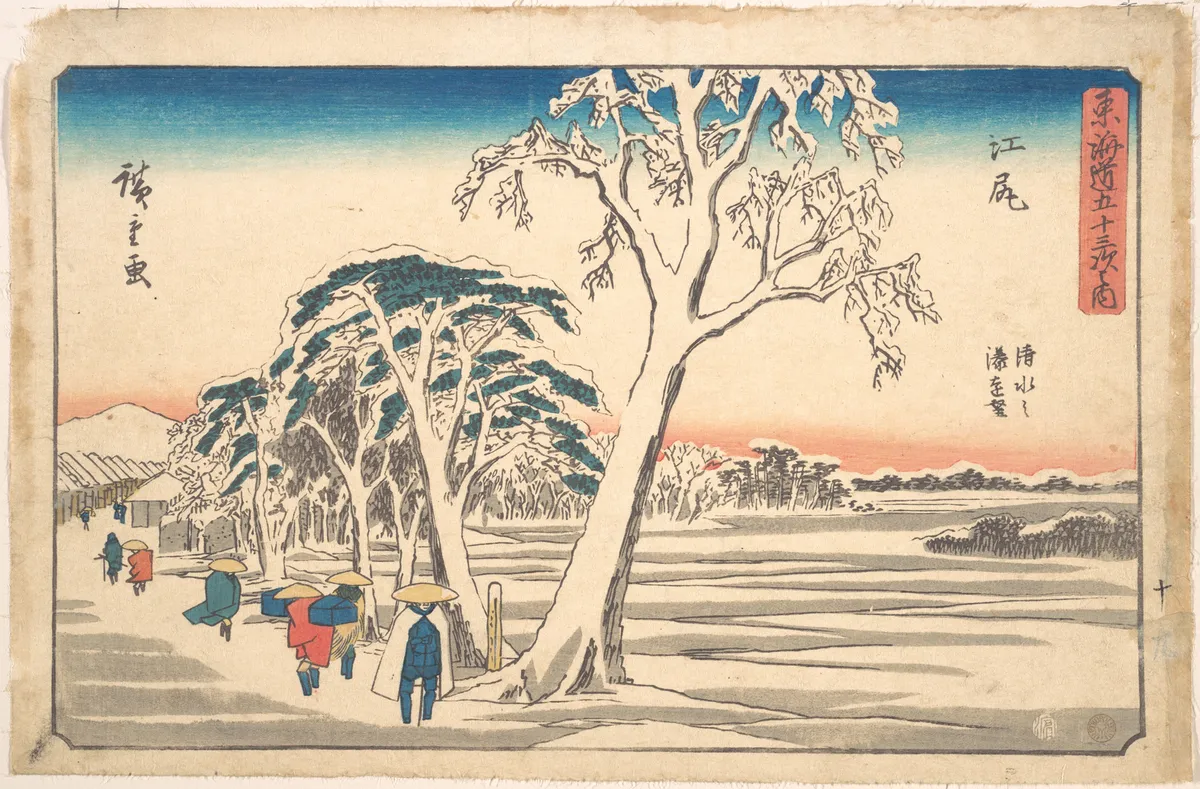
Under the Whistling Pines
The wind sweeps across the plains of Ejiri. Pine trees bend and sway under its invisible force. Needles rustle, a chorus of whispers in the chill air. Clouds gather above, grey and heavy, threatening the earth below. Villagers hurry along the road, clutching their hats and baskets, shadows merging with the dimming light.
A lone traveller pauses, his silhouette caught against the restless sky. His cloak flaps wildly, a banner in the storm. The road stretches on, a ribbon of earth leading to distant mountains cloaked in mist. He breathes in the scent of coming rain, sharp and clean. Dust rises, swirling in tiny eddies, caught in the dance of the wind.
The houses of Ejiri huddle together, roofs sloping low, as if bowing to the force of nature. Lanterns flicker in windows, small beacons of warmth. The traveller moves on, footsteps silent on the dirt path, the world both vast and intimate under the lowering sky.
Historical Echo
In 1842, the world of Edo was on the brink of change. Hiroshige's "Ejiri" captures a moment of stillness within motion, the landscape alive with the breath of the wind. It is a snapshot of a journey, where the natural world holds sway over human fortune. This print, part of Hiroshige's famed "Fifty-three Stations of the Tōkaidō," serves as a haunting reminder of the ephemeral beauty of the Japanese landscape, where every gust of wind carries whispers of the past.