

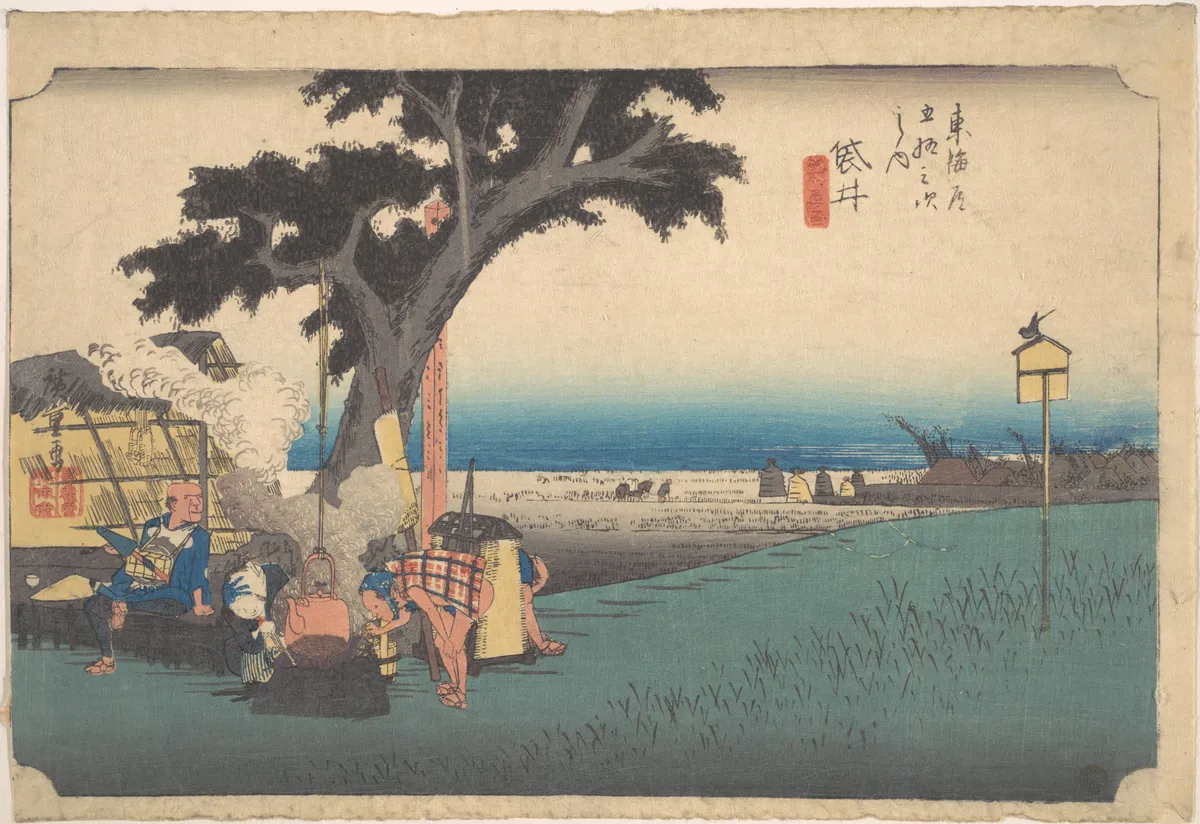
Evening at Fukuroi
The sun sinks low, casting long shadows across the road. A gentle hush falls over the landscape. At the tea house, travellers pause. They rest their weary feet, the dust of the Tokaido Road clinging to their sandals. The air is thick with the scent of brewing tea. Wooden beams creak softly as the evening breeze whispers through them. A woman, her kimono rustling like leaves, serves steaming cups with care. Her movements are deliberate, her face calm.
Outside, a lone pine stands silhouetted against the fading light. Its branches sway gently, a silent sentinel. In the distance, the faint clatter of hooves fades into the evening. The road stretches on, an endless path under the gathering twilight. Silence envelops the tea house, broken only by the occasional murmur of travellers sharing quiet stories. The world slows here, at Fukuroi, caught between the demands of the journey and the peace of a moment's rest.
Historical Echo
In the early 19th century, the Tokaido Road was the most important route in Japan, linking Edo and Kyoto. Fukuroi was one of the fifty-three post stations where weary travellers could find respite. Hiroshige captures this fleeting moment of tranquility, the essence of travel in Edo Japan. His delicate portrayal of light and shadow brings to life the quiet dignity of those who journeyed along this historic road.