

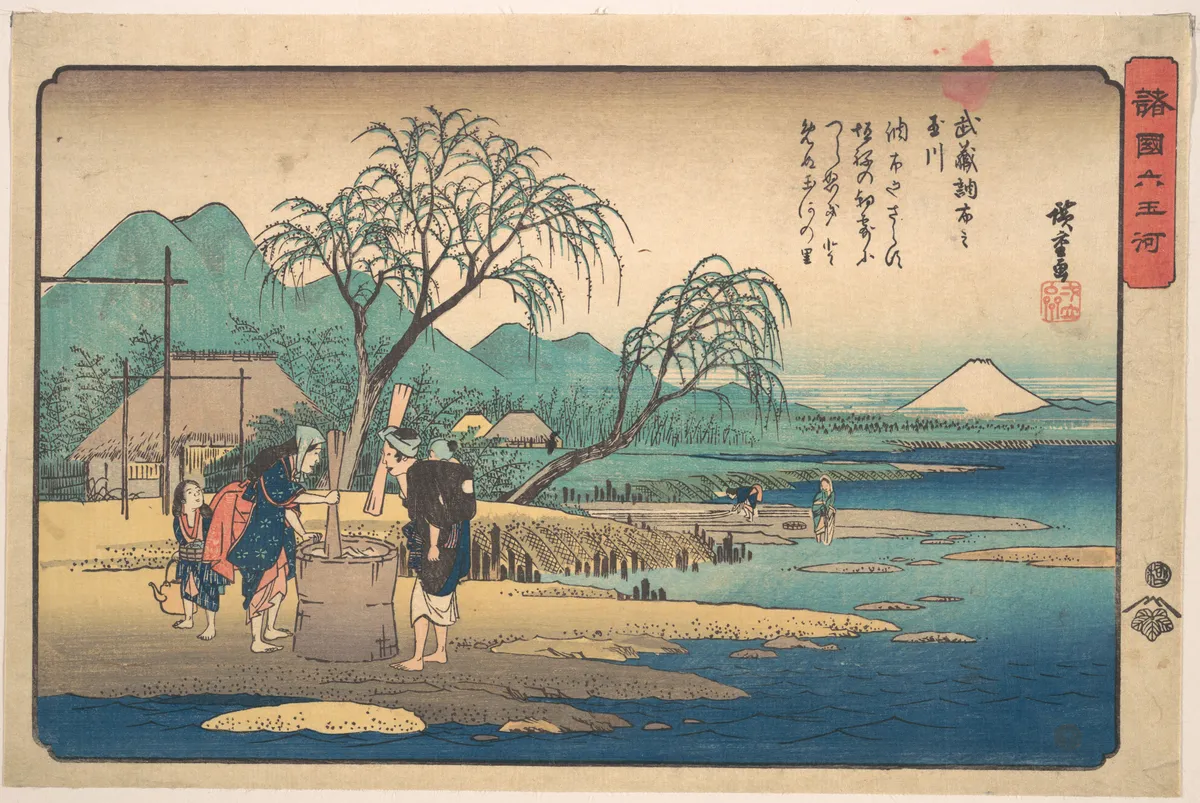
The Quiet Flow of Chōfu
The wind whispers through the tall reeds by the riverbank. Its sound mingles with the gentle rush of water over smooth stones. A solitary figure in a straw hat stands by the river’s edge, casting a net with a deft flick of his wrist. His movements are a dance in slow motion, precise and unhurried. The air is thick with the scent of fresh water and earth.
The landscape stretches wide and open, a vast expanse of serenity under a pale sky. In the distance, mist clings to the outlines of low hills, blurring their edges. The world seems to hold its breath, suspended in a moment of quiet grace. A heron lifts from the water, its wings slicing through the air with deliberate elegance.
Nearby, a cluster of small houses nestles close to the water, their thatched roofs dark against the light sky. Smoke rises in thin lines from their chimneys, curling upwards before disappearing. The village is a world unto itself, cocooned in the embrace of nature’s rhythms.
Here, time flows like the river itself — steady, untroubled, eternal. The man by the water pauses, feeling the weight of the net in his hands, the cool splash of droplets on his skin. For a moment, he is part of the water, the earth, the sky. A silent witness to the endless dance of nature.
Historical Echo
In 1833, Utagawa Hiroshige captured the essence of Musashi Province with his depiction of Chōfu no Tamagawa. This woodblock print, part of his celebrated series, reflects Hiroshige's keen observation of Japan's landscapes. His work invites the viewer to step into a world where nature and humanity coexist in quiet harmony. Through subtle lines and muted colours, Hiroshige evokes a sense of peace and continuity, a timeless echo of Japan's natural beauty.