

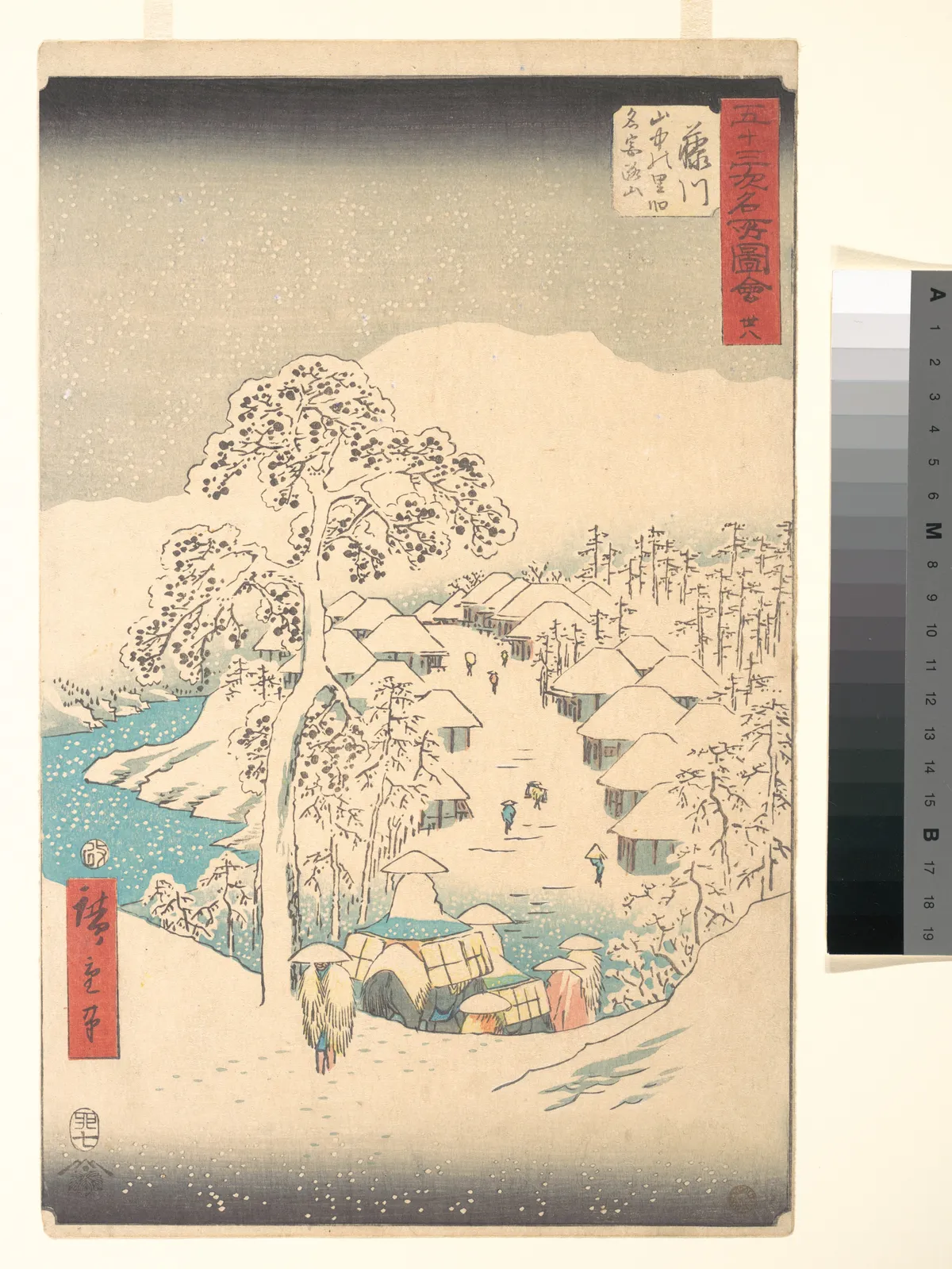
Fujikawa at Dawn
The mist clings to the base of the mountains, a ghostly veil. Silence hangs over the village of Yamanaka. The air is cool, heavy with the scent of pine. Through the stillness, a lone figure steps along the path. Their sandals brush against damp earth, leaving faint imprints. A lantern sways in their hand, casting a soft glow on the cobbled stones.
Morning light touches the rooftops, revealing the timeless dance between shadow and form. The mountains stand watchful, eternal guardians of this secluded place. Branches sway gently in the breeze, whispering secrets of the past. Beneath the canopy, the village breathes slowly, as if reluctant to wake.
A distant bird calls, breaking the hush. The figure pauses, eyes lifting to the horizon where Fujikawa's waters shimmer faintly. It is a place of quiet beauty, a hidden world captured in Hiroshige's careful strokes. Each line, each colour, a meditation on nature's grace.
The traveler continues, steps echoing softly. They vanish into the landscape, swallowed by the morning's embrace. The village sleeps on, cradled in the heart of the mountains.
Historical Echo
In 1855, Utagawa Hiroshige immortalised the serene beauty of Fujikawa and its surrounding villages. His work captures the tranquil spirit of the Edo period, where nature and human life flow in gentle harmony. This woodblock print, like many of Hiroshige's landscapes, speaks of a time when the world moved at a slower pace. It invites the viewer to step into a moment suspended in time, to breathe the air of a long-gone era.