

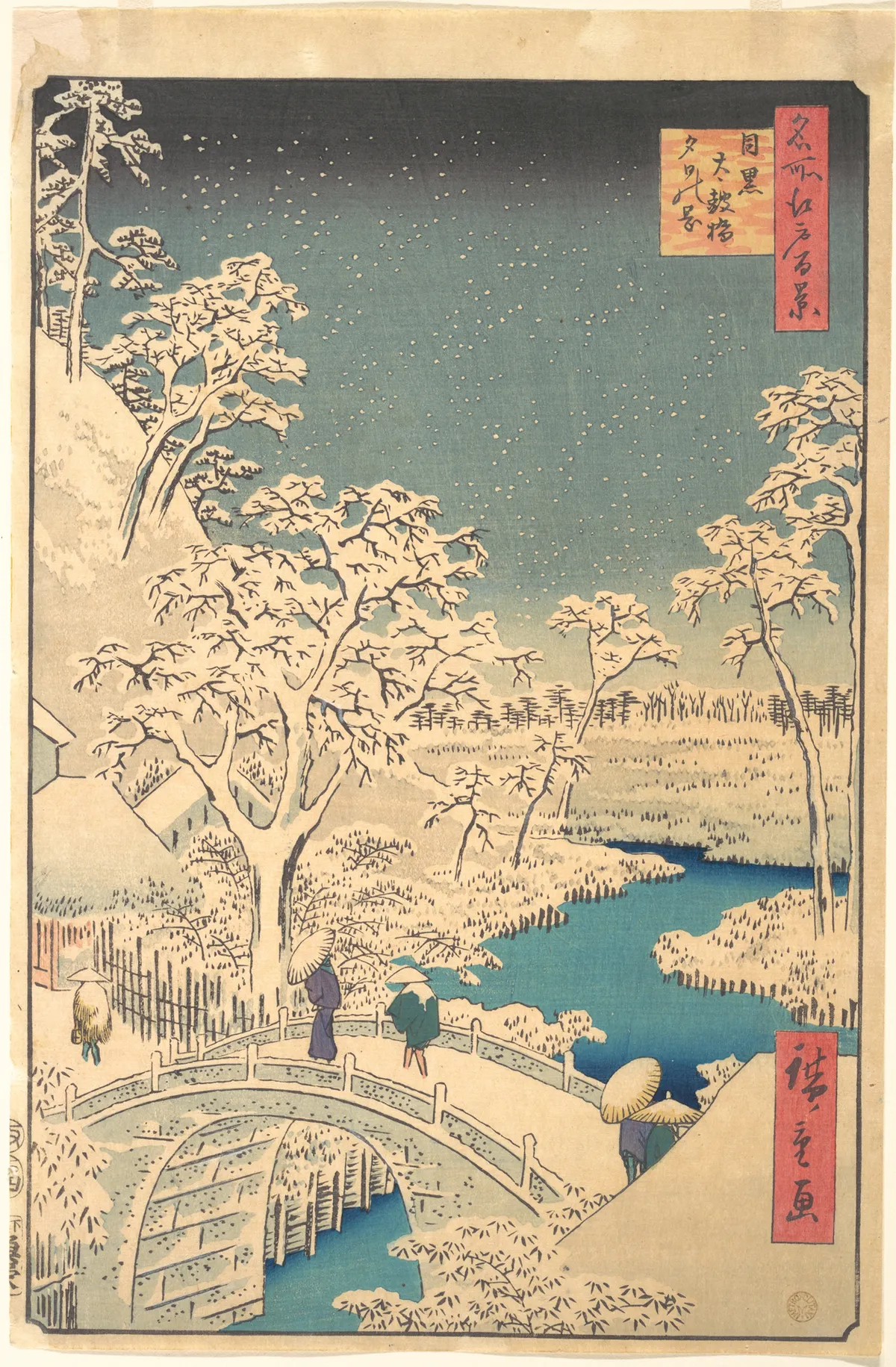
Taiko Bridge, Meguro, on a Snowy Evening
Snow falls silently upon Meguro. The Taiko Bridge arches gently over the quiet river. Footsteps crunch softly on the snow-laden path. A lone traveller pauses, breath visible in the crisp air. Lanterns cast a warm, flickering glow. Shadows dance lightly on the white blanket covering the earth.
The traveller's cloak is heavy, burdened with snowflakes. He adjusts his grip on a bamboo umbrella. The air is still, and his breath echoes in the silence. A distant crow caws, breaking the quiet momentarily. The traveller resumes his journey, footsteps deliberate and slow.
The river beneath the bridge flows unseen, its murmur hushed by the snow. Trees on either side stand like sentinels, branches drooping under the weight of winter. Meguro is enveloped in a serene, melancholic beauty. The world is reduced to shades of white and grey.
As night deepens, the traveller becomes a silhouette against the snowy landscape. His figure blends with the shadows, as if the night itself swallows him whole. The bridge stands alone once again, a silent witness to the passing of time.
Historical Echo
In 1857, Edo was a city of contrasts. It bustled with life, yet corners like Meguro offered solitude. Hiroshige captured this duality in his landscapes. The Taiko Bridge, depicted here, was a common crossing. Yet, under snow, it transforms into a place of quiet reflection.
Hiroshige's prints were known for their atmospheric qualities. He painted the familiar, yet suffused it with emotion. This snowy evening invites introspection. The bridge, the traveller, the falling snow—all are transient, like life itself in Edo's ever-changing world.