

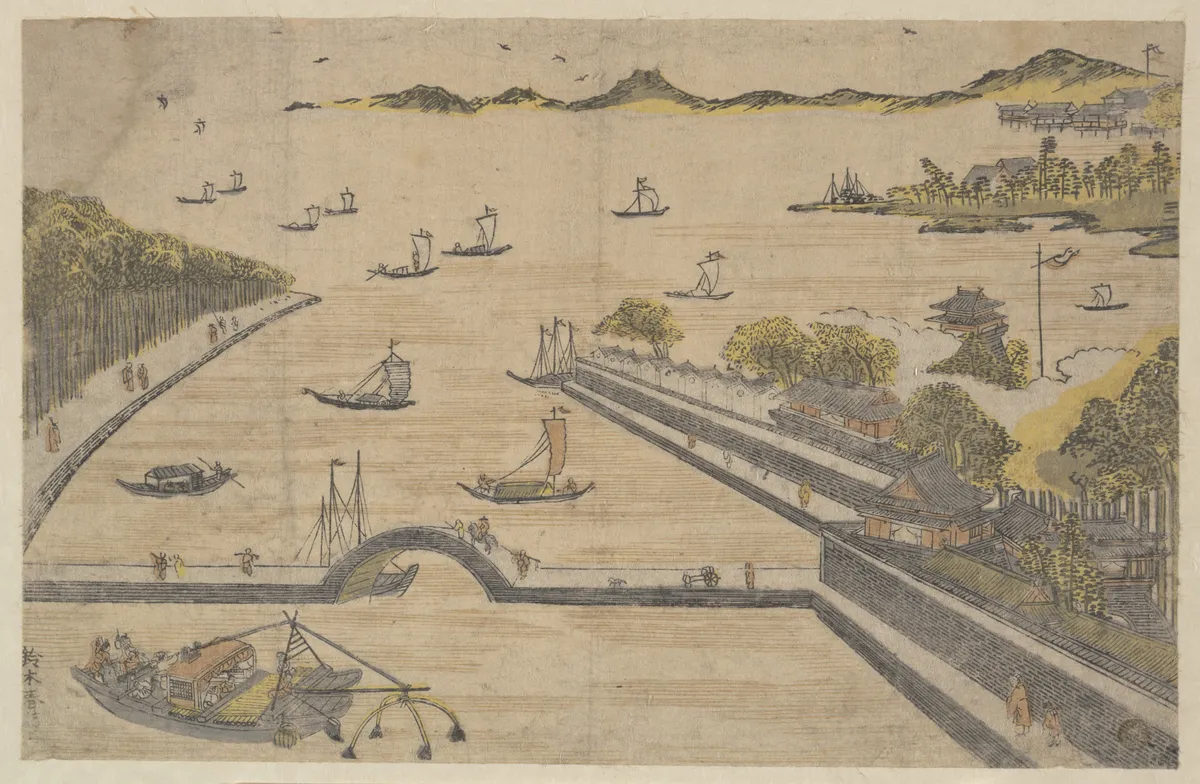
View of Fukagawa, Edo
A hush falls over Fukagawa. The river sighs under the weight of early morning mist. Boats drift, barely cutting the water's surface. Their hulls creak softly, a gentle symphony against the silence. The city lies still, as if holding its breath. Wooden houses line the distant shore, their windows dark, their forms muted in the grey dawn.
A lone figure walks along the riverbank. Their feet press into the damp earth, leaving transient marks that the river will soon reclaim. The air is cool, heavy with the scent of water and the promise of rain. A paper lantern sways in the figure's hand, its light a warm glow against the encroaching fog.
In the distance, the silhouette of Edo emerges. The city is a slumbering giant, its presence both comforting and ominous. The figure pauses, listening to the rhythmic lap of water against boat hulls. The river speaks in a language of its own, ancient and eternal.
The scene is timeless. As the first light of day begins to pierce the mist, the city stirs. The river, ever watchful, carries on its eternal journey, bearing witness to the quiet moments that shape the soul of Edo.
Historical Echo
Fukagawa, a district of Edo, was known for its waterways and vibrant merchant life. Suzuki Harunobu captured this tranquil scene around 1764, a time when Edo was expanding, its pulse dictated by both water and commerce. Through his delicate lines and muted palette, Harunobu invites us into a world where the river is a silent observer, a constant amidst the city's relentless change.