

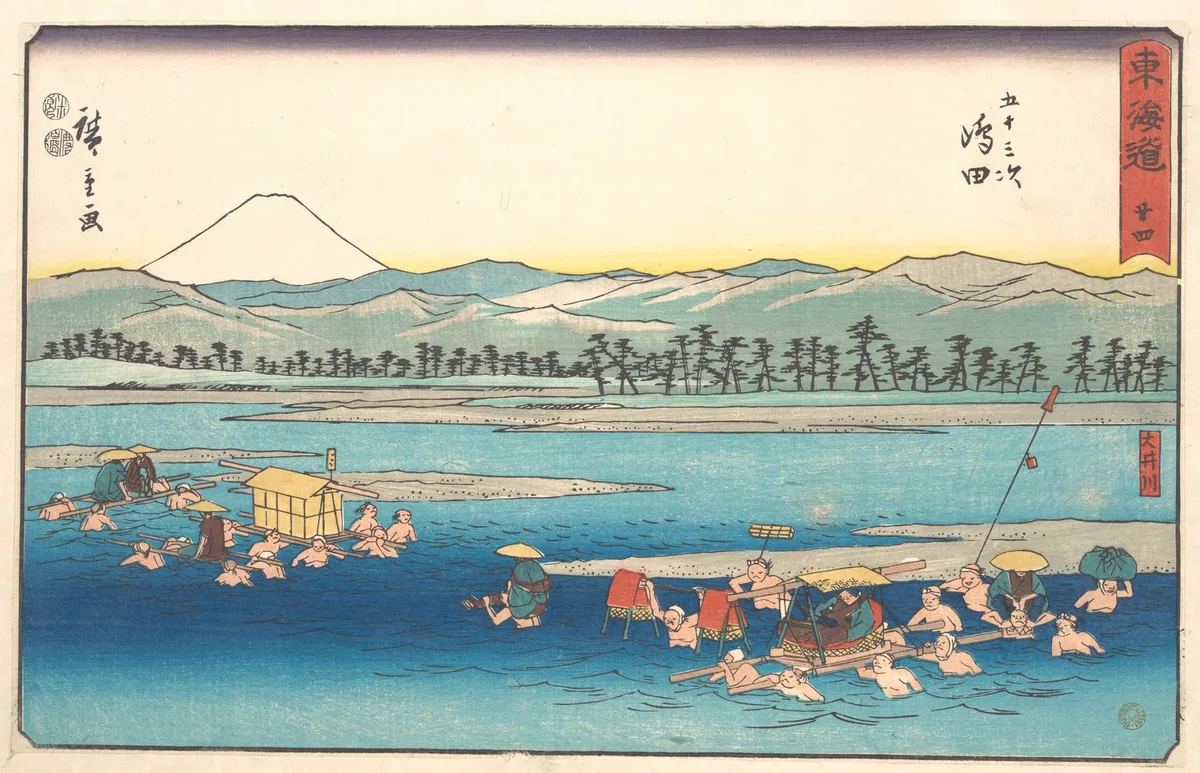
Shimada
A heavy mist clings to the riverbanks. The air is thick, damp. A bridge arches over the flowing water, its wooden planks creaking softly underfoot. Travellers cross, their sandals faintly tapping against the wood. Below, the river whispers past, carrying with it secrets of distant mountains.
On the bridge, a lone figure pauses. The traveller adjusts the weight of the pack on his back, eyes scanning the horizon. The distant hills are veiled in grey, their outlines softened by the fog. In the silence, the faint call of a far-off bird echoes.
The traveller breathes deeply, the air cool against his skin. Around him, the world feels suspended, as if time itself has slowed. Each step forward is deliberate, echoing in the stillness. Behind, the sounds of the village fade, swallowed by the mist.
Shimada's bridge stands firm, a silent witness to countless crossings. The traveller moves on, leaving only the soft imprint of his passage. The river flows on, unchanged, eternally whispering.
Historical Echo
Shimada, depicted by Utagawa Hiroshige around 1840, captures a moment on the Tōkaidō road. This vital route connected Edo and Kyoto, bustling with travellers and goods. Hiroshige's work freezes this transient world, where nature and humanity briefly intersect.