

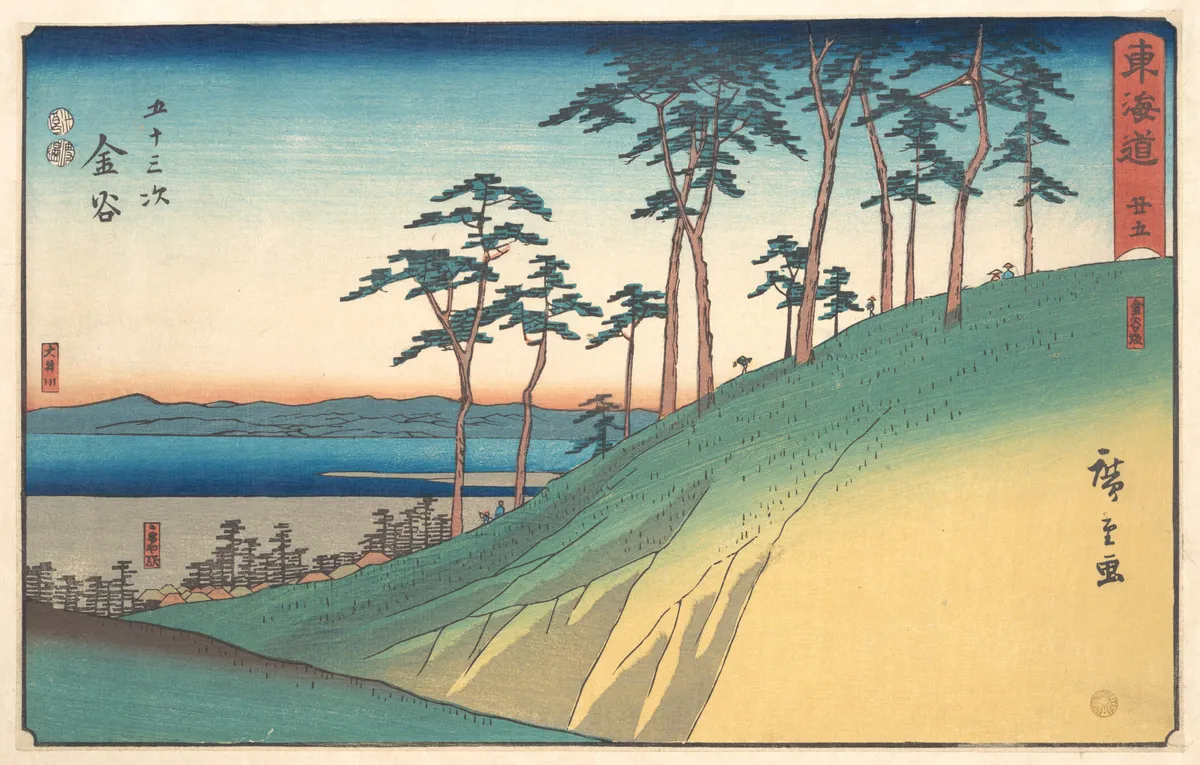
Crossing Kanaya
A gentle mist hangs over the Oi River. The world is softened, hushed. Travellers tread carefully across the makeshift bridge. Their feet are heavy, leaving faint imprints on the damp wood. The river murmurs beneath them, a constant, quiet companion.
A vendor's cart creaks, its wheels catching the soft earth. Nearby, a lone fisherman stands motionless, his gaze fixed on the water's surface. His line dips in and out, a rhythmic dance with the unseen.
The air is cool, carrying the scent of wet pine and distant rain. In the far distance, the muted silhouette of Mount Fuji looms, a silent guardian watching over the travellers' journey.
The day moves slowly. Shadows stretch, elongating under the dimming light. A woman adjusts her umbrella, shielding herself from the drizzle. Her kimono rustles softly, fabric whispering against fabric.
Voices are low, intimate, blending with the symphony of nature. Each traveller is a part of this tapestry, their stories echoing in the gentle rustle of leaves, the soft patter of rain.
Historical Echo
Kanaya was a pivotal crossing on the Tōkaidō, a road linking Edo and Kyoto. During Hiroshige's time, travellers relied on ferryboats and temporary bridges to traverse the Oi River. The print captures the transient beauty and quiet resilience of these journeys. It reflects the essence of Edo period travel, where each step was measured against nature's whims.