

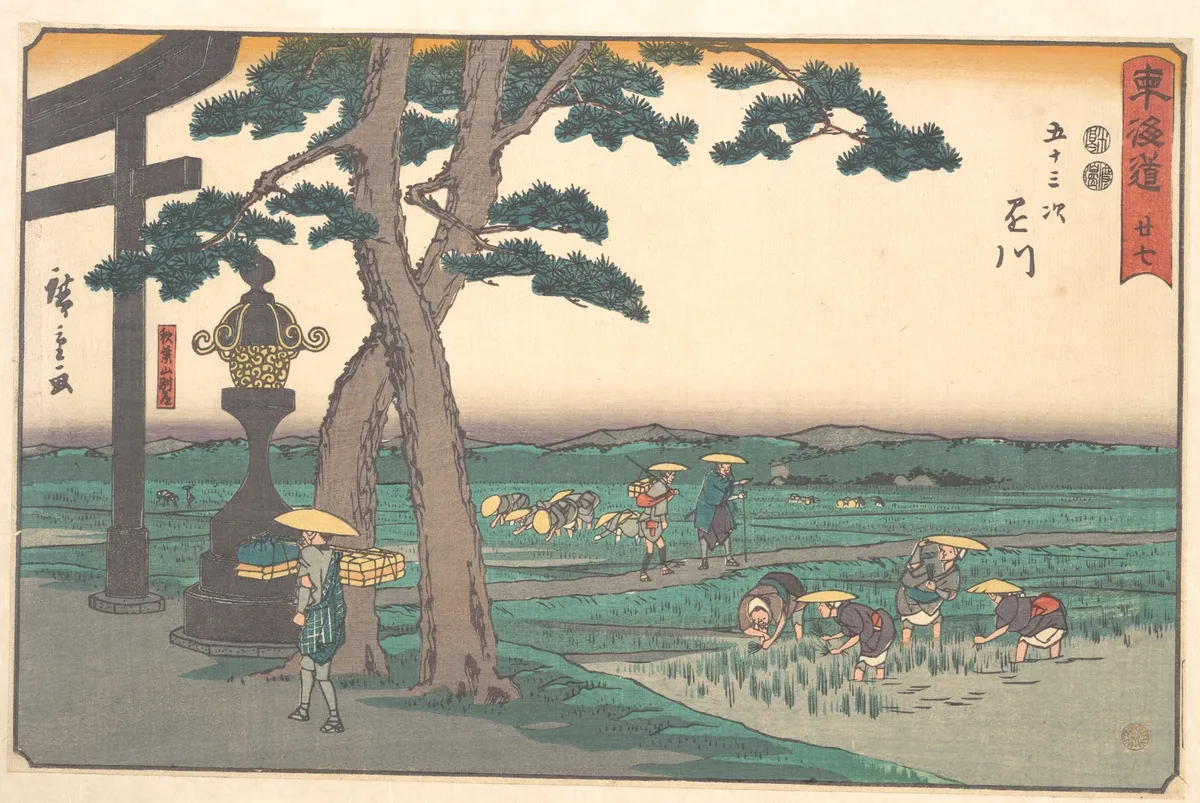
Kakegawa
Mist hangs low over Kakegawa. A wooden bridge stretches across the scene, damp from the morning dew. Travellers move quietly, their footsteps muted on the bridge's worn planks. The air is heavy, filled with the distant murmur of a hidden river.
A lone figure pauses, adjusting the straw hat that shields him from the pale sun. He glances at the horizon, where hills roll gently like whispers of a forgotten dream. The scent of wet earth rises, mingling with the faint aroma of pine.
Birds call softly from the trees, their voices echoing through the mist. The travellers' robes rustle against the cool breeze, colours muted in the morning light. Silence lingers, broken only by the occasional creak of the bridge.
The moment stretches, timeless and serene, as the figures continue their journey across the bridge. The landscape holds its breath, waiting for the sun to break through, casting light on the road ahead.
Historical Echo
Kakegawa, captured by Utagawa Hiroshige around 1840, lies within the Tōkaidō, a vital route of the Edo period. Hiroshige's depiction of this serene landscape reflects the journey's quiet moments. The bridge, central to the scene, is a symbol of connection and passage, embodying the travels of countless souls along this historic road.
Hiroshige's work, part of the famed "Fifty-three Stations of the Tōkaidō," invites the viewer into a world where nature and humanity coexist in delicate balance. His prints offer a glimpse into the transitory beauty of life, captured in the fleeting mist over Kakegawa.