

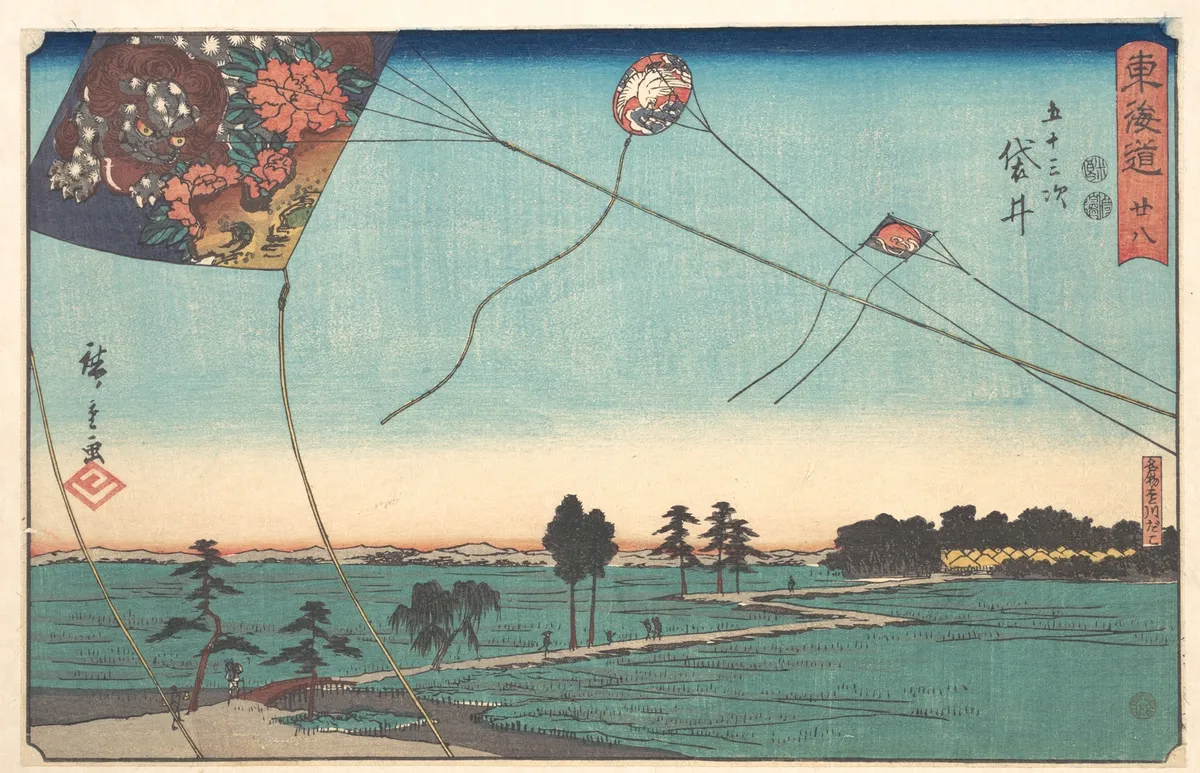
Beneath the Quiet Sky
The road stretches under a muted sky. Wisps of clouds hang low, like smoke from a distant fire. A group of travellers tread softly on the damp earth. Their footsteps blend with the rustle of pine needles. The air is thick with the scent of rain-soaked soil.
Hiroshige’s vision captures a fleeting moment along the Tōkaidō. The travellers move with purpose, their robes heavy and dark. Shadows play across their faces, lending them a quiet dignity. A lone figure pauses, glancing towards the horizon. His gaze is lost in the endless line where earth meets sky.
The trees stand sentinel, their branches whispering secrets only the wind understands. In the distance, the mountains loom, silent giants cloaked in mist. The scene speaks of a journey, of places left behind and destinations yet to come.
The quietude of Fukoroi envelops all. It is a world suspended in time, caught between the past and an uncertain future.
Historical Echo
In the early 19th century, the Tōkaidō road was a vital artery for travellers in Edo Japan. Utagawa Hiroshige’s prints captured these journeys with an unparalleled intimacy. His work reveals the soul of a landscape, where each traveller is a part of the greater story of movement and change. The Fukoroi print is a testament to this era of transition, where the journey itself was as significant as the destination.