

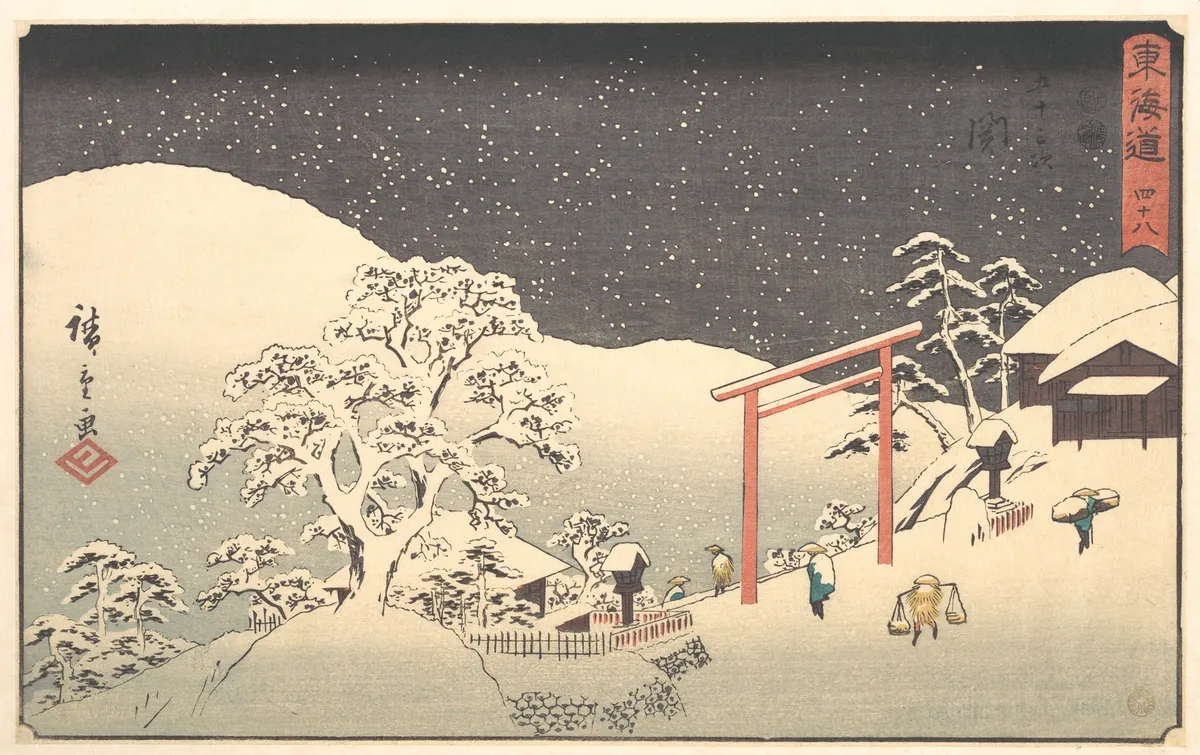
Passage Through Seki
Mist clung to the air, wrapping the quiet village of Seki in a gentle embrace. The distant sound of hooves echoed, muffled by the damp earth. A lone traveller, cloaked in shadow, approached the checkpoint. The pine trees stood watch, their needles whispering secrets to the wind.
Lanterns flickered, casting a warm glow on the worn path. The traveller paused, feeling the weight of his journey in the silence that surrounded him. His kimono, damp from the evening mist, clung to his frame. The scent of pine mixed with the earthy aroma of wet soil, filling the air with a sense of ancient continuity.
Footsteps approached, slow and deliberate. A guard emerged from the shadows, his presence as steady as the mountains. He nodded, recognising the traveller's resolve. No words were exchanged, just a mutual understanding, a silent agreement that transcended time.
The traveller continued, the path stretching before him like a promise. The air was thick with anticipation, the landscape a silent witness to the passage of time and souls. Seki held its breath, a moment suspended between night and dawn.