

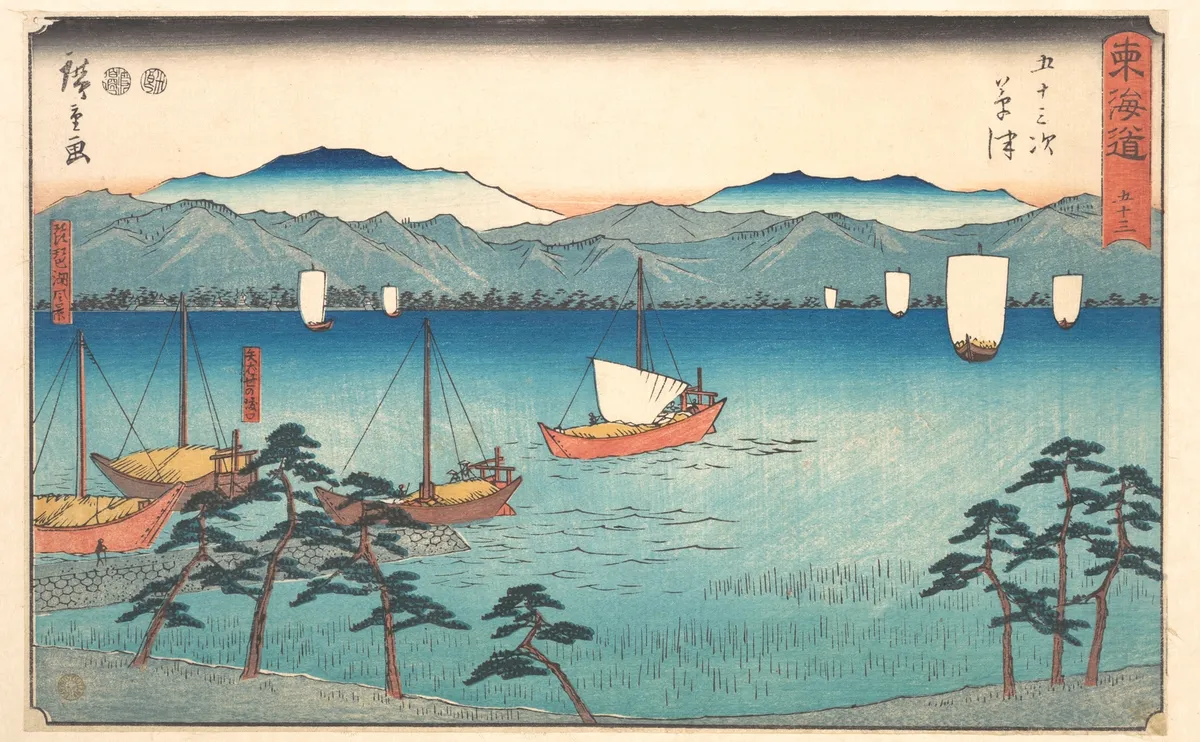
Kusatsu
Mist clung to the early morning air. The road wound through Kusatsu, a village at rest. Travellers moved with purpose, their wooden sandals tapping softly against the earth. Horses snorted, their breath visible in the chill. Hiroshige captured the essence of a journey—the promise of places yet to be reached.
Tall pines lined the path, their shadows long and silent. A vendor with a straw hat arranged his wares, the scent of dried fish mingling with the crisp air. The inn's paper lanterns hung still, their glow a promise of warmth within. A woman paused, adjusting the bundle on her back, her gaze lingering on the distant hills.
The scene held a quiet rhythm, interrupted only by the occasional call of a bird. Hiroshige's lines were gentle, yet precise, each stroke a testament to the harmony of nature and human presence. The passage of time seemed suspended, caught between the shifting light and the enduring landscape.
Historical Echo
Kusatsu was a pivotal station on the Tokaido Road, a bustling artery of commerce and culture during the Edo period. Hiroshige's portrayal captures both the transient and the timeless. Travellers moved between Edo and Kyoto, their lives intersecting with the village's daily rhythm. This print, part of Hiroshige’s famed "Fifty-three Stations of the Tokaido," offers a glimpse into the journeys of countless souls, each step echoing through the corridors of history. A moment in time, forever captured in the delicate balance of ink and paper.