

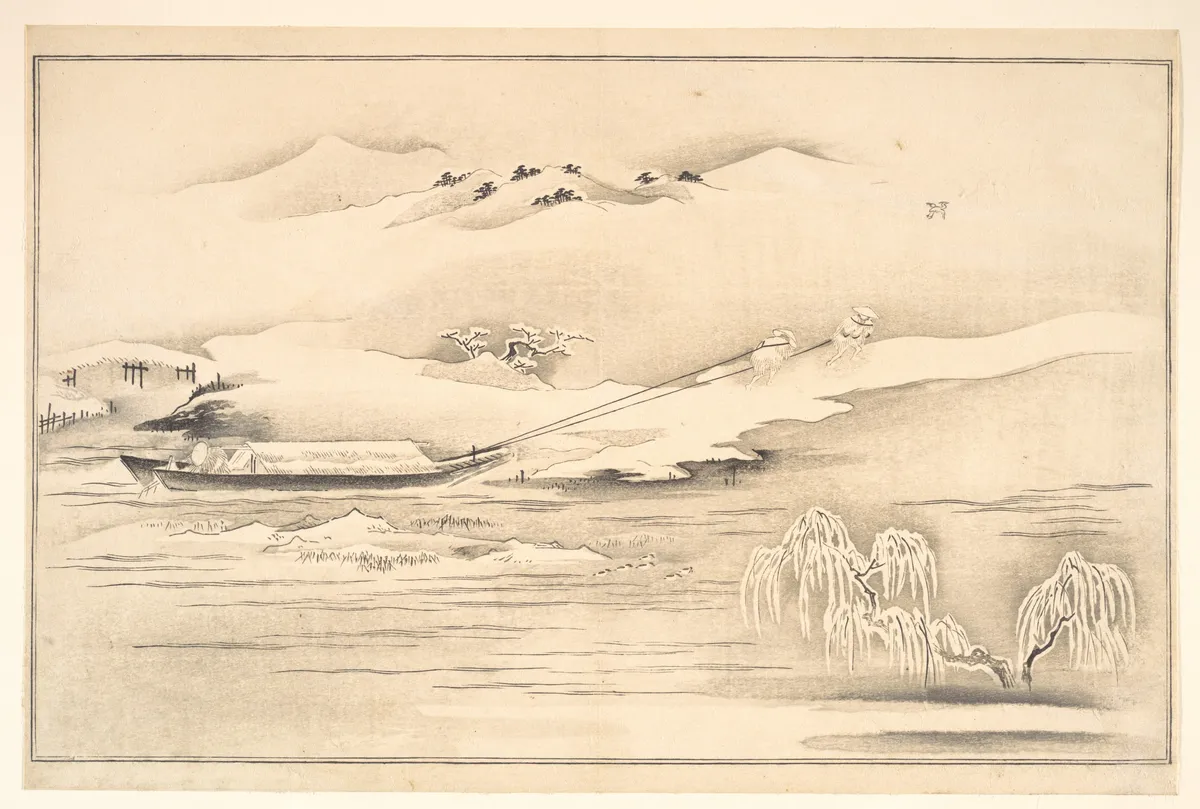
The Silver World
Moonlight spilled across the snow-covered landscape, casting a spectral glow. A lone figure trudged through the drifts, each step a whisper in the crisp air. Her kimono, a swath of midnight blue, fluttered like a shadow against the white expanse. Breath mingled with the night mist, a fleeting cloud in the chill. Somewhere distant, a fox's cry pierced the silence, echoing through the naked branches. The world lay still, suspended in silver.
She paused, eyes tracing the silhouette of pine trees etched against the horizon. Their needles glistened, dusted with frost, silent sentinels in the frozen night. A gentle breeze stirred, rustling the delicate paper lantern she held. The faint glow illuminated her face, revealing a moment's reflection—lost, perhaps, in thoughts of warmth and hearth.
The air smelled of pine and distant smoke, a reminder of life beyond the snow's reach. Her path wound through the landscape, a fleeting journey captured in the momentary hush of the winter night. The weight of solitude and serenity enveloped her, as the world, cloaked in silver, watched in quiet repose.
Historical Echo
Kitagawa Utamaro, a master of capturing fleeting beauty, imbues this scene with quiet melancholy. Known for his bijin-ga, or portraits of beautiful women, Utamaro turns his gaze to the serene, yet haunting, landscapes in "The World in Silver." The print captures the ethereal stillness of a winter's night, where the natural world holds its breath. Through his delicate lines and subtle play of light and shadow, Utamaro transports us to an Edo period winter, a world wrapped in silence and silver.