

The Silent Roar
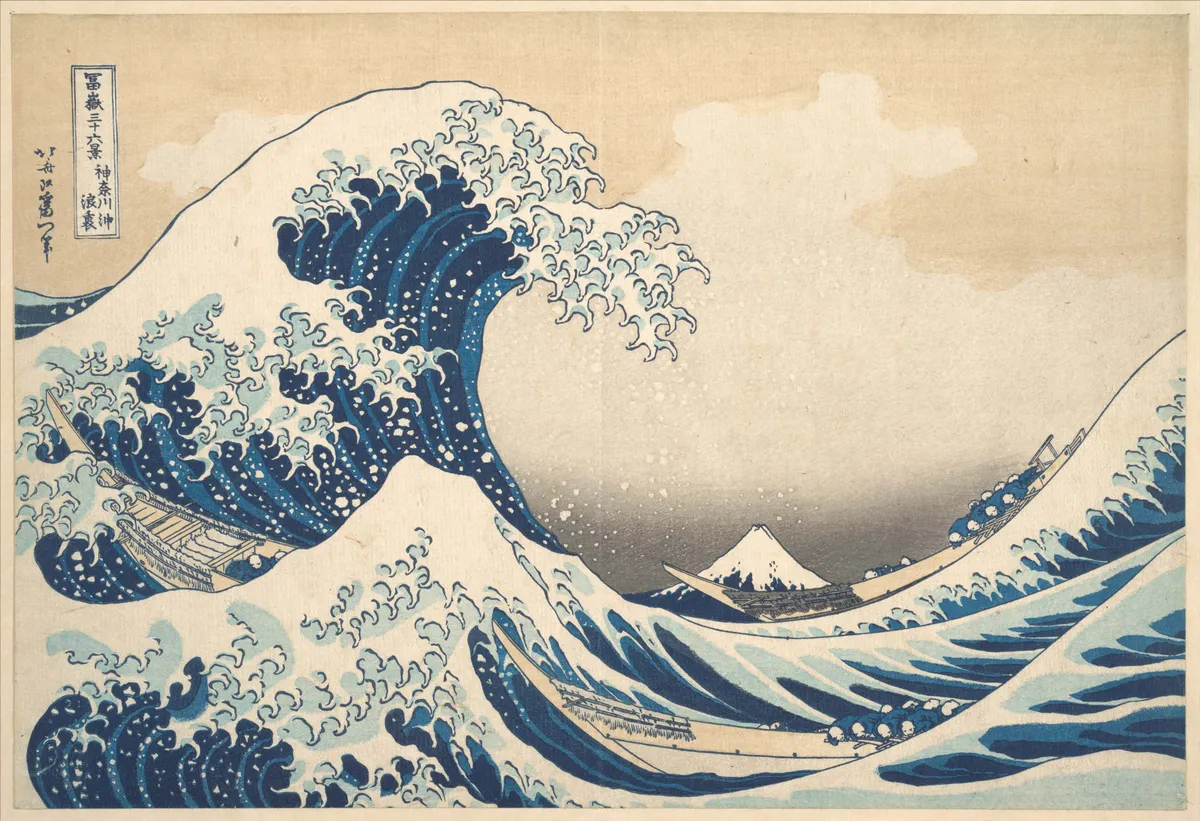
The sea roars silently. A great wave, frozen in time, arches over frail boats. Fishermen clutch their oars, faces taut with fear. The air is salty, thick with anticipation. The wave, a towering wall, threatens to swallow them whole. Yet, in the distance, Mount Fuji stands still and eternal. Snow caps its peak. It watches without judgment.
The sky is a muted canvas. Greys and blues blend, echoing the tension below. The wave's crest, white as foam, reaches claw-like towards the sky. Silence fills the space between heartbeats. The boats, mere specks, defy the ocean's fury. Each man braced against the inevitable.
Wood creaks. The wind howls through the rigging. The water, a deep indigo, churns beneath. It is a moment caught between breaths, where nature's power and human fragility meet. The wave looms, a monstrous beauty, indifferent to the struggle below.
Historical Echo
In the early 1830s, Japan was a land of isolation. Yet, within its borders, art flourished. Katsushika Hokusai, a master of ukiyo-e, captured the sublime in simplicity. His series, "Thirty-six Views of Mount Fuji," revealed the mountain's many faces. "The Great Wave" became its most famous. It transcended time, symbolising both the fragility of man and the unyielding force of nature.