

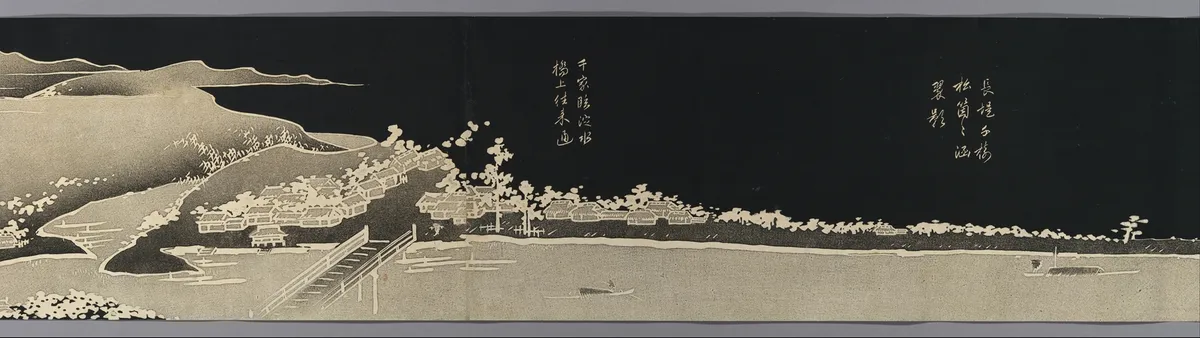
Pleasant Diversions on a Riverboat Journey
The river whispers under the pale morning light. Boats glide silently across the water, their wooden hulls creaking softly. A gentle mist clings to the surface, blurring the line between river and sky. On one boat, figures are gathered, their silhouettes dark against the dawn. Laughter floats like a gentle breeze, mingling with the soft splash of oars.
A man pours sake, the liquid glinting in the rising sun. His companion leans forward, a fan in hand, eyes on the distant banks. The air smells of damp wood and fresh water, a scent that clings to their clothes. Birds call from the reeds, their cries sharp and clear.
The boat drifts past willow trees, their branches trailing like fingers in the water. A woman stands, her kimono a splash of colour in the grey morning. She raises a hand, pointing at something unseen. Her gesture is met with murmurs of approval.
The river twists and turns, each bend revealing a new tableau. The journey is unhurried, their world contained in this floating sanctuary. Above, clouds gather, promising rain. Yet for now, the moment is still, their laughter the only sound.
Historical Echo
The print captures the essence of Edo period leisure. Itō Jakuchū, known for his exquisite detail and vibrant colours, presents a serene escape on the water. In the 18th century, such riverboat journeys were common among the affluent, offering a pause from the bustling city life. The print reflects a society in harmony with nature, where pleasure and tranquillity intertwine.