

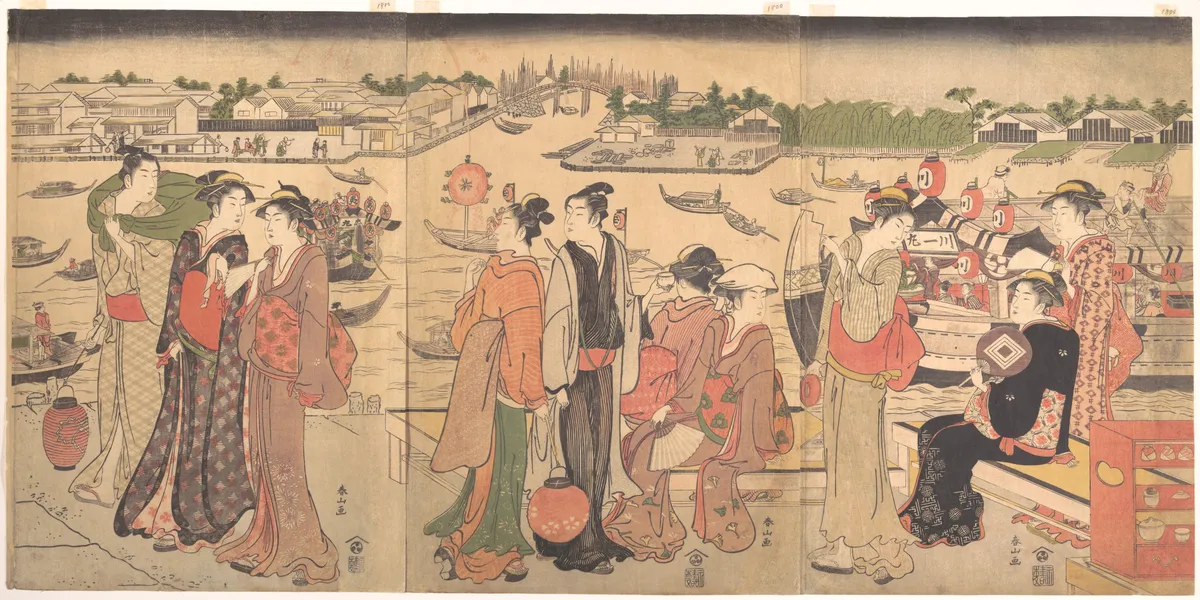
Festival by the Sumida River
The river murmurs beneath a canopy of lanterns. Shadows dance across the water's surface. On the banks, voices rise and fall like the gentle lapping of waves. The air is heavy with the scent of grilled fish and the faint sweetness of dango. A child runs past, feet slapping against the wooden planks of a temporary stage. His laughter echoes, swallowed by the night.
Men and women in summer robes drift between stalls. Their sleeves brush against each other, silent conversations spoken in silks. A vendor calls out, his voice rough like gravel, offering his wares to the crowd. Laughter mingles with the distant notes of a shamisen. Its strings tremble under skilled fingers, weaving melodies that thread through the cool night air.
A woman pauses by the river's edge. Her gaze drifts across the water, where lanterns float like stars cast adrift. She breathes in the night—its moisture clinging to her skin, its whispers threading through her hair. Her eyes catch the flicker of a firework, a brief bloom of light against the sky's dark canvas.
The festival swells around her, a living thing. Yet, beneath the surface, a quiet melancholy hums—a reminder of fleeting moments, vanishing like smoke.
Historical Echo
In the late 18th century, the Sumida River was a lifeline of Edo. Festivals thrived along its banks, drawing crowds into the embrace of night. Katsukawa Shunzan captured these gatherings, freezing moments in wood and ink. His prints echo with the voices of a past that never truly fades.