

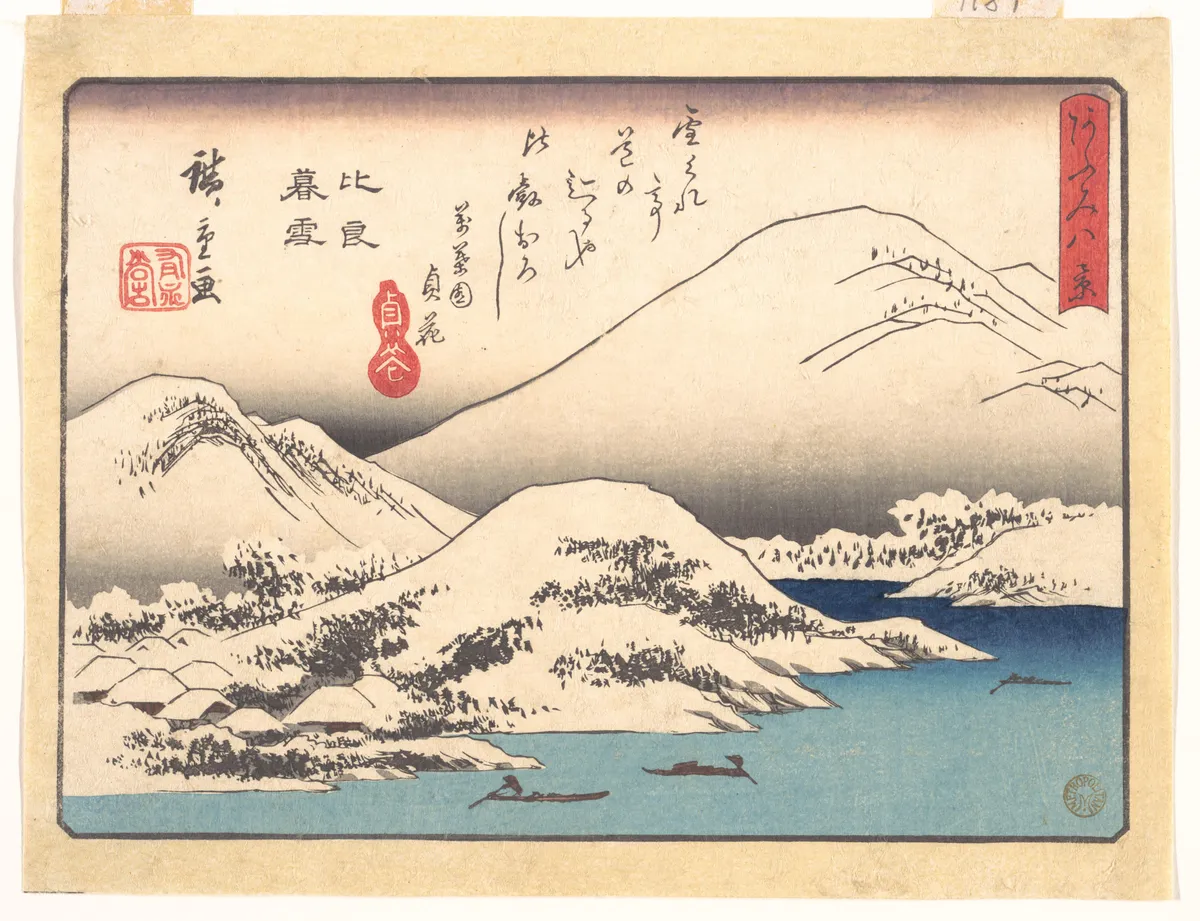
Evening Snow at Mount Hira
Snow falls silently over Mount Hira. The air is crisp, biting. A deep blue spreads across the sky, fading into the shadows of evening. The mountain stands tall, its contours softened by the fresh snow. Pine trees, burdened with white, lean slightly under the weight.
A lone traveller pauses on the path, breath visible in the cold air. He pulls his cloak tighter, feels the snow crunch beneath his sandals. His eyes follow the distant ridge, where the last light of day lingers. The stillness is profound. Only the soft whisper of the falling snow breaks the silence.
Villages below nestle in the valley, their roofs blanketed, chimneys exhaling thin trails of smoke. Hearths glow within, casting flickering shadows on paper walls. The traveller inhales the faint scent of burning wood, mixed with the pure chill of snow.
In the twilight, Mount Hira is a ghostly presence. Its quiet majesty commands respect. The traveller moves on, a solitary figure against the vast winter landscape. His footsteps leave a transient mark, soon to be erased by the gently falling snow.
Historical Echo
Mount Hira, part of the Eight Views of Ōmi, captures the serene beauty and transient nature of the Japanese landscape. During the Edo period, such scenes were celebrated for their ability to evoke a sense of mono no aware—the awareness of the impermanence of things. Hiroshige's mastery in depicting these views offers a glimpse into a world where nature's quiet power and beauty reign supreme.