

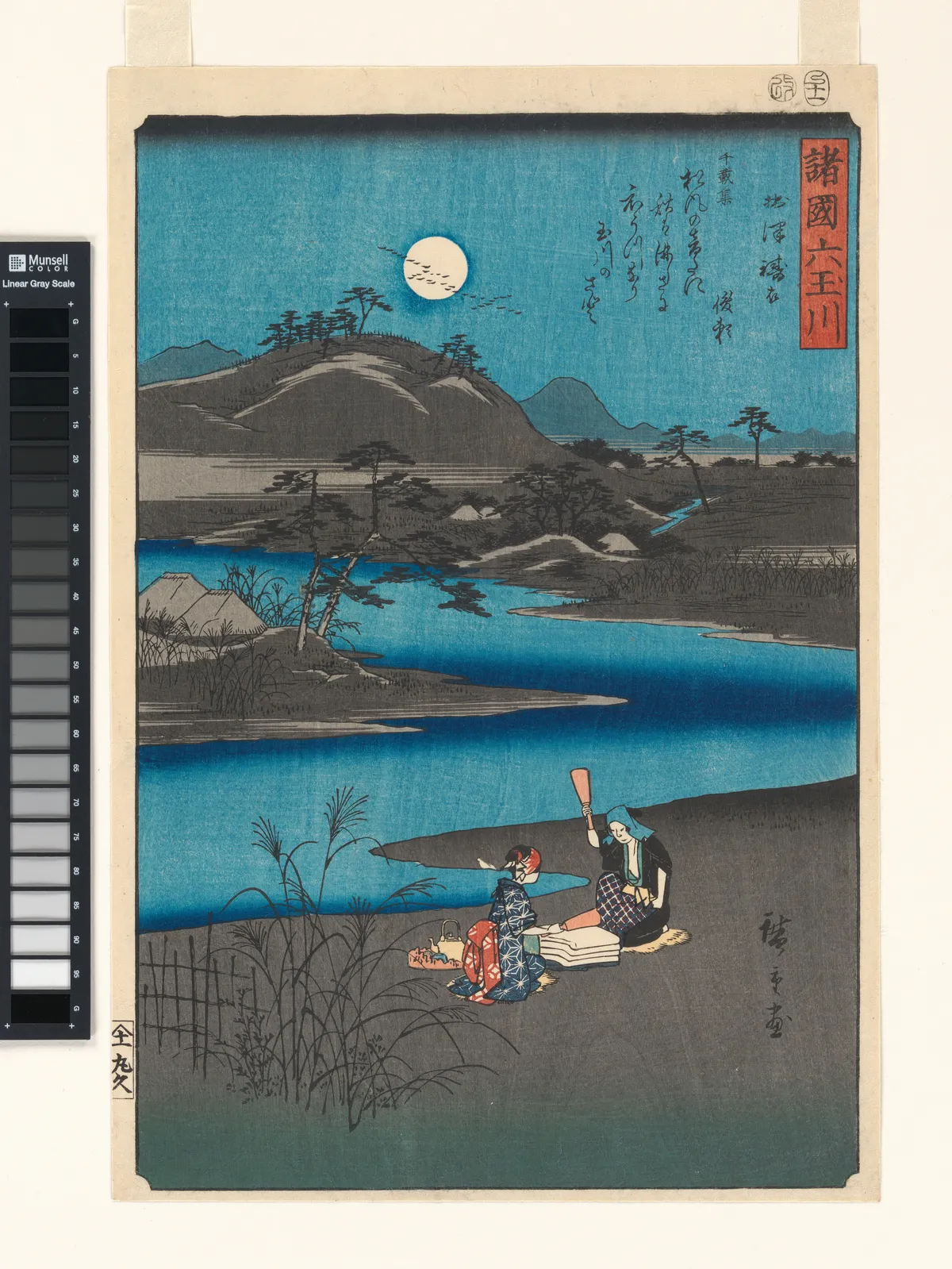
Jewel Rivers
The rain had just stopped. A gentle mist lingered over the riverbanks. Six rivers, six provinces, each held its own secret. Dew clung to the leaves, heavy with the night's whispers. The artist, Hiroshige, stood still, listening.
Water flowed softly, weaving through reeds and stones. The scent of wet earth rose in the cool air. Hiroshige's brush moved with quiet precision, capturing the rivers' serene dance. Each stroke, a tribute to nature’s silent beauty.
In the distance, mountains loomed, shrouded in a cloak of early morning fog. Their ancient presence watched over the rivers, guardians of history. The first light of dawn kissed the water, turning it into a ribbon of gold.
A lone bird called out, its voice echoing across the valley. As the sky brightened, colours deepened. Blues and greens melded, creating an ethereal tapestry. Hiroshige paused, his heart in rhythm with the rivers' gentle pulse.
He knew these jewel rivers held stories. Tales of seasons past, of people who came and went. His prints would preserve them, a bridge to the ephemeral world floating just beyond reach.
Historical Echo
In 1857, Utagawa Hiroshige captured the essence of Japan's six famous rivers. His work reflected the Edo period's fascination with nature's transient beauty. Each river, celebrated in poetry and legend, represented a passage of time and spirit. Hiroshige’s artistry immortalised these landscapes, offering a glimpse into a world where nature and humanity existed in delicate harmony.