

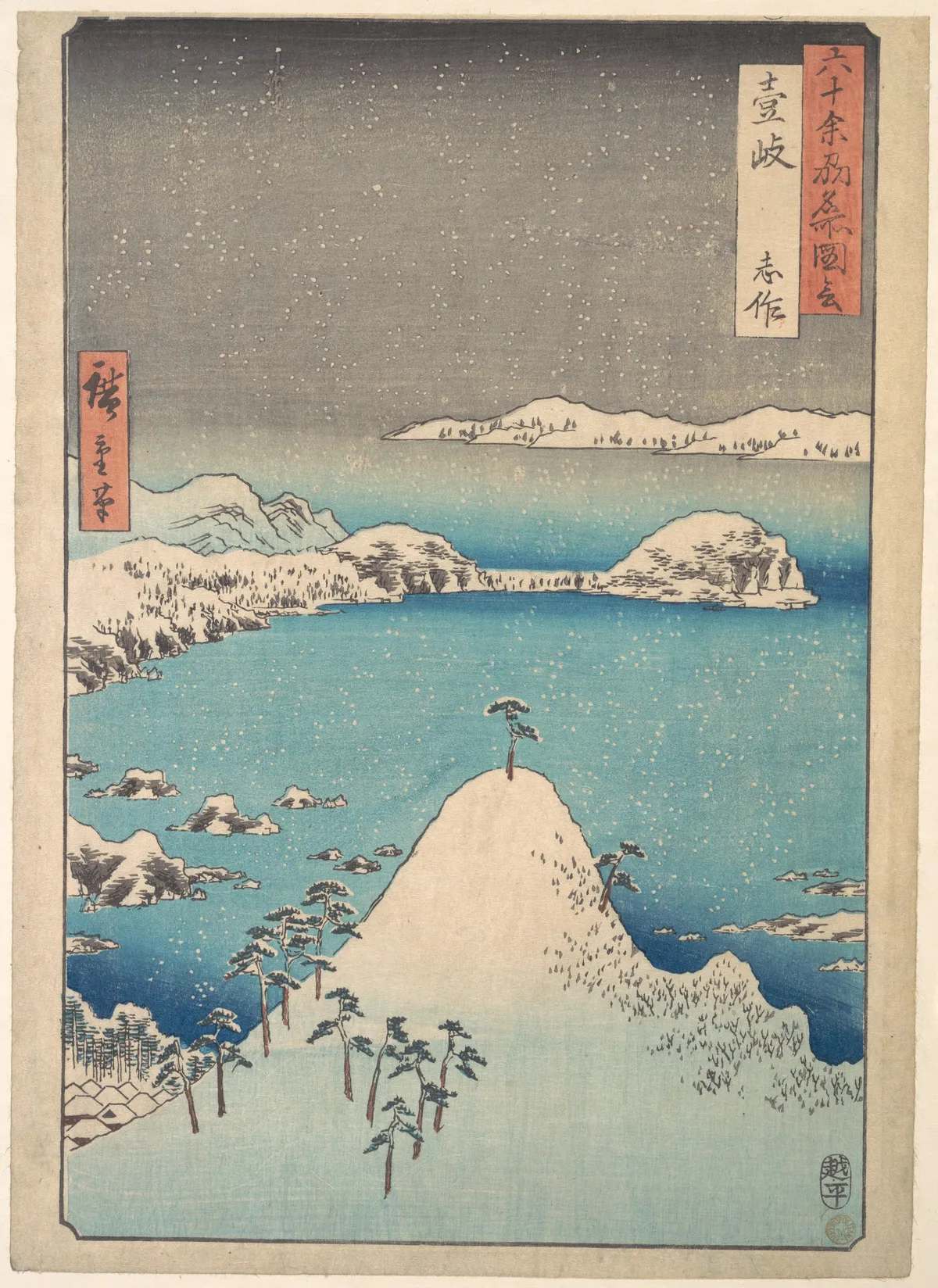
Shimasaku's Silent Winter
Snow falls gently upon the roofs of Shimasaku. The village sits hushed under the heavy, white blanket. Trees, stripped of their leaves, stand like sentinels. Their branches stretch towards the grey sky. In the distance, the sea murmurs against the shore, a quiet rhythm in the cold air.
A lone figure trudges along the path. His footsteps crunch softly in the snow. He pulls his coat tighter against the biting wind. The air smells of salt and pine, mingling in the crisp silence. Lantern light flickers through the paper windows of distant houses, casting warm glows on the icy ground.
The weight of winter presses down. It muffles sound, slows time. The village breathes in unison with the sea, a slow, steady pulse. Above, clouds drift silently, their bellies full of snow. The world is painted in shades of grey and white.
As night approaches, the snow continues to fall. Each flake joins the dance, a quiet descent from sky to earth. The village, wrapped in its winter cloak, dreams beneath the silent sky.
Historical Echo
Utagawa Hiroshige, a master of the ukiyo-e tradition, captured the serene beauty of the Japanese landscape. In 1856, he portrayed Shimasaku, a village in the province of Iki, during the profound stillness of winter. His prints evoke a timeless, contemplative atmosphere, where nature and human life intermingle quietly. Through his work, the viewer is transported to a world where the whisper of snow and the distant murmur of the sea resonate with the soul's quiet reflections.