

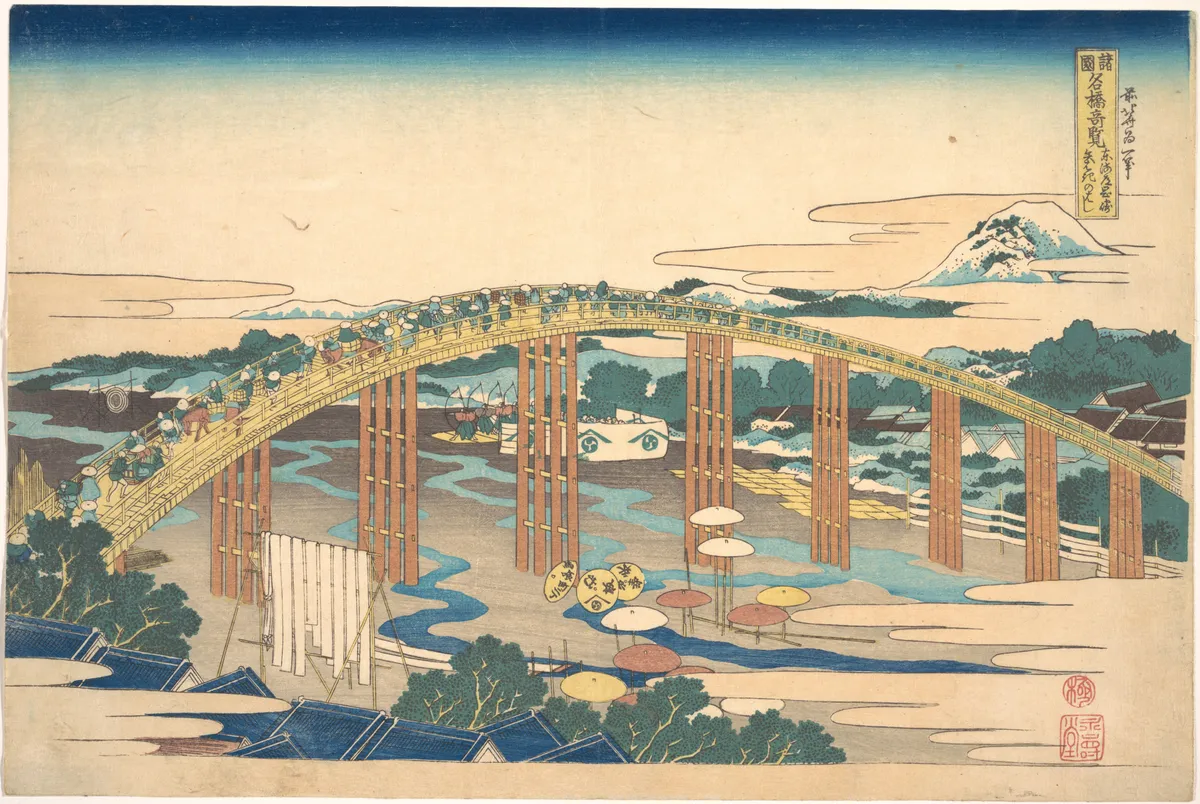
Yahagi Bridge at Okazaki
The Yahagi River flows slowly beneath the heavy wooden planks of the bridge. A chill lingers in the morning air. Travellers cross, their footsteps soft against the aged wood. The bridge stretches wide, a path suspended over water's quiet murmur. Mist curls around their ankles, rising from the river’s depths.
A lone fisherman stands at the edge, casting his line with a practiced flick. His silhouette is dark against the pale dawn. Nearby, a merchant adjusts his wide-brimmed hat, burdened by the weight of his wares. He pauses, glancing at the sky’s gradual lightening.
Beneath the bridge, the water is an endless whisper. It carries secrets of distant lands, stories swept along the Tōkaidō road. The air is thick with the scent of damp earth and fresh pine, mingling with the faint smoke of an early fire.
Through the mist, Okazaki’s distant rooftops emerge, their outlines sharp against the sky. The bridge connects worlds, a testament to human endeavour amidst nature’s quiet dominion. As day breaks, the landscape breathes in a moment of stillness, a pause before the world awakens.