

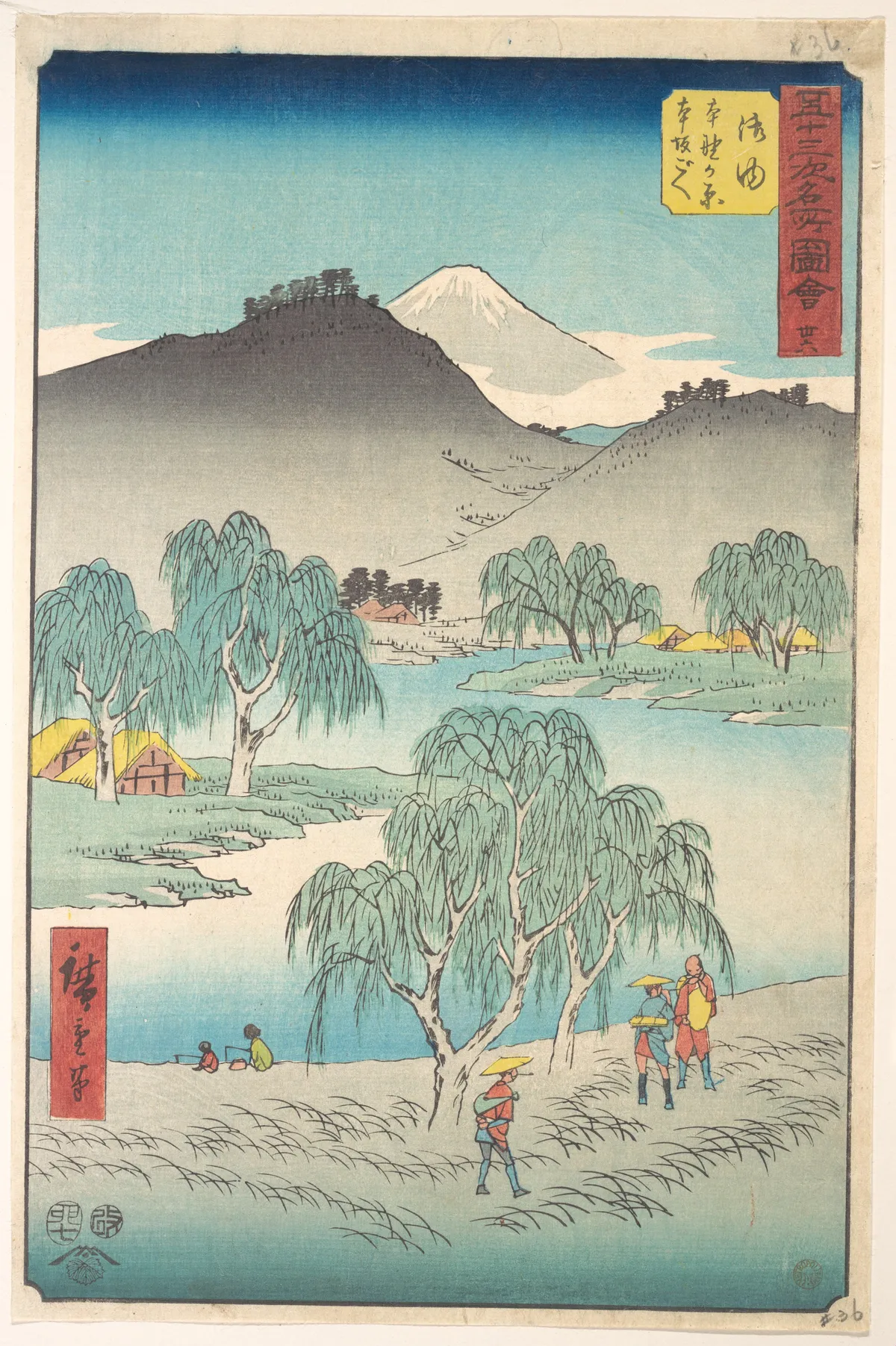
Goyu: A Quiet Evening
The air is thick with the scent of pine. A gentle hush blankets the landscape. In the dim light, Goyu emerges—a fleeting moment captured in the heart of Edo. The road is narrow, lined with tall trees that whisper in the breeze. A solitary traveller walks, his feet pressing softly into the damp earth. He pauses, listening to the rustle of leaves, the distant call of a night bird.
The sky is a muted grey, fading into the shadows of evening. Lanterns flicker, casting pools of soft light that dance along the path. Nearby, a teahouse beckons, its warm glow spilling into the cold night. The sound of laughter drifts from within, mingling with the clatter of tea cups and quiet murmur of voices.
Goyu is alive with subtle motion. The traveller moves on, his presence a mere whisper against the vast, still landscape. Each step echoes in the silence, a rhythm that marks his passage through time.
Historical Echo
Utagawa Hiroshige crafted this scene in 1855, capturing the essence of travel during the Edo period. Goyu was a post station along the Tōkaidō road—a vital artery connecting Edo and Kyoto. It was a place of rest for weary travellers, a glimpse of solace amidst the journey. Hiroshige's prints transport us to a time when the world moved at a slower pace, where nature and humanity coexisted in quiet harmony.