

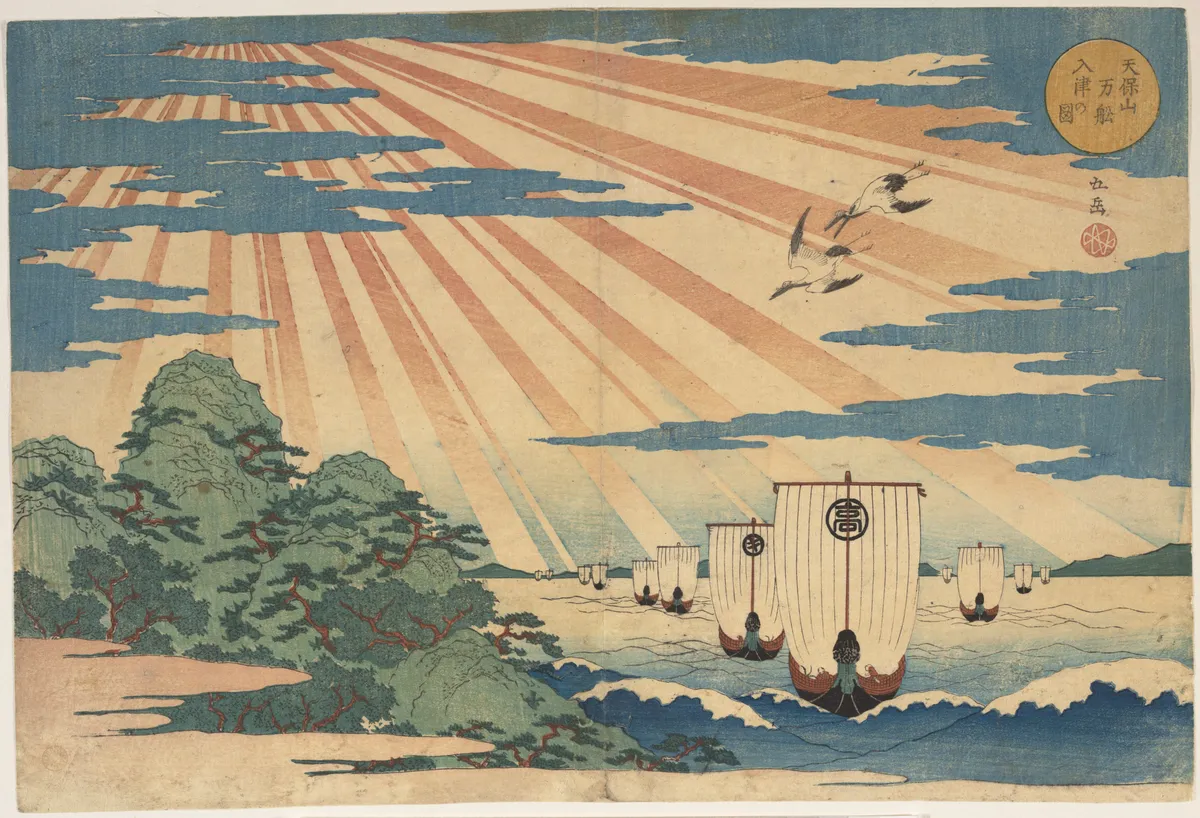
Tempozan Man-sen Nu-shin no Zu
The air is thick with the scent of salt and seaweed. A lone boat drifts silently on the water. Its wooden hull creaks with the gentle sway of the waves. The sky, a muted canvas of grey, hints at an approaching storm. Fishermen, their faces etched with years of toil, cast their nets with practised grace. Each movement deliberate, each gesture a testament to their craft. The distant rumble of thunder echoes like a distant drum. Above, gulls cry into the vastness, their wings cutting through the air like knives. The horizon blurs between sea and sky, a seamless blend of nature's vastness. On deck, a young boy watches, eyes wide, absorbing the rhythm of the sea, the wisdom of his elders. The boat, a fragile speck in this expanse, holds stories untold. Stories of the sea's bounty and its fury. As the first drops of rain fall, a shiver runs through the crew. The storm's embrace is both feared and revered. It is the sea's way, the ever-present balance of giver and taker. In this moment, time stands still, captured forever in ink and paper. A silent witness to the ephemeral beauty of life on the waves.
Historical Echo
In 1838, the bustling ports of Japan were lifelines to the world. Tempozan, a man-made mound in Osaka, stood as a symbol of progress and human ingenuity. Yashima Gakutei captured this spirit in his art. His prints, delicate yet powerful, spoke of the everyday lives intertwined with nature's forces. The fishermen, the storm, the sea—all were part of a larger tapestry of existence. Each print a window into a world balanced on the edge of change.