

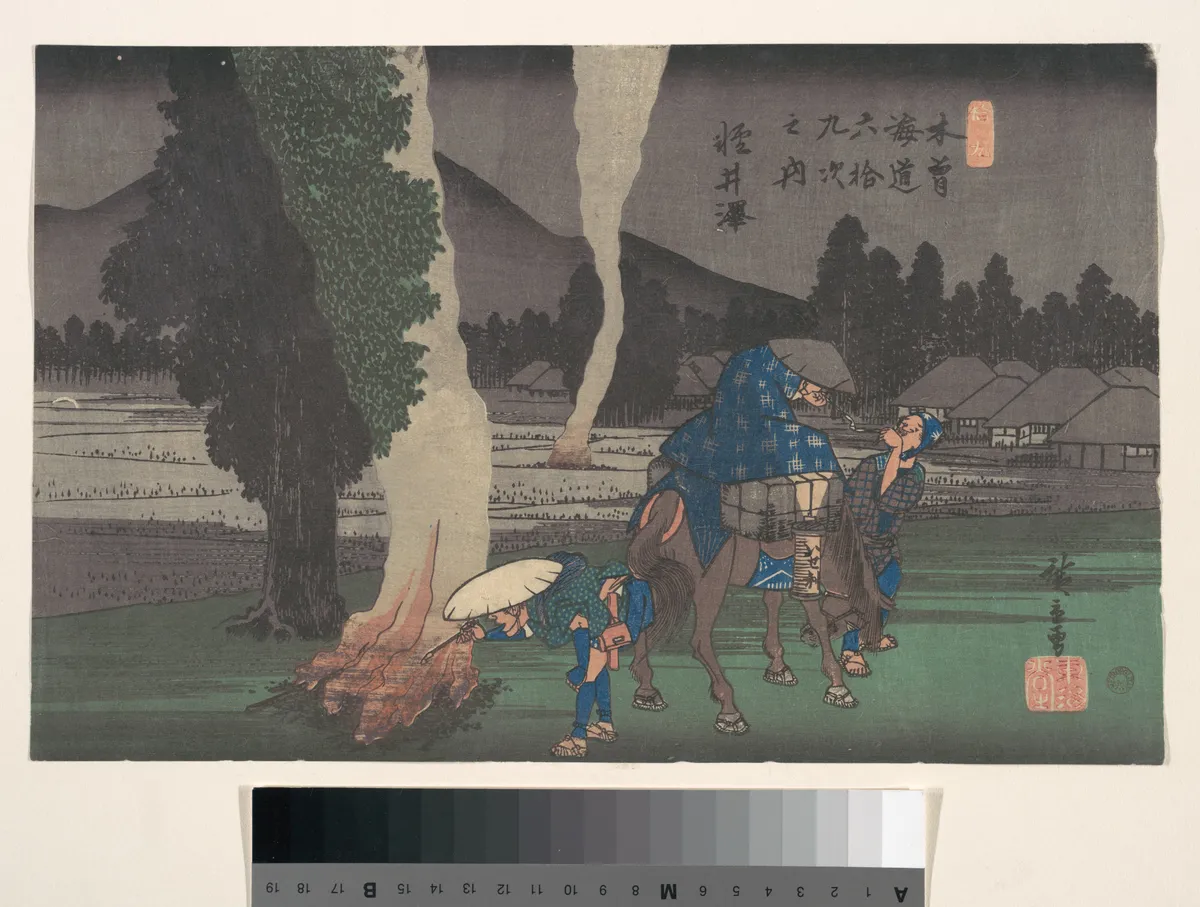
Karuizawa
The path winds through the hills of Karuizawa. Mist clings to the earth, softening the edges of the landscape. Shadows stretch and sway as a group of travellers make their way along the road. Their sandals shuffle against the damp ground, leaving faint imprints that soon disappear. Pines stand tall, dark silhouettes against the sky. The air is thick with the scent of pine needles, mingling with the faint aroma of distant fires. A traveller pauses, adjusts the weight of his pack, and listens. The murmur of a stream nearby. The gentle rustle of leaves in the breeze.
The sky hangs low, heavy with the promise of rain. Clouds drift lazily, casting fleeting shadows over the scene. Each traveller is wrapped in layers, their garments muted against the vibrant greens and soft earth tones of the landscape. A quiet determination propels them forward, step by step, along the ancient road. The journey is long, but the destination is worth the effort. Karuizawa, nestled in the heart of the mountains, offers solace for those who seek it.
Historical Echo
In the Edo period, Karuizawa was a well-known post station along the Nakasendo, a key route connecting Edo to Kyoto. It was a place of rest for weary travellers, merchants, and samurai alike. Utagawa Hiroshige captured the essence of this landscape in his woodblock print, depicting the serene beauty and timeless atmosphere of the journey. The print reflects the quiet perseverance of those who traversed this path, a testament to the enduring allure of the Japanese countryside.